


When it comes to road safety, I can’t stress enough the importance of being prepared for any situation. That’s why it’s crucial to have a well-equipped car emergency kit tailored to your climate. Whether you’re navigating a tropical downpour or bracing for a snowstorm, the right tools can make a world of difference.
Your car’s emergency kit should reflect the unique challenges posed by your local weather conditions. In a hot, arid climate, you’ll need different essentials than you would in a cold, icy one. I’ll be diving into the must-haves for various climates so you can gear up appropriately and be ready for whatever the road throws your way.
Importance of Being Prepared for Road Emergencies
We can’t deny it – road emergencies and unforeseen situations are part and parcel of the unpredictable journey called life. No matter how expert a driver you are or how well-serviced your vehicle is, there’s never a zero-percent risk. That’s why being prepared for road emergencies holds immense importance.
Here’s a real shocker – a recent AAA Foundation for Traffic Safety study found that between 2012 and 2016, more than 200,000 road emergencies happened purely due to bad weather conditions. This statistic isn’t just a number, it’s a loud and clear reminder of how vital it is to be ready for any situation on the road.
Moreover, driving through unique climates comes with its own set of challenges. Imagine if you are driving through the scorching heat of Arizona or traversing through the icy paths of Alaska – each situation demands a unique response. I hope by now it’s clear why a “one-size-fits-all” car emergency kit just won’t cut it.
Instead, we must strive to have a custom-tailored car emergency kit. The contents of this kit should depend on the climate we live in, and each item inside that kit could make a difference in life and death.
In the subsequent sections of this article, I’ll take you on a guided tour as we explore what your car emergency kit should look like if you’re driving in arctic temperatures, cutting through a desert landscape, or negotiating hard rain on a slippery road.
Remember, it’s always better to be over-prepared than under, especially during journeys. But hey, don’t get overwhelmed! I am here to help you gear up aptly. Stay tuned.
Tailoring Your Car Emergency Kit to Your Climate
As I reflect on the number of highway incidents affected by weather conditions, I’m struck by how crucial it’s to adapt our car emergency kits to the climate. It’s not one-size-fits-all.
In the US alone, between 2012 and 2016, weather-related road emergencies numbered over 200,000, compelling me to stress the point: your car emergency kit must reflect where you live and the atmospheric elements you’re facing.
- Cold Climate Areas: If you’re dwelling in areas where the climate is predominantly cold, preparing for freeze-induced emergencies is a must. Add items like a warm blanket, gloves, candle-powered heater, de-icer, and tire chains to your kit. Antifreeze engine oil is also a worthwhile consideration.
- Hot Climate Areas: Those of you living in hot climate regions, think about the challenges faced on a scorching day. Your gear should include extra drinking water, sunscreen, a hat, a handheld fan, and a reflective emergency blanket that can double up as a sun shield.
- Rainy Climate Areas: In rainy or often wet climates, waterproof gear is vital. Think about adding a sturdy raincoat, waterproof matches, and a high-quality umbrella. A fog light is also essential, as visibility often becomes a challenge in such weather.
| Climate type | Essential Kit Additions |
|---|---|
| Cold | Blanket, gloves, candle-powered heater, de-icer, tire chains, antifreeze engine oil |
| Hot | Extra water, sunscreen, hat, handheld fan, reflective blanket |
| Rainy | Raincoat, waterproof matches, umbrella, fog light |
It’s critical that upon acquiring these items, you ensure they are always in working condition. Regular checks and maintenance can mean the difference between a mere inconvenience and a dangerous situation.
Diving deeper, we’ll now discuss each climate type in detail, starting with cold climates.
Essential Car Emergency Kit Items for Hot, Arid Climates
A hot, arid climate presents its unique challenges. The high temperatures can take a toll not only on you but also on your vehicle. It’s essential to keep some specific items in your car emergency kit when driving through such areas.
Think of summer, and what comes to mind? Sunshine, heat waves, dehydration. Yes, dehydration! Water is your best friend in a hot, arid climate. You’ll need plenty to stay hydrated. Keep no less than one gallon of water per person per day. If you travel with pets, they will need their share, too.
Next, consider your car battery. In high temperatures, a vehicle’s battery can be drained quickly. Therefore, keeping a portable car battery charger is highly advised. With this device around, you can give your drained battery the juice it needs to get you back on the road.
During a vehicle breakdown in the scorching heat, visibility is crucial. A sunshade or umbrella can offer you some reprieve from the sun’s rays. They can provide you with a cooler, more visible environment to execute any necessary repairs.
Remember the old adage – it’s better to be safe than sorry? Well, that rings true here. When the temperatures rise, tires tend to expand. Tire blowouts are more common in hot weather. Therefore, it’s always a good idea to have a spare tire and a jack at your disposal. Plus, quick familiarity with how to replace a tire could be crucial.
Let’s talk about first-aid. Sunburn, heatstroke, and dehydration are common issues one could face. Ensure your first-aid kit has rehydration salts or electrolyte solutions besides the usual items.
| Essential Item | Quantity/Features |
|---|---|
| Water | One gallon per person per day |
| Portable car battery charger | One |
| Sun shade or umbrella | One |
| Spare Tire and Jack | One each |
| First-Aid Kit | Equipped with rehydration salts and electrolyte solutions |
A hot, arid climate can be daunting. But with the right emergency car kit tailored for the climate, you’re setting yourself up for a journey filled with more confidence and less worry.
Must-Have Items for Cold, Icy Climates
When it comes to driving in cold, icy climates, preparation is key. Just as you would adjust your emergency kit for hot, arid regions, it’s critical to adapt to cold weather conditions.
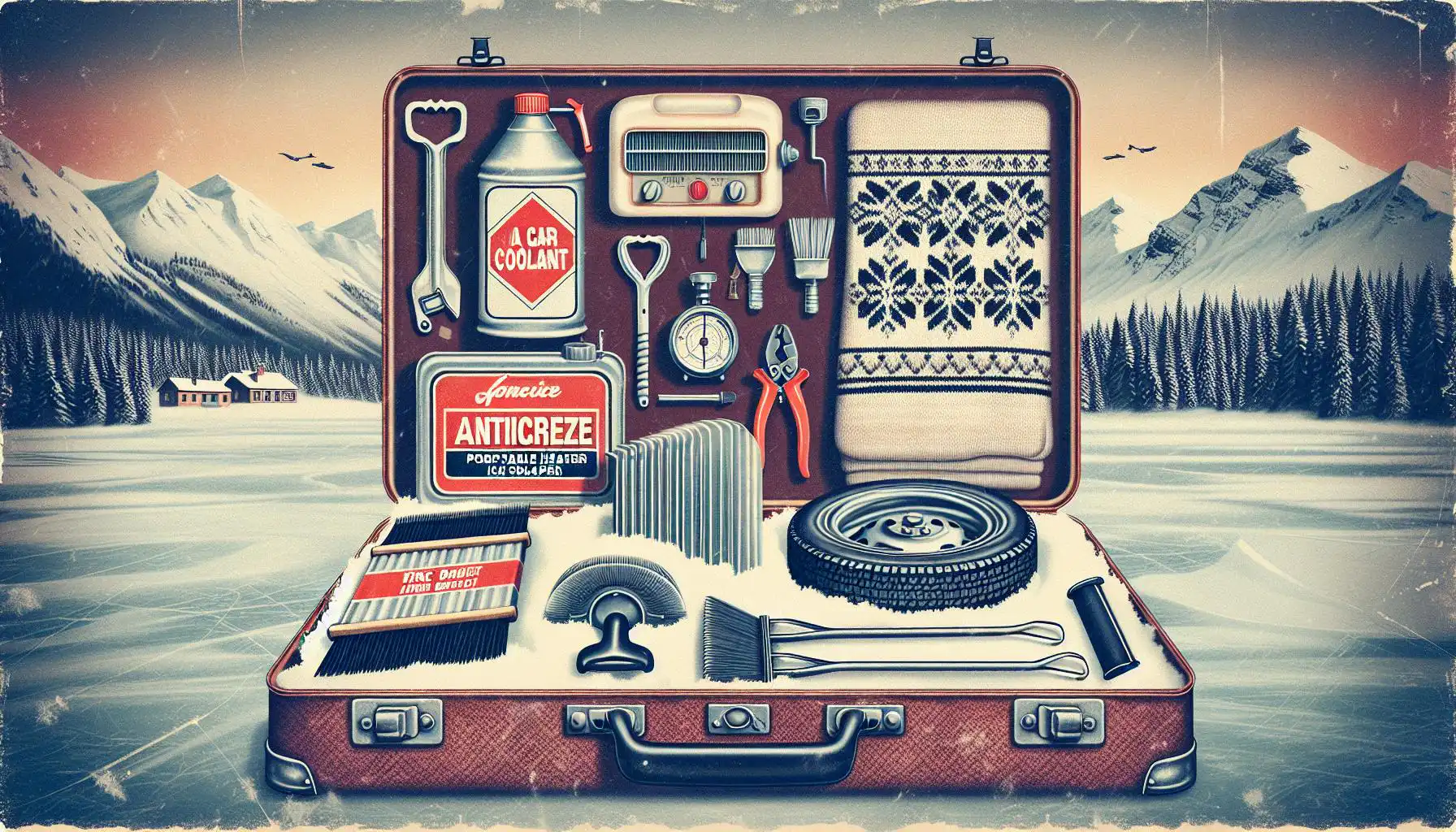
First off, antifreeze coolant is an absolute must. It should be at the top of your list. This special coolant prevents your engine from freezing up, allowing your car to function properly despite the low temperatures.
Having a portable car heater can be a real lifesaver when stranded in the icy cold. Breaking down and finding yourself trapped in your car with temperatures dropping can be a dangerous situation. With a portable car heater, you can stay warm and safe until help arrives.
Additionally, including tire chains in your kit can make a huge difference. Ice and snow can make roads slippery and challenging to navigate. Tire chains provide added traction, reducing the chances of sliding off the road, losing control or getting stuck.
Ice scrapers and snow brushes are invaluable tools for cold weather. They’re essential for removing frost, ice and snow from your windshield and other windows. It’s a safety issue – you need clear visibility when driving, especially in tough winter conditions.
A thermal blanket is something you absolutely should not leave out. It won’t take up much space, and its benefits far outweigh its size. In case of accidents or breakdowns, a thermal blanket can help you avoid hypothermia. Trust me, you’ll be glad you packed this.
Let’s create a handy table summarizing the essentials for an emergency car kit adapted for cold, icy climates.
| Prevents the engine from freezing | Purpose |
|---|---|
| Antifreeze Coolant | Prevents engine from freezing |
| Portable Car Heater | Provides warmth in case of breakdowns or accidents |
| Tire Chains | Provides added traction on icy roads |
| Ice Scraper & Snow Brush | Enables clear visibility in frosty weather |
| Thermal Blanket | Prevents hypothermia in case of emergencies |
Remember: tailored vehicle emergency kits can significantly improve your safety and confidence on the road. This is especially true for extreme climate conditions, whether hot or cold. Equipping yourself correctly can ease some of the stresses associated with driving in these climates.
Conclusion
So there you have it. I’ve outlined the must-haves for your car emergency kit, depending on whether you’re dealing with the scorching heat or the freezing cold. Always remember that safety comes first, and having the right tools can make all the difference when you’re caught in extreme weather.
A well-prepared kit can be your lifeline, providing crucial aid and comfort when you need it most. Whether it’s an antifreeze coolant for icy roads, a portable car heater for those chilly nights, or tire chains for extra traction, these items can be game-changers. So don’t wait until it’s too late. Tailor your car emergency kit to your climate, and drive with the confidence that you’re ready for whatever Mother Nature throws your way.
FAQs
What kind of items would be included in a car emergency kit for cold, icy climates?
For cold, icy climates, the recommended items include antifreeze coolant, a portable car heater, tire chains, ice scrapers and snow brushes, and a thermal blanket.
Does climate impact what should be in a car emergency kit?
Yes, the article stresses that climate greatly influences the essentials for a car emergency kit. The kit should be tailored according to whether the prevailing climate in your area is hot and arid or cold and icy.
What benefits does tailoring a car emergency kit provide?
Tailoring a car emergency kit according to your climate ensures preparedness for potential weather-related incidents. It boosts driver’s confidence and potentially improves overall safety.