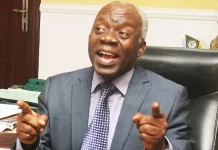


Renowned human rights lawyer Femi Falana (SAN) has strongly condemned the recent trend of street and bus stop renaming in Lagos State, describing the actions as unconstitutional, authoritarian, and a violation of the rights of local governments and residents.
In a statement released on Sunday, Falana criticised individuals and authorities who he said are renaming public spaces without community consultation or compliance with due process as required by law.
Falana Cites Illegal Usurpation of Local Government Powers
Falana cited the example of “Charley Boy Bus Stop” in Bariga, which was recently renamed “Baddo Bus Stop” by the former chairman of the Bariga Local Council Development Area (LCDA), Kolade Alabi.
He also referenced other instances of renaming, involving streets being named after President Bola Tinubu, Lagos Governor Babajide Sanwo-Olu, and the late Herbert Wigwe—reportedly by Aliko Dangote.
“These actions amount to an illegal usurpation of constitutional functions,” Falana declared, emphasizing that the 1999 Constitution (as amended) vests the exclusive power to name streets and assign house numbers in local government councils.
He referred to the Fourth Schedule of the Constitution and a notable court judgment in Obidi Ume v. Abuja Metropolitan Management Council, which affirmed the authority of local government councils over naming roads within their jurisdiction.
“Charley Boy Bus Stop” Renaming Sparks Outrage
Falana specifically criticised the renaming of Charley Boy Bus Stop, arguing that the location holds historic and cultural significance for the residents of Bariga and Gbagada.
“Charley Boy Bus Stop acquired its name sociologically due to its functionality and the positive impact which Charley Boy has historically made in the area,” he said.
“Renaming it without consulting the people smacks of authoritarianism.”
Falana: Colonial Street Names Remain While Nigerian Icons Are Erased
The senior lawyer also denounced the double standard in preserving colonial-era street names while replacing the names of contemporary Nigerian figures who have made meaningful contributions to society.
“It is contradictory to retain the names of colonial masters who represent oppression while erasing the names of Nigerians who inspired generations,” he said.
Calls for Constitutional Adherence and Grassroots Involvement
Falana urged legislative councils in Lagos’ local governments to rise to their constitutional responsibility by halting arbitrary renaming exercises, insisting that such changes must be subjected to public hearings and legal procedures.
“Streets should not be renamed arbitrarily to please the whims and caprices of political leaders or to promote ethnic chauvinism, especially in a cosmopolitan capital city like Lagos,” he warned.
He concluded by stating that unilateral renaming decisions risk erasing local history, undermining community identity, and weakening grassroots democracy.