

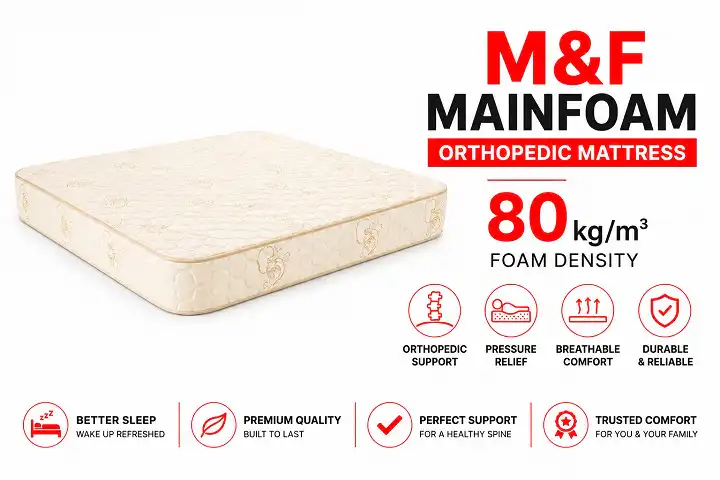
Sleep is not a luxury. It is the foundation of recovery, focus, and long-term health — and the surface you sleep on matters more than most people realize. Yet across Nigeria, millions of people still wake up with aching backs, stiff necks, and tired joints because their mattress simply isn’t doing its job.
That is exactly the gap the M&F Galaxy Orthopedic Mattress is built to fill.
What Makes an Orthopedic Mattress Different?
The word orthopedic gets thrown around a lot in the mattress industry. To understand what it actually means, you need to look at the science of spinal alignment during sleep.
A true orthopedic mattress doesn’t just feel firm — it actively supports the natural curves of your spine, distributes your body weight evenly, and reduces pressure on joints.
Leading design publications like Dezeen have covered the global shift toward wellness-driven interior products, noting how consumers increasingly demand that everyday objects — including mattresses — deliver measurable health benefits, not just comfort. That shift is just as visible in African markets, where buyers are becoming more informed and more discerning.
The M&F Galaxy Orthopedic Mattress is built around that principle. It combines high-density foam technology with structured support layers designed to hold your spine in its correct alignment throughout the night.
Foam Density 80 kg/m³ — Why This Number Matters
If you’ve ever bought a mattress that sagged after six months, low foam density was probably the cause. Density is the single most reliable indicator of a foam mattress’s durability and support quality — and it’s measured in kilograms per cubic meter (kg/m³).
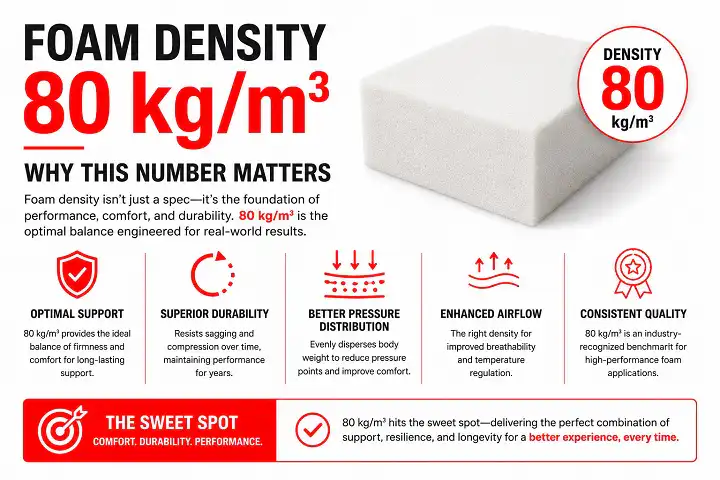
The M&F Galaxy Orthopedic Mattress uses a Foam Density of 80 kg/m³, placing it firmly in the high-density category. To put that in context, budget mattresses often use foam between 25–40 kg/m³. The difference in longevity and support is dramatic.
You can learn more about how foam density affects mattress performance and durability on the Mainfoam website — it’s a useful read before making any mattress purchase decision.
High-density foam at 80 kg/m³ means:
- The mattress resists compression over time, maintaining its original shape and firmness.
- You get consistent, reliable support every night — not just in the first few months.
- The foam absorbs and distributes weight more effectively than low-density alternatives.
Built to Support Heavier Sleepers
One of the most overlooked specifications in mattress shopping is weight capacity. Many foam mattresses on the market fail quietly above 80–90 kg, leading to premature sagging, poor spinal alignment, and excessive heat retention.
The M&F Galaxy Orthopedic Mattress is engineered to comfortably support sleepers weighing 100 kg and above. This is a direct result of the 80 kg/m³ foam density — the structure simply doesn’t collapse under sustained pressure the way lower-density foams do. For heavier individuals, or couples sharing a mattress, this capacity matters enormously.
Who Actually Needs the M&F Mainfoam Orthopedic Mattress?
This isn’t a mattress for everyone — and that’s not a drawback, it’s a feature. It’s designed with specific needs in mind:
People dealing with chronic pain. If you wake up with back pain, neck stiffness, or joint discomfort, your mattress may be the culprit. The M&F Galaxy’s orthopedic foam targets the pressure points that cause these problems, particularly at the lumbar spine, hips, and shoulders.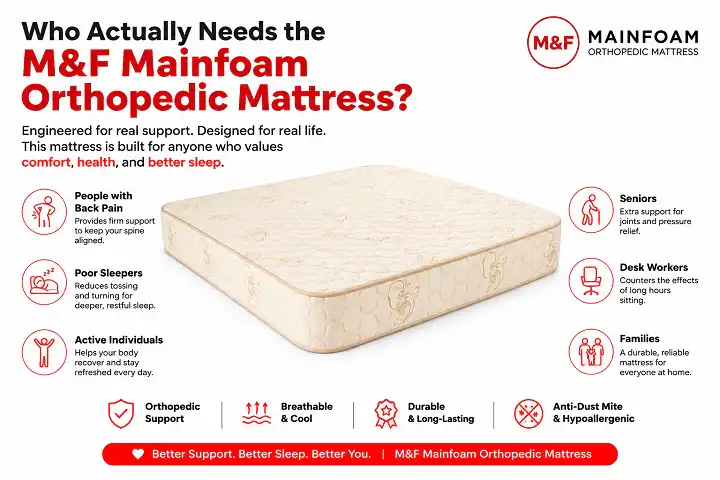
Athletes and active individuals. Recovery is where performance is built. During deep sleep, the body repairs muscle tissue, regulates hormones, and consolidates motor learning. A properly supportive mattress accelerates that process — which is why many high-performance athletes treat their sleep surface as part of their training equipment.
People who simply want better sleep. You don’t need a diagnosis to deserve better rest. Anyone who tosses and turns, wakes up stiff, or feels unrested in the morning is a candidate for an orthopedic upgrade.
Heavier-framed sleepers. As covered above, the 100 kg+ weight capacity makes this mattress a genuinely practical choice — not just a claim on a sticker.
The Global Wellness Sleep Trend — and Where Nigeria Fits
Sleep science has exploded as a field over the past decade. Design and lifestyle authority Dezeen regularly features sleep-focused products and environments, reflecting how deeply the wellness movement has embedded itself in how people think about their homes. From breathable bedframe structures to temperature-regulating textiles, sleep is now treated as a design problem worth solving properly.
Nigeria is not behind this curve — it’s catching up fast. Urban professionals in Lagos and Abuja are increasingly unwilling to compromise on sleep quality, and premium mattress options are becoming part of the conversation alongside standing desks, ergonomic chairs, and gym memberships.
Orthopedic Mattresses and the Broader Sleep Ecosystem
Choosing the right mattress is the most important decision in your sleep setup, but it doesn’t exist in isolation. Pairing your orthopedic mattress with the right bed frame and foundation is essential — a high-density foam mattress placed on a slatted or uneven base will underperform, regardless of its quality.
M&F Mainfoam designs its mattresses to work within a complete sleep system. The Galaxy Orthopedic sits best on a solid, flat surface or a slatted frame with slat spacing no wider than 7 cm. Getting this combination right maximizes the lifespan of the foam and the quality of support you feel.
Comparing the M&F Galaxy to Standard Foam Mattresses
| Feature | Standard Foam Mattress | M&F Galaxy Orthopedic |
| Foam Density | 25–45 kg/m³ | 80 kg/m³ |
| Weight Capacity | Up to ~80 kg | 100 kg and above |
| Spinal Alignment | Passive | Active orthopedic support |
| Durability Lifespan | 2–4 years | 6–10+ years |
| Back Pain Suitability | Low | High |
The numbers speak clearly. While a standard foam mattress might cost less upfront, the M&F Galaxy’s longevity and health benefits make it the stronger value over time.
What to Look For When Buying an Orthopedic Mattress in Nigeria
Shopping for an orthopedic mattress in Nigeria requires looking past the marketing language that many brands use loosely. Here are the questions that actually matter:
- What is the foam density (kg/m³)? Demand a specific number. Vague claims about “high density” without figures are a red flag.
- What is the weight rating? Confirm the manufacturer’s stated capacity and whether independent testing supports it.
- What is the warranty? A confident manufacturer backs their product with a meaningful warranty period.
- Does it address your specific pain points? General firmness is not the same as targeted orthopedic support.
M&F Mainfoam publishes its foam density specifications transparently — the Galaxy’s 80 kg/m³ rating is verifiable, not a vague selling point.
If you want to know the simplest version of what we covered, here it is
Great sleep doesn’t happen by accident. It results from deliberate choices — the right environment, the right habits, and critically, the right surface.
The M&F Galaxy Orthopedic Mattress delivers on the technical fundamentals that actually determine sleep quality: high foam density, genuine orthopedic support, and a weight capacity that doesn’t leave heavier sleepers underserved.
Whether you’re managing chronic pain, optimizing athletic recovery, or simply tired of waking up tired, this mattress is worth serious consideration.