

Apple’s notoriously airtight secrecy around its supply chain has taken a serious hit. A ransomware attack on Tata Electronics, one of the company’s most important manufacturing partners in India, has resulted in a trove of confidential iPhone 18 Pro documents and images surfacing on the dark web, offering an unusually detailed look behind the curtain at how the world’s most valuable smartphone is actually made.
The breach was carried out by a group calling itself World Leaks. This ransomware operation follows a hack-and-leak model, stealing massive amounts of data and threatening to publish it unless victims pay up.
The group claimed responsibility for the attack on its dark web leak site on June 12, posting more than 200,000 files totalling over 630 gigabytes. Tata Electronics has since publicly confirmed the incident, though the full scope of what was taken only became clear in the days that followed.
What makes this leak particularly significant isn’t just its size; it’s what’s inside it. According to documents reviewed and a source familiar with the matter, the stolen files include supplier lists, detailed component breakdowns, and photographs of internal drop tests for unreleased iPhone 18 Pro models.
Reporting found at least six files that map many components in the iPhone 18 Pro to the specific companies that supply them, including details of chips on the main circuit board and parts of the battery and cameras.
That kind of supplier-to-component mapping is exactly the sort of information Apple has spent years keeping locked away. The company does disclose a general list of suppliers annually.
Still, it has never revealed which company manufactures a specific part for a specific model, largely because those relationships shape its negotiating leverage and expose where its supply chain might be vulnerable.
Adding to the sensitivity, several of the leaked documents reportedly carry Apple’s internal “Confidential” watermark alongside code names tied to the iPhone 18 Pro generation, details that leave little doubt about their authenticity even though the devices themselves haven’t launched yet.
Among the most eye-catching pieces of the leak are photographs, dated early 2026, showing prototype handsets undergoing drop tests at a Tata facility.
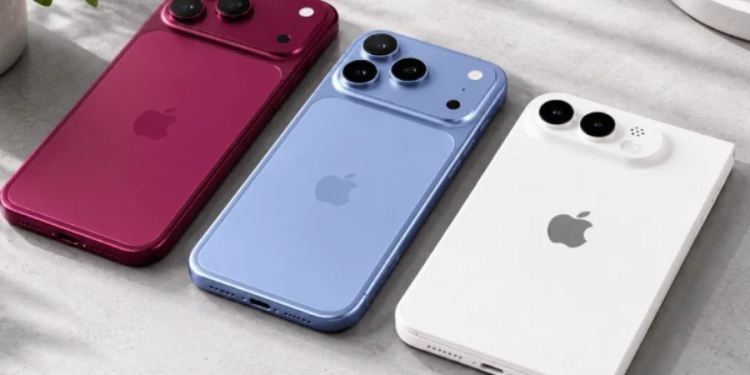
The images depict a conventional, grey, slab-shaped handset with a three-rear-camera setup and the Apple logo. The exact model couldn’t be independently confirmed, though a source close to the matter identified them as iPhone 18 Pro units.
This isn’t an isolated disclosure either; it’s an extension of an earlier leak. Reuters had previously reported that the broader cache of files stolen from Tata included purported component design papers for older iPhone models, documents tied to Tesla, and material involving Taiwan Semiconductor Manufacturing Co. and Qualcomm, two companies whose chips and components also feed into Apple’s devices.
In other words, the breach didn’t just touch Apple; it pulled in a web of major tech and auto suppliers connected to Tata’s broader client list.
The fallout has put both companies on the defensive. Apple is investigating the incident and working with Tata on longer-term security measures.
At the same time, Tata has restricted internal access to sensitive systems and engaged a global consultant to conduct a forensic audit. Neither company has commented publicly beyond acknowledging the investigation is ongoing.
What gives this breach extra weight is the timing and the relationship it threatens. Tata has emerged as one of Apple’s most important manufacturing partners outside China, both supplying components and assembling finished iPhones.
This expansion aligns closely with India’s broader push to become a global electronics manufacturing hub.
That bet has paid off quickly: India is on track to produce roughly 26% of the world’s iPhones in 2026, up from just 6% four years earlier, according to research firm Counterpoint.
A breach of this scale at a partner that is central to Apple’s supply chain inevitably raises uncomfortable questions about how secure that diversification strategy really is.
Cybersecurity experts who’ve reviewed the situation say the nature of the breach itself is telling. Attacks of this scale typically aren’t smash-and-grab jobs; they usually require attackers to gain a real foothold inside an organization through compromised credentials, weak access controls, or the ability to move undetected across internal systems, a reminder that a company’s cybersecurity is often only as strong as its weakest supplier link. World Leaks, for its part, isn’t new to high-profile targets, having previously claimed responsibility for a breach involving Nike.
The leak lands at an awkward moment for Apple more broadly. The company is gearing up for the expected September launch of the iPhone 18 Pro and Pro Max and has recently raised prices on select iPad and MacBook models due to rising costs of memory and storage chips.
Analysts are now watching closely to see whether iPhone pricing follows suit. A supply chain breach of this magnitude, just months before a major launch, isn’t the kind of headline any hardware company wants heading into its biggest release window of the year.