
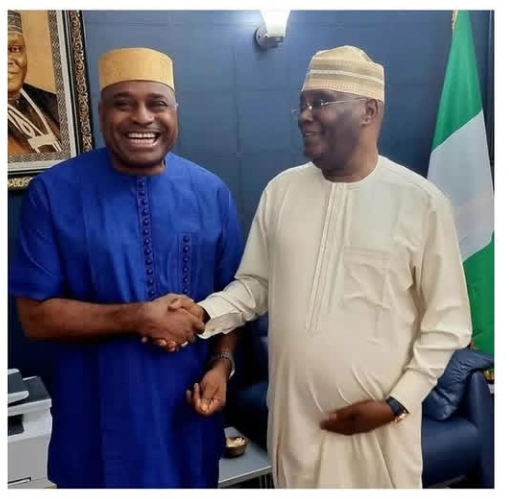
Kenneth Okonkwo, a chieftain of the African Democratic Congress (ADC), has stirred political debate after declaring that a vote for Peter Obi in the 2027 presidential election would effectively benefit President Bola Tinubu.
Speaking during an online interview, the former Labor Party spokesperson argued that opposition forces risk handing the ruling party another victory if they fail to unite behind a single candidate.
According to Okonkwo, the biggest threat to efforts to unseat the incumbent president is the fragmentation of opposition votes.
He maintained that whether voters support President Tinubu directly or divide their support among multiple opposition candidates, the outcome could ultimately favor the ruling party.
In his words, a divided opposition would make it easier for Tinubu to secure another term in office.
“Voting for Peter Obi is voting for Tinubu,” Okonkwo said while explaining his position on the evolving political landscape ahead of the 2027 general elections.
The lawyer and politician also criticized Obi’s political decisions, particularly his brief association with the ADC before eventually leaving the party.
Okonkwo noted that no one forced the former Anambra State governor to join the party and questioned the circumstances surrounding his departure.
According to him, Obi voluntarily aligned with the ADC but left shortly before a crucial deadline, offering explanations he considered unconvincing.
He further argued that leadership requires resilience and the willingness to compete, suggesting that a presidential hopeful should not shy away from a primary election process.
Okonkwo questioned the credibility of any candidate unwilling to test their popularity by running in a competitive internal contest.
In his view, Nigeria’s challenges require a leader capable of navigating political obstacles rather than avoiding them.
The ADC chieftain concluded with a strong warning to voters, insisting that supporting Obi in 2027 could unintentionally improve President Tinubu’s chances of remaining in power.
His remarks add another layer to the growing debate within Nigeria’s opposition circles as political parties and coalition groups continue discussions ahead of the next presidential election.
The comments are also likely to intensify conversations surrounding opposition unity, a subject that has dominated political discourse since the conclusion of the 2023 elections.
Supporters of opposition alliances have repeatedly argued that a united front offers the best chance of challenging the ruling party. In contrast, others maintain that voters should be free to support candidates who align with their convictions regardless of broader coalition strategies.
As political realignments continue and parties position themselves for the 2027 contest, statements like Okonkwo’s are expected to fuel further discussion about the future of opposition politics and the battle for Nigeria’s highest office.
Neither Peter Obi nor the Nigeria Democratic Congress had publicly responded to Okonkwo’s comments at the time of filing this report.