

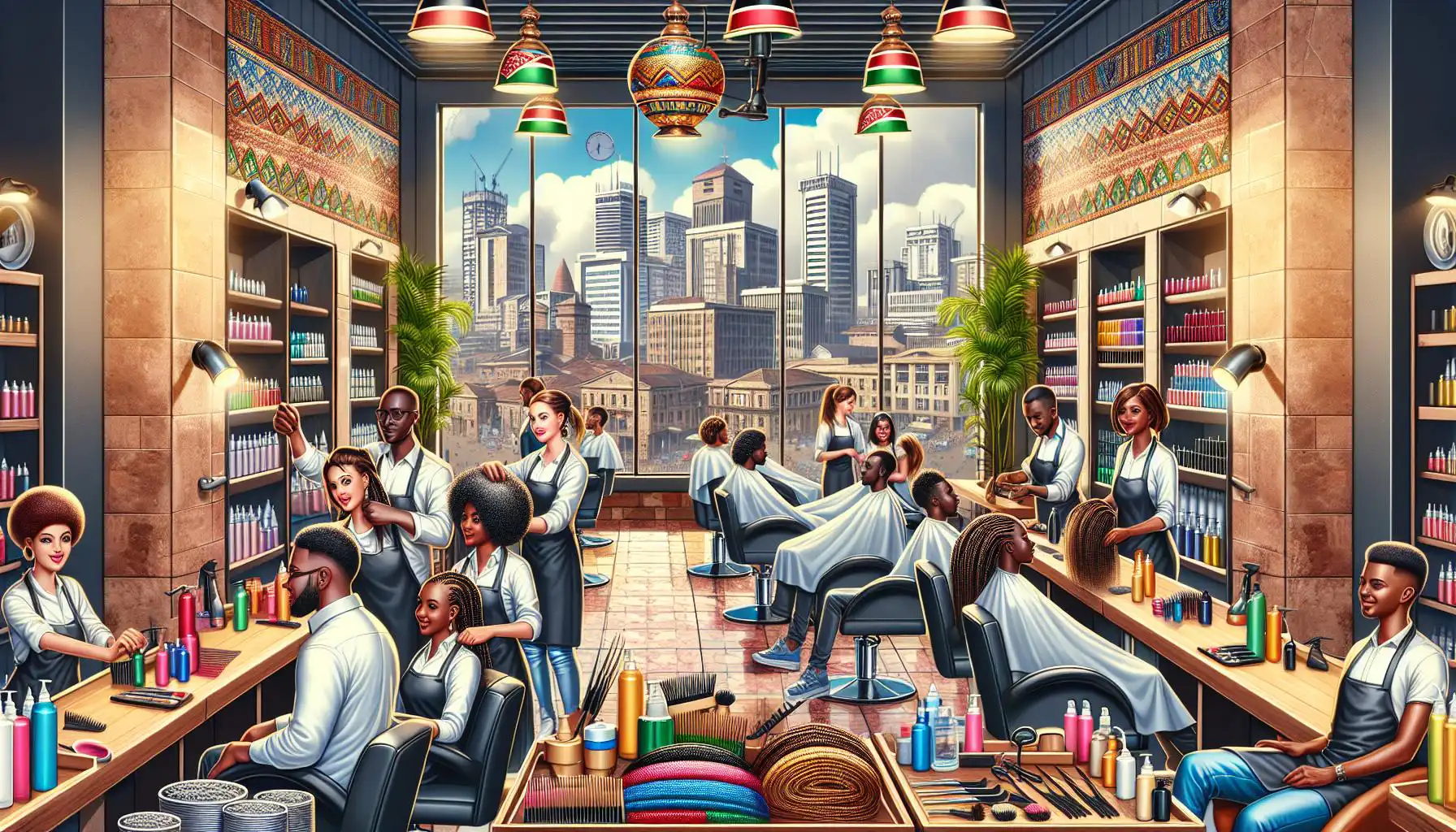
Starting a hair salon business in Kenya might seem daunting, but with the right guidance, it’s a dream you can turn into reality. I’ve been through the process, and I’m here to share my insights and tips to help you get started on the right foot.
Kenya’s beauty industry is booming, and there’s a clear demand for high-quality, professional hair services. Whether you’re a seasoned hairstylist looking to branch out on your own, or an entrepreneur seeking a promising business venture, a hair salon could be your ticket to success.
Research and Planning
If you’re keen on starting a hair salon business in Kenya, you can’t underestimate the importance of thorough research and careful planning. It’s what separates successful entrepreneurs from those who flounder in their endeavors. Let’s explore this in the following subsections.
Market Research
It’s essential to have an in-depth understanding of the Kenyan beauty industry’s current landscape, primarily focusing on the hair salon sector. Keeping this in mind, consider these key elements:
- Competitor analysis: Identify your potential competitors—both major players and small businesses. What kind of services do they offer? What’s their pricing structure? How do they engage their clientele?
- Customer Analysis: Understand the needs and preferences of your target customers. Are they looking for premium, high-end services or are they more focused on affordability? What hairstyles are popular among Kenyans? Do they prefer using natural hair products, for instance? A comprehensive customer analysis can help you develop a unique value proposition that stands out.
- Industry Trends. Kenya’s beauty industry is burgeoning, and staying up-to-date with the latest trends can make a difference in longevity. New styles, techniques, or products—these are things you should have your fingers on the pulse of.
Once you’ve gathered this information, you’re better positioned to carve your niche within the market.
Business Plan
After the market research, it’s time to develop a robust business plan. It’s your roadmap and a reflective tool allowing you to refine your business concept. Important components include:
- Executive Summary: A brief overview of your business—what it is and why it will be profitable.
- Company Description: A deeper look into your company. Discuss your services, clientele, and why your business stands out.
- Marketing and Sales Strategy: How will you attract and retain customers? Discuss your branding, marketing plan, and sales strategy.
- Financial Projections: Offer a forecast of your business’s financial health. Project expenses against anticipated revenue over a three to five-year period.
This business plan is your guiding light, helping you navigate through the murky waters of entrepreneurship.
Location Selection
Choosing the right location for your hair salon is crucial. It should be accessible, visible, and capable of attracting the right clientele. Consider demographics, proximity to complementary businesses, rental costs, and the overall potential for growth in your chosen area.
Consider the above parameters, and you’ll be on your way to selecting a location that fosters your salon’s growth and profitability.
In your pursuit of venturing into the promising venture of hair salon business in Kenya, thoroughly researched steps and well-planned strategies are your building blocks to success.
Legal Requirements
As we navigate through the steps of starting a hair salon, it’s essential to underscore the legal requirements. This section won’t only help you stay within the confines of the law but also lay a firm foundation for your venture. There’s a wide range of regulations you’ll have to comply with, some of which include business registration and obtaining necessary licences and permits.
Business Registration
Your first port of call is to register your salon business with The Registrar of Companies in Kenya. Business registration is a crucial step because it gives your enterprise legal recognition. Registering a business is relatively straightforward in Kenya. I’d recommend going for a Limited Liability Company (LLC) because it separates your personal assets from your business assets. An LLC serves to protect your personal belongings in case of any legal suits against your salon.
Licenses and Permits
Once your salon is registered successfully, the next legal hurdle to conquer is obtaining the mandatory licensing and permits. These tools legitimise your operations and failures to acquire crucial licenses result in heavy penalties, or even shutting down of the business. There are several licenses required, but the main ones include:
- Single Business Permit: It’s a legal requirement for all businesses in Kenya. You can acquire it from the county government offices based on your location.
- National Environmental Management Authority (NEMA) License: Since salons deal with numerous chemicals, this permit is vital. It ensures your business does not harm the environment.
- Kenyatta National Hospital Dermatology Clinic Permit: This permit verifies your salon abides by the set Kenya Bureau Standards (KEBS).
By obeying these legal requirements, you’re well on your way to setting up a successful hair salon business in Kenya! Stay tuned as we delve even deeper into lucrative insight and impeccable strategies for establishing your salon empire.
Set Up Your Salon
Now that we’ve navigated the legal labyrinth, it’s time to focus on setting up your salon. This is where the magic happens – and where your professionalism and style can truly shine. Creating the ideal environment for your salon is key in attracting and keeping clients. Let’s break down the elements of setting up your salon into two main areas: Design and Decor, and Equipment and Supplies.
Design and Decor
The first thing a client sees when they walk into your salon is its overall design and decor. Your salon’s ambiance can significantly impact client perception and, in turn, your bottom line. You’ve got to strike the right balance between comfort, style, and functionality. Opt for stylish but comfortable chairs and sofas, use soothing colors, and ensure adequate lighting.
Remember that your wall art, magazines, and even the music playing in the background should match the overall style you’re going for. Try to create a vibe that sets you apart from other salons. You may also want to consider investing in a professional interior designer – their experience could help you avoid costly mistakes and create a space that truly reflects your brand.
Equipment and Supplies
Your salon wouldn’t be complete without the right equipment and supplies. This includes, but is certainly not limited to, hair dryers, scissors, combs, shampoos, conditioners and hair styling products, among others. It may seem a daunting task to compile a complete list of everything you’ll need, but many supplier websites offer pre-compiled ‘start-up’ packages that can help guide your purchases.
At the same time, it’s important to remember that equipment and supplies are an area where quality should never be compromised. Investing in high-quality, professional-grade equipment not only lasts longer but also ensures the best results for your clients. As such, while it might be tempting to skimp in this area to save costs short term, it could hurt your business in the long run.
What’s more, proper storage of your equipment and supplies should not be overlooked. Ensure there’s enough space in your salon to store equipment and products safely and hygienically. This not only ensures that tools are always ready to use but also enhances the overall professionalism of your salon.
Hiring and Training Staff
After delving the process of setting up a salon and ensuring it’s a welcoming environment, the next essential step I’ll address is hiring and training the staff effectively.
Recruitment Process
Your salon’s success significantly depends on the skilled and passionate team you assemble. It’s not enough to have a beautiful establishment if you don’t have great staff members to match. Your employees are the ones who interact directly with the clients, and their proficiency in their jobs can make or break your salon.
Start the recruitment process by identifying what roles you need to fill. Hair stylists, managers, receptionists, and janitors are among the basic staff needed in a salon.
You’ll need to write job descriptions for each role, ensuring that the skills, experience, and qualifications required are clearly outlined. These postings should be advertised on job boards, social media, and any other platform you think potential candidates might frequent.
Furthermore, conducting in person interviews not only allows you to assess the professional abilities of a candidate but also their interpersonal skills. Remember, your staff needs to possess excellent customer service skills since they’ll be interacting with clients on a daily basis.
Training Programs
In the dynamic, creative, and service-oriented world of salons, your employees need to keep improving and learning continually. Regardless of how experienced your new hires are, there’s always room for improvement.
There exist numerous training options. One popular approach is partnering with professional development programs, which offer courses in different areas of the beauty industry. You can also organize in-house training seminars where your team can learn about new styling techniques, salon best practices, and customer service etiquette among others.
All training sessions should be documented and employees should have a record of all the qualifications they gain over time. Not only does this instill a sense of achievement in your employees, but it also demonstrates to your customers that highly trained professionals are servicing them.
As I have spotlighted, creating a talented, smart and professional staff is achievable with a solid recruitment process and ongoing professional development opportunities. It is evident that having a strong team not only attracts clients but also helps retain them.
Marketing Strategies
Once I’ve got the right team on board and everyone’s up-to-date with the latest beauty techniques, it’s time to turn my attention to marketing. It doesn’t matter how fantastic my services are – if nobody knows about my salon, all that hard work will be for nothing. Here, I’ll delve into some key strategies to get my salon’s name out there in the Kenyan market, attracting a steady flow of clients both new and loyal.
Online Presence
In this digital age, a strong online presence is a must for any business. For a hair salon in Kenya, it’s no different. The Internet offers an unparalleled opportunity to communicate with potential clients and showcase my salon’s unique selling points.
I’ll start by creating a professional, easy-to-navigate website replete with attractive photos of my salon, the services we offer, as well as our team’s profiles. This site is my business card to the world. I’ll make certain each page is primed with the right search keywords, allowing my salon to climb Google’s all-important rankings.
Social media platforms also can’t be overlooked. They’re where I’ll interact with clients, reply to their questions, and keep them informed about any promotions. I’ll join Facebook, Instagram, and Twitter. Regularly posting updates, engaging content, and stellar before-and-after hair photos to catch people’s attention is my plan. On Instagram and Facebook, I’m also considering running sponsored ads targeting potential clients in the local area.
These platforms additionally facilitate reviews and feedback from clients. Positive reviews play a huge role in attracting new clients. In fact, according to BrightLocal, 82% of consumers pay close attention to online reviews when choosing a local business. It’s clear to me; I can use these reviews as powerful marketing tools to promote my salon.
Local Advertising
While online marketing is key, I won’t forget the power of local advertising. Distributing flyers and posters in the local community, advertising in print media like local newspapers and magazines, even sponsoring local events, are all traditional strategies that I believe still have a place in today’s digital world.
Being part of community events is indeed a powerful tactic. It helps me build relationships with people in the area and raises awareness about my salon. Furthermore, by sponsoring local events, I can demonstrate my commitment to the community and further cement my salon’s image as a trusted and reliable local business.
An oversized banner on the salon’s façade to lure passers-by can’t be underestimated either. Coming across a bold, catchy sign can often be the nudge people need to book their next haircut or styling session at a new salon.
My main aim is to ensure my hair salon is on the tip of everyone’s tongue, be it through online buzz or local chatter. The combination of these innovative digital strategies and the reliability of traditional advertising makes my salon a place people can’t wait to visit. That’s my goal.
Financial Management
It’s clear that launching a hair salon business in Kenya isn’t just about cutting and styling hair. It’s about smart marketing, both online and offline. You’ve got to establish a strong digital footprint while also making your mark in the local community. Remember to harness the power of SEO and social media engagement, and don’t underestimate the impact of traditional advertising methods. Keep those flyers flying and the banners high. And let’s not forget about the importance of online reviews. Your salon’s reputation can be built or broken by these virtual word-of-mouth referrals. So, strive for excellence in all you do, and your salon will not only survive but thrive in the competitive Kenyan market. Here’s to your success!