


Africa’s rich tapestry of cultures and nations has long been a focal point for global powers. The continent’s history is marked by periods of colonization that have shaped its modern landscape. I’m diving into this fascinating subject, shedding light on the list of colonized countries on the African continent.
From the 15th to the 20th century, Africa witnessed an influx of European powers on its soil. This era, often referred to as the ‘Scramble for Africa’, saw countries like Britain, France, and Portugal, to name a few, stake their claim. I’ll be exploring these historical events and their impact on the countries involved.
Stay tuned as I delve into the intriguing past of these African nations. Their stories of colonization, resistance, and eventual independence are not just historical facts but lessons that resonate even today. This is more than just a list, it’s a journey through time.
Countries Colonized in North Africa
To venture further into our discussion on the colonization of Africa, let’s shine a light on North Africa. It’s an area with a rich historical tapestry, deeply impacted by European colonial powers. Here, I’ll be highlighting the experiences of countries like Algeria, Egypt, Morocco, and Tunisia during the colonial era.
Algeria
Algeria, known for its diverse culture and scenic vistas, was no exception to the colonial conquest. It became a French colony in 1830, eventually shaking off these chains of subjugation in 1962. The French colonization had a profound impact on Algeria’s socio-economic dynamics. It’s important to note that this era was characterized by a staunch resistance from the Algerian populace, forging an indomitable spirit that continues to echo in present-day Algeria.
Egypt
Egypt has been a cradle of civilization, with a history dating back millennia. The modern colonial history of Egypt is essentially a narrative of British rule. The country came under British control in 1882, albeit as a protectorate, and maintained this status until achieving independence in 1952. This period deeply affected Egypt’s political and economic systems, and some vestiges of the British influence still remain.
Morocco
Despite the resilience portrayed by Moroccans, the country was colonized by both France and Spain in 1912. Under the treaty of Fez, France became the dominant colonial power while Spain controlled certain coastal regions. Morocco endured such shared control until gaining independence in 1956. These colonial influences still permeate Morocco’s structure, with French remaining a widely spoken language.
Tunisia
Tunisia, renowned for its enchanting landscapes and historical sites, fell under French colonization in 1881 and attained independence in 1956. The French left an indelible mark on Tunisia’s societal fabric and administrative systems. Today, the legacy of its colonial past subtly exists within its societal layout, bearing testament to this era.
In our subsequent sections, we’ll continue our engaging journey through the chronicles of colonization, hopping from one African region to another. We take this opportunity not merely to delve into historical events, but also to understand their causes, consequences, and ongoing influence.
Countries Colonized in West Africa
Moving on from North Africa, let’s look at colonization in the Western region of this extensive continent. A focal point of the European powers, West Africa experienced distinct sequences of colonial rule.
Nigeria
Nigeria, abundantly rich in resources, particularly oil, was colonized by Britain in 1885. With a multiplicity of ethnic groups and languages, it was a complex territory to govern. Britain implemented a system of indirect rule leveraging traditional local leaders, to control Nigeria effectively. This system left a lasting legacy, shaping the political structure of the post-colonial country. Nigeria finally claimed independence in 1960 but the colonial imprint on its societal and governmental fabric remains undeniably prevalent.
Ghana
Once known as the Gold Coast, Ghana was a hotbed for European empires due to its wealth in gold resources. Portugal first made its mark followed by the Dutch, the Danes, and finally, the British. The British were the ones to consolidate power and form the Gold Coast Colony, prevalently exploiting the valuable resources. Resistance was met, culminating in the country’s independence in 1957. Now, Ghana is an emblem of pan-African aspirations and post-colonial success.
Senegal
Senegal, a significant part of French West Africa, fell under the French’s colonization in the 19th century. Like their British counterparts, the French also exploited local resources. They introduced the policy of assimilation, aiming to transform African subjects into French citizens. Upon gaining independence in 1960, Senegal maintained strong ties with France. This relationship continues to impact Senegal’s economic and political interactions today.
Sierra Leone
Despite a Portuguese visit in the 15th century, Sierra Leone was later colonized by the British in the 19th century. The British initially established it as a home for freed slaves resulting in a unique Krio culture. Post independence in 1961, Sierra Leone still grapples with past issues of colonial legacy, civil war, and resource conflicts.
In the next section, we’ll dive deeper into South Africa’s experience of colonization. A unique case, where not just one but two colonial powers were involved, eventually leading to the notorious apartheid era. But that’s a conversation for another time! Remember, history is a journey, not a destination.
Countries Colonized in East Africa
Moving eastward, European expansion took hold in an area known as East Africa. Rich in history, culture and natural resources, this region presented an irresistible target for colonial powers like Britain, Germany and Belgium. We’ll follow our journey with a close look at several East African nations – namely, Kenya, Tanzania, Uganda, and Rwanda.
Kenya
Kenya’s colonial history begins with Germany, which claimed it as a protectorate in the 1880s. However, by 1890, the British took control. They established the East Africa Protectorate, and by 1920, it became the Crown Colony of Kenya. The British exerted their power through indirect rule, influencing the local sociopolitical structure. They also carried out a policy of “divide and rule,” which intensified tribal divisions, the effects of which still echo today in Kenya’s political landscape.
Tanzania
Dominating what we now know as Tanzania were the Germans. Established in the late 19th century as part of German East Africa, the area fell under British administration after Germany’s defeat in World War I. During their rule, the British focused on developing the agricultural sector for export, causing a shift from a subsistence to cash crop economy. This change had a profound effect on the socioeconomic standing of farmers and local communities.
Uganda
Uganda fell into British hands in 1894. Unlike Kenya and Tanzania, the native Baganda Kingdom retained significant power and influence during the colonial period due to its alliance with the British. The relationship benefited both sides – protection and privileged status for the Bagandas, and a backbone of administrative control for the British. This arrangement, however, bred resentment from other tribal groups, creating rifts that persist to this day.
Rwanda
Lastly, let’s discuss Rwanda. The Germans colonized Rwanda as part of their East African holdings until the end of World War I. From thereon, the Belgians took over under a League of Nations mandate. They subjected the Tutsi minority to preferential treatment while marginalizing the Hutu majority, a practice that would lay the ground for future ethnic tension.
As we wind down with East Africa, our narrative will transition into the southern part of the continent. There, we’ll shed light on the varied experiences and impacts of colonization. South Africa, with its unique history of double colonization and apartheid, merits a special mention.
Countries Colonized in Central Africa
Continuing our examination across the diverse landscapes of colonized Africa, we’ll now turn our spotlight to Central Africa. This region saw a dramatic transformation under the rule of foreign powers, permanently shaping the political, economic, and social fabric of nations like the Democratic Republic of the Congo, Cameroon, and Gabon. Like in East Africa, these alterations continue to reverberate today.
Democratic Republic of the Congo
The Democratic Republic of the Congo, originally referred to as the Congo Free State, was first established as a private colony of King Leopold II of Belgium. The establishment of the monarch’s brutal rule in 1885 led to significant human rights abuses and economic exploitation.
Under Leopold’s rule, the extraction of rubber and other natural resources became priority, often at the tremendous cost of the local population’s well-being. It’s estimated that nearly 5 million Congolese lost their lives due to forced labor, abuse, and the spread of diseases during this period.
Despite being transferred to the Belgian state in 1908, the legacy of Leopold’s reign cast a long, dark shadow over the Congo’s societal fabric.
Cameroon
As with many African nations, Cameroon also endured a complex period of colonization. Initially, the Germans took control in the late 19th century, bringing with them new farming techniques that catalyzed the rise of large-scale plantations. Unfortunately, this also led to forced labor and harsh working conditions for many Cameroonians.
With the Germans’ expulsion after World War I, Cameroon found itself split between French and British administrators. These two differing colonial practices nurtured distinct cultural norms, languages, and administrative structures in their respective zones — a split that influences Cameroon’s socio-political climate to this day.
Gabon
Gabon, one of Africa’s least densely populated countries, fell under French dominion from the late 19th century right up until 1960. Despite its lower profile within the scramble for Africa, Gabon’s colonial experience saw extensive resource extraction, particularly timber and later oil.
French rule in Gabon encouraged the growth of a cash economy, transforming the country’s economic structure. This change continues to have profound impacts, with oil production becoming integral to Gabon’s economy post-independence.
Now that we’ve taken a closer look at Central Africa’s colonial past, our narrative journey takes us to the southernmost region on the African continent — Southern Africa. A region with a unique narrative, it offers us profound stories of resistance and turmoil, as we’ll soon discover.
Countries Colonized in Southern Africa
Descending into the southernmost part of Africa, we plunge into three iconic countries. Each with a divergent yet gripping narrative of colonization. Their unique histories reflect not just in their past, but also in their present identity, culture, and economics. Let’s explore South Africa, Zimbabwe, and Namibia.
South Africa
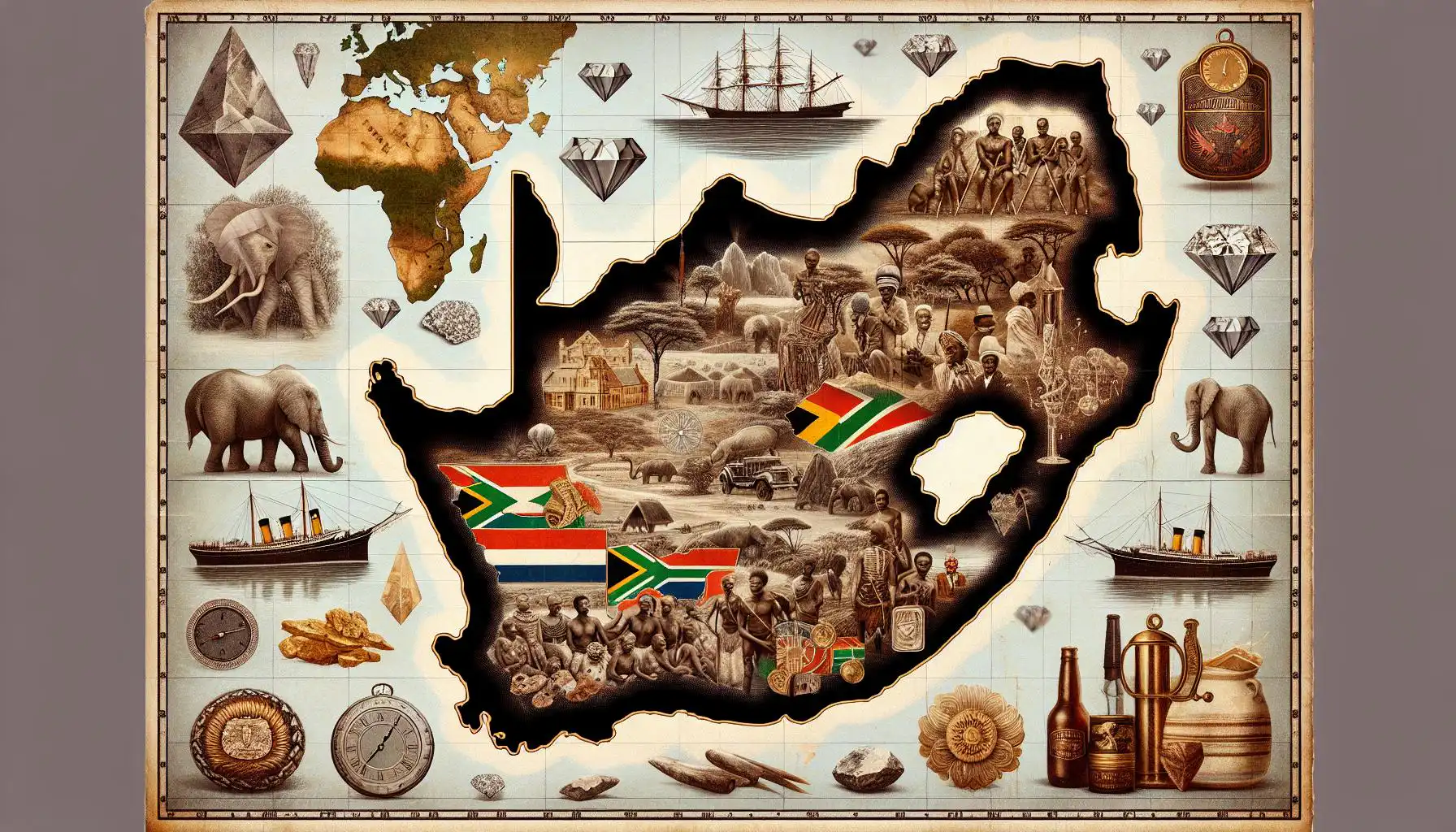
Riddled with a complicated yet enlightening history, South Africa got its first taste of European intervention with the Dutch East India Company in 1652. They emerged as a crucial stopover point for the Dutch spice route to the East Indies. The indigenous peoples of the region, the Khoi-San, bore the brunt of forced labor and land dispossession.
However, the real upheaval came with the discovery of diamonds in 1867 and gold in 1886. These lands brimmed with precious resources, leading to the infamous Boer War. Afrikaans-speaking Dutch settlers (Boers) and the British Empire were pulled into a contest for control.
Zimbabwe
Next, we travel to the heart of Southern Africa, Zimbabwe, a land known for its impressive stone structures. Zimbabwe, formerly known as Southern Rhodesia, felt the impact of colonization with Cecil Rhodes’ British South Africa Company in the late 1800s.
The company lured by minerals and gold, ruthlessly exploited the local population. Land expropriation and imposed taxes forced locals into wage labor. The political and social fallout from these events continue to shape Zimbabwe today.
Namibia
Our journey ends in Namibia, a German colony from 1884 until World War I, when South Africa claimed the territory. Initial German colonization was marked by land seizures, racial segregation, enforced labor, and most notably, the Herero genocide.
In 1904, the Herero people’s rebellions were brutally suppressed, leading to what’s considered the 20th century’s first genocide. Namibia’s struggle for independence was a long, hard-fought one, finally achieving sovereignty in 1990.
It’s evident that the footprint of colonial rule runs deep in these nations. The effects are interwoven into the fabric of the societies and continue to resonate within their economics and politics. Let’s proceed further into exploring the historical and current impacts of this colonization.
Who colonized South Africa?
South Africa was colonized by the Dutch in 1652, leading to forced labor and dispossession of the Khoi-San people’s lands.
What valuable resources led to conflicts in South Africa?
Conflicts in South Africa were instigated by disputes over valuable resources such as diamonds and gold.
What influenced the current political and social landscape of Zimbabwe?
Zimbabwe’s current political and social landscape was influenced by exploitation from Cecil Rhodes’ British South Africa Company.
What was the initial colonial power in Namibia?
Namibia was initially a colony of Germany, during which there were widespread land seizures and the Herero genocide.
How did Namibia gain its independence?
Namibia gained its independence in 1990 after a long struggle against colonial powers.
What are some impacts of colonialism on Southern African nations?
Colonialism has deeply influenced the societies, economies, and politics of Southern African nations such as South Africa, Zimbabwe, and Namibia.