


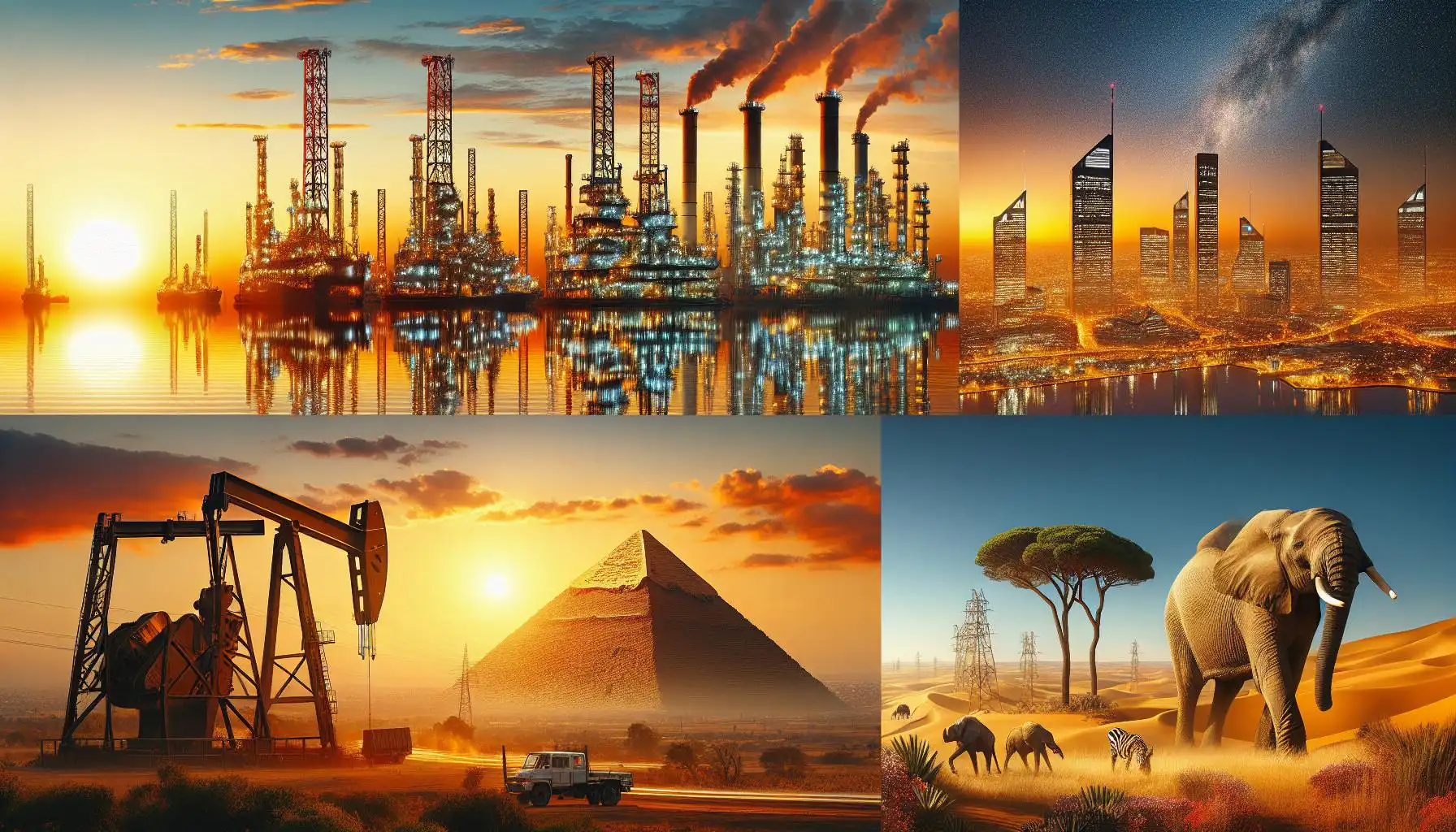
Africa, often dubbed the ‘cradle of civilization’, isn’t just rich in culture and history, but also in wealth. While it’s often misunderstood as a continent riddled with poverty, there’s more to Africa than meets the eye.
Home to 54 countries, Africa boasts a diverse range of economies. Some of these nations have GDPs that rival those of developed countries. Let’s delve into the wealth of the richest countries in Africa, showcasing the economic powerhouses of this vibrant continent.
From oil-rich nations to those with booming tourism industries, Africa’s richest countries are a testament to the continent’s economic potential. Stay tuned as we explore these prosperous nations, their economic strengths, and how they’re shaping Africa’s future.
Overview of Africa’s Economy
Gross Domestic Product (GDP) in Africa
When you look at Africa’s economic landscape through the lens of Gross Domestic Product (GDP), the diversity becomes evident. The total GDP of Africa is in excess of $2.6 trillion which is indicative of the continent’s potential. This GDP figure can be further dissected to understand the distribution across different African countries. Five nations — Nigeria, South Africa, Egypt, Algeria, and Morocco — hold the lion’s share of the continent’s GDP. In fact, these economies combined account for about 60% of Africa’s total GDP.
However, it’s not all about size. Small nations like Seychelles and Equatorial Guinea, though their economies are tiny compared to giants like Nigeria and South Africa, still pack a mighty punch in terms of GDP per capita. The assets and wealth in these countries are distributed among a relatively small population, yielding a high GDP per capita and, consequently, a high standard of living.
Economic Sectors in Africa
There’s more to Africa’s wealth than just GDP and GDP per capita. A closer look at the economic sectors in various African countries reveals where this wealth is coming from. From tourism to tech and from petroleum to precious metals, every country in Africa boasts its own unique mix of economic sectors.
Nigeria, for example, is a major player in the global oil market. Its economy, being the largest in Africa, is heavily dependent on oil, which accounts for over 90% of its export earnings.
On the flip side, South Africa — the continent’s second-largest economy — draws its wealth from a notably diversified economic base. Its economic sectors include mining, agriculture, finance, real estate, and tourism, among others. Particularly noteworthy is the mining industry, accounting for a significant part of the nation’s wealth.
Morocco and Egypt, on the other hand, are capitalizing on their geographic locations and rich histories. Their thriving tourism industries contribute a substantial portion towards their respective GDPs. From ancient pyramids in Egypt to exotic bazaars in Morocco, these two nations attract millions of tourists every year, racking up billions in tourism revenue.
Factors Influencing Wealth in African Countries
Exploring the richness of Africa requires a detailed understanding of the factors influencing wealth distribution across different nations. The wealth of African countries is primarily influenced by the availability of natural resources, political stability, and foreign investments.
Natural Resources
Let’s kick things off with Natural Resources, shall we? It’s no secret that the economic backbone of many African countries lies in their abundant mineral and natural resources. Take Nigeria for example. It’s the largest oil producer in Africa and the 13th largest in the world, significantly contributing to its GDP. But their dependency on oil revenue has been a double-edged sword. Fluctuating global oil prices can send ripples through Nigeria’s economy, leading to stability issues.
On the other hand, South Africa flaunts a more diversified economy, reaping benefits from gold, diamonds, and platinum along with a well-developed manufacturing sector. This variety of resources gives South Africa a certain resilience that’s reflected in their GDP.
Political Stability
Moving on to Political Stability, it’s a key factor that can either make or break a nation’s economic progress. Political stability not only instills confidence in the citizens but also influences international trust, making the country an attractive prospect for trade and investment. For instance, Botswana – often hailed as one of Africa’s most stable democracies – has successfully combined its political stability with the lucrative diamond trade, resulting in commendable economic growth.
However, constant civil unrest, conflict, and corruption in many African nations stand as formidable barriers to economic prosperity. These problems deter foreign investors, impede infrastructural development, and cause forced migration, all of which can destabilize an economy.
Foreign Investments
Lastly, Foreign Investments play a monumental role in shaping the wealth of African countries. Foreign investments can boost the local economy by providing capital for new industries, job creation, and technology advancement.
Egypt and Morocco boast of substantial revenues from their thriving tourism industries, which attract significant foreign investments. Whereas, smaller nations like Seychelles and Equatorial Guinea leverage their natural beauty and limited population to lure foreign funds, enabling them to boast high GDPs per capita despite their small size.
While foreign investments can stimulate economic growth, it’s vital for countries to maintain a balance to avoid over-reliance or exploitation.
Overall, the interplay of natural resources, political stability, and foreign investments creates a complex and fascinating landscape of wealth distribution across Africa.
Top 5 Richest Countries in Africa
Nigeria
Dominated by the oil and gas industry, Nigeria stands as the richest country in Africa. Holding the top slot, Nigeria’s wealth comes predominantly from its massive oil reserves. With over 37 billion barrels of oil reserves, it’s the largest producer in Africa and 12th largest globally. However, leaning heavily on oil has had mixed results. While fuelling considerable wealth, it’s also led to economic instability due to fluctuating global oil prices.
South Africa
South Africa’s resilient economy, built on a diversified range of resources, puts it firmly in second place. Mining forms a significant chunk of this wealth, with the country highlighted for its vast quantities of gold, diamonds, and platinum. But it’s not just about raw materials. South Africa also boasts a robust service sector and a burgeoning tech industry, providing a more stable and varied income stream than resource-dependent countries.
Egypt
Egypt’s wealth is built primarily from sectors like tourism, agriculture, and industries. Tourism, being a significant contributor, has seen strong recoveries after periods of instability, highlighting a significant inflow of foreign investment. The ancient history, stunning architecture, and favourable climate have kept Egypt high on the global tourism map. Additionally, the Suez Canal provides an essential trade route, adding to Egypt’s wealth.
Algeria
While Algeria is a country rich in minerals and oil, the government has enacted policies to diversify the economy. From telecoms to tourism, Algeria is taking bold strides in reducing its reliance on oil revenue. However, the path to diversification has not been smooth. Despite the challenges, the nation still stands as one of the wealthiest in Africa.
Kenya
Rounding out the top five, Kenya’s wealth stems primarily from agriculture and services sector, which includes tourism. Kenya has been lauded for its entrepreneurial spirit, and it’s the innovation in mobile-based services like M-Pesa that underlines this fact. The thriving tourism industry, fueled by the country’s unique wildlife and beautiful landscapes, contributes significantly to Kenya’s overall wealth.
Frequently Asked Questions
1. Which is the richest country in Africa?
Nigeria takes the top spot as the richest country in Africa due to its vast oil reserves.
2. What is South Africa’s primary source of wealth?
South Africa’s wealth is diversified, spanning from mining and services to tech industries.
3. How does Egypt generate its wealth?
Egypt generates its wealth primarily from the tourism industry and agriculture, which also invites a significant amount of foreign investment.
4. What sets Algeria’s source of wealth and economic strategy apart from others?
Algeria is focusing on diversifying its economy beyond its current oil-dependency, demonstrating a unique economic strategy.
5. What are the primary sources of wealth for Kenya?
Kenya’s primary sources of wealth include agriculture, services, and tourism sectors. Moreover, Kenya showcases innovation in the mobile services industry.