


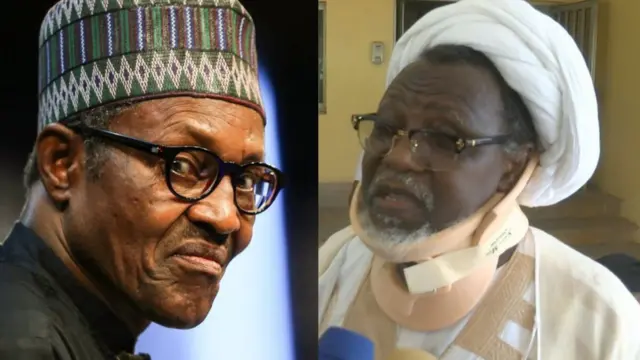
Ten years after the deadly clash between soldiers and members of the Islamic Movement in Nigeria (IMN), the group’s leader, Sheikh Ibraheem El-Zakzaky, has said that former President Muhammadu Buhari will “give account on the Day of Judgement” for the actions taken during the crisis.
The confrontation, which occurred in December 2015, started when IMN members blocked the convoy of then–Chief of Army Staff, Lt-Gen. Tukur Buratai, in Zaria, Kaduna State. What began as a brief standoff escalated into a violent military operation that led to the proscription of IMN.
Human Rights Watch reported that over 300 IMN members were killed and secretly buried, while a state-backed judicial commission later put the civilian death toll at more than 1,000.
El-Zakzaky and his wife, Zeenat, were arrested after the incident and remained in detention until a Kaduna High Court discharged and acquitted them in 2021.
Speaking at a press conference marking a decade since the incident, El-Zakzaky criticised both the Buhari government and succeeding administrations for failing to release the commission’s report or offer justice and compensation to victims’ families.
“Nothing has been done. They do not even acknowledge anything happened,” he said, noting that Buhari completed two terms without acting on the inquiry despite earlier assurances.
He added that the current administration, which also promised to address the matter, has remained “totally silent.”
When asked whether he had forgiven Buhari, El-Zakzaky responded:
“Buhari has passed away. We will meet on the Day of Judgement. The equation of Buhari is over.”
El-Zakzaky said the government does not need to be pressured to do what is right, insisting that authorities are aware of the “injustice.”
He also maintained that the massacre did not succeed in silencing the IMN. Instead, he said it amplified the movement globally, citing international demonstrations and advocacy following his arrest.
The IMN leader confirmed that the group has taken legal action internationally through the Islamic Human Rights Commission, saying:
“All the facts, pictures, videos, speeches are there. One day the court will look at it.”
El-Zakzaky added that despite restrictions on public gatherings, the movement’s activities will continue:
“If they don’t want to see us, they will still see us. If they don’t want to hear us, they will still hear us.”