
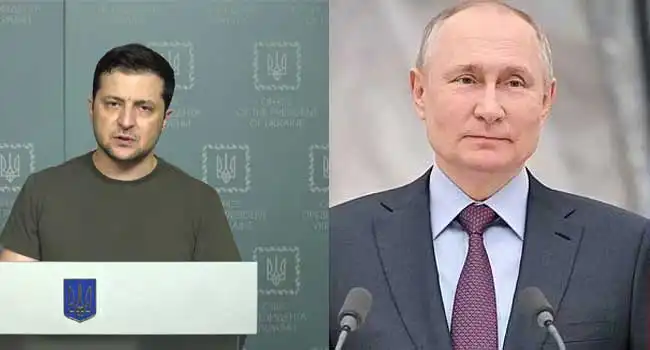
Tensions have risen sharply in the ongoing peace negotiations between Russia and Ukraine following claims that Ukraine attempted to attack President Putin’s state residence in the Novgorod region.
Lavrov alleged that Russian air defense systems intercepted and destroyed 91 long-range drones between December 28 and 29. Moscow has since described the alleged act as “state terrorism,” cautioning that such actions would provoke a response.
Although Russia has signaled that it will remain engaged in the current peace talks, Lavrov disclosed that Moscow’s negotiating stance is now under review as a result of the incident. Russian authorities also claimed that potential targets for retaliatory strikes have already been identified.
Ukraine, however, has rejected the allegations. President Volodymyr Zelenskyy dismissed the claims as false, arguing that Putin is using them as justification to carry out fresh attacks on government facilities in Kyiv.
Zelenskyy stressed that attention should be directed toward the diplomatic framework being shaped with international partners rather than what he described as Russian “misinformation.”
Despite the escalating rhetoric, discussions around a possible peace agreement have continued to emerge following Zelenskyy’s recent meeting with U.S. President Donald Trump at Mar-a-Lago. Reports indicate that the United States has proposed security guarantees lasting 15 years, though Zelenskyy has stated his preference for a 50-year commitment to better deter future Russian aggression.
Zelenskyy has also indicated that any final agreement would be subjected to a national referendum in Ukraine. Such a vote, he noted, would require a ceasefire lasting at least 60 days to ensure a credible and secure process.
Meanwhile, the conflict continues to take a heavy toll on the ground. General Valery Gerasimov, Russia’s Chief of the General Staff, claimed that Russian forces seized more than 6,400 square kilometers of Ukrainian territory in 2025.
President Putin has reiterated calls for the establishment of “buffer zones” along Russia’s borders to safeguard its territory, as international partners move toward formalizing their roles in a potential settlement.
French President Emmanuel Macron has announced that Ukraine’s allies will convene in Paris in early January to finalize their respective contributions to the proposed security guarantees.
With the fourth anniversary of the full-scale invasion set to be marked in February, negotiators are under mounting pressure to resolve difficult issues, including troop withdrawals and the future status of the Zaporizhzhia nuclear plant.