
President Bola Ahmed Tinubu has defended the economic reforms introduced by his administration over the last three years, insisting that the difficult decisions taken since 2023 were necessary to prevent Nigeria from sliding into a deeper fiscal and economic crisis.
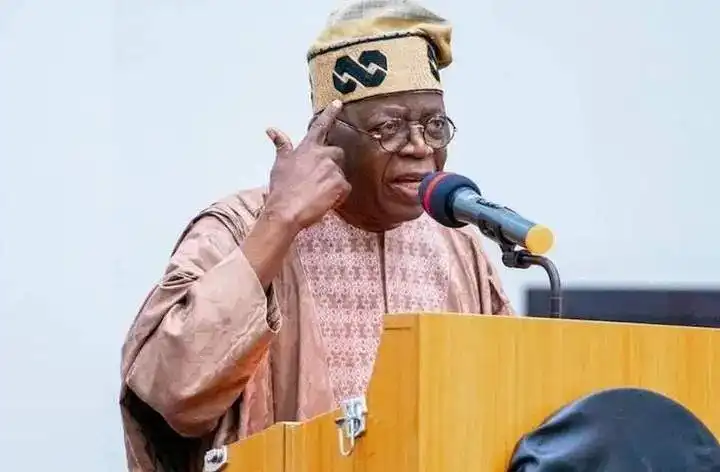
In a nationwide address marking the third anniversary of his administration, the President acknowledged the hardship experienced by millions of Nigerians following the removal of fuel subsidies and other economic reforms, but maintained that the country is now on a path toward recovery and long-term stability.
Tinubu said his government inherited an economy burdened by mounting debt obligations, declining revenues, multiple exchange rate distortions, fuel subsidy costs, insecurity, and weakening public confidence in national institutions.
According to him, continuing with previous policies would have pushed the country closer to fiscal breakdown and economic uncertainty.
“The easy choices would have been politically convenient. But leadership demands courage, especially when the right decisions are difficult,” the President stated while defending the reforms that have dominated his administration’s first term.
The President revealed that Nigeria was spending up to ₦18.4 billion daily on petrol subsidies before the policy was removed. At the same time, multiple exchange rate windows allegedly contributed to significant financial losses through arbitrage and speculative practices. He argued that redirecting those resources was necessary to fund infrastructure, education, healthcare, and other critical sectors.
Despite widespread criticism of the reforms, Tinubu claimed the economy has begun showing signs of improvement.
He pointed to growth in the Nigerian stock market, rising investor confidence, improved public finances, and increased revenues available to state and local governments as evidence that the reforms are yielding results.
The President also highlighted major infrastructure projects currently underway, including the Lagos-Calabar Coastal Highway, the Sokoto-Badagry Super Highway, the Abuja-Kaduna-Zaria-Kano Road, and sections of the East-West Road.
Beyond infrastructure, Tinubu emphasized developments in the energy sector, saying reforms have attracted fresh investment into oil and gas, improved local refining capacity, and strengthened domestic energy security.
He also reiterated his administration’s commitment to improving electricity supply through investments in transmission infrastructure, renewable energy, and power sector reforms.
The President highlighted interventions in education, agriculture, housing, healthcare, and telecommunications as part of efforts to improve living standards.
According to him, the Nigerian Education Loan Fund has provided access to higher education for more than 1.5 million students, while housing programmes under the Renewed Hope initiative are delivering thousands of housing units and creating jobs across the country. He also noted ongoing efforts to support farmers, expand healthcare coverage, and improve digital connectivity.
Addressing young Nigerians directly, Tinubu described the country’s youth population as the engine of future growth and promised continued investments in digital skills, innovation, technical education, entrepreneurship, and job creation.
On security, the President acknowledged that significant challenges remain but insisted progress is being made in the fight against terrorism, banditry, kidnapping, oil theft, and other forms of criminality.
He said the government continues to invest in intelligence gathering, surveillance systems, military capabilities, and interagency coordination to improve national security and restore confidence in affected communities.
While acknowledging that many Nigerians have yet to feel the benefits of the reforms fully, Tinubu urged citizens not to lose faith in the country.
“We have not solved every problem, and we are not yet where we want to be. But the foundation for recovery has been laid,” he said.
The President concluded with a call for national unity, urging Nigerians to reject division, remain hopeful, and work together toward building a more secure, prosperous, and inclusive nation.
As debates continue over the impact of the administration’s policies, Tinubu’s anniversary speech signals a determination to defend his reform agenda while asking Nigerians for more patience as the government seeks to translate economic adjustments into tangible improvements in daily life.