


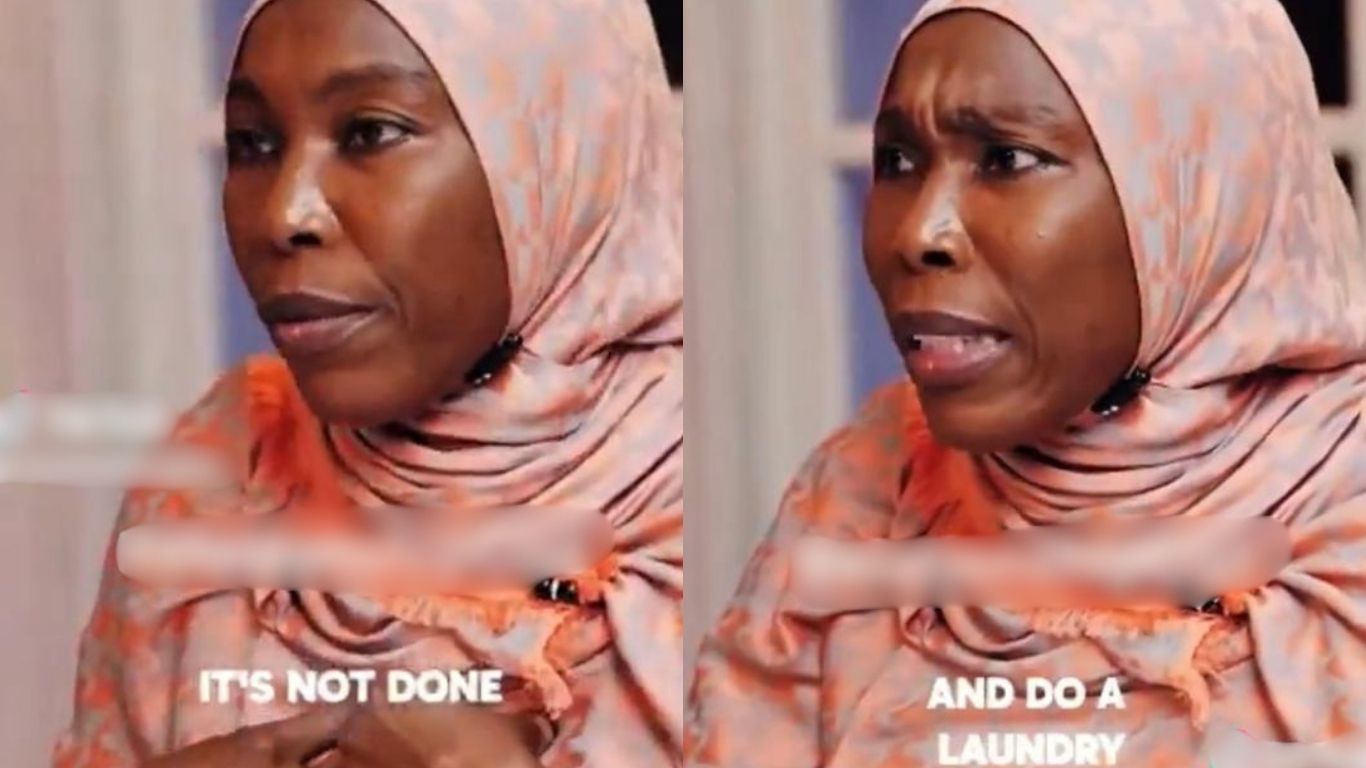
A Nigerian Muslim woman has become the centre of a social media debate after sharing her views on marriage, financial responsibilities, and the role of husbands and wives in the home.
The woman’s comments, captured in a video that has since gone viral on X (formerly Twitter), have divided opinions online, with supporters and critics offering sharply different perspectives on what marriage should look like in modern society.
In the widely circulated clip, she argued that a husband should bear full responsibility for providing for the family, regardless of whether his wife earns an income.
According to her, a wife’s earnings should remain exclusively hers and should not be considered part of the family’s financial obligations.
“My husband cannot say I should come and pay school fees with him. It’s not done. My money is my money. His money is for all of us. He has to provide everything,” she said.
The woman explained that her position is rooted in her understanding of Islamic teachings, which place the primary responsibility of financial provision on the husband.
Under traditional Islamic principles, a husband is generally expected to provide his family with necessities such as housing, food, clothing, and other essential needs. At the same time, a wife’s personal income remains under her control unless she voluntarily chooses to contribute.
Beyond finances, she also emphasised the importance of compatibility in marriage, particularly regarding social and economic backgrounds.
According to her, significant differences in upbringing can create challenges after marriage, especially when one partner is accustomed to a very different lifestyle.
“You can’t pick a child from Banana Island and take her to Agege. How will she survive?” she said.
“You can’t pick a child that has grown up with maids and chefs and everybody around, then ask her to come and do her laundry by herself.”
Her remarks quickly gained traction online, triggering discussions about gender roles, financial expectations, and evolving views of marriage among younger Nigerians.
Many social media users agreed with her interpretation of traditional family structures, arguing that a man should remain the primary provider regardless of his wife’s income level.
Supporters pointed out that financial provision has historically been viewed as a husband’s responsibility in many cultures and religious traditions.
Others, however, strongly disagreed.
Critics argued that modern economic realities have made dual-income households increasingly necessary, particularly amid rising living costs, inflation, and financial pressures facing many families.
Some commenters maintained that successful marriages thrive on partnership, teamwork, and shared responsibilities rather than rigid financial divisions.
The debate also highlighted broader conversations on social media about changing relationship expectations.
As more women pursue careers and achieve financial independence, questions about how couples should manage money, household duties, and family responsibilities have become recurring topics of discussion.
While some advocate traditional roles, others believe marriage works best when both partners contribute according to their circumstances and mutual agreements.
The viral video has therefore become more than just a discussion about money.
It has evolved into a wider conversation about culture, religion, class, gender expectations, and what modern marriage should look like in today’s society.
Whether people agree with her views or not, the woman’s comments have struck a nerve, drawing thousands of reactions and reigniting one of the most enduring debates surrounding relationships: who should be responsible for what once two people decide to build a life together?
As the discussion continues online, one thing is clear. Issues of money, expectations, and roles in marriage remain among the most passionately debated topics in Nigerian society today.