

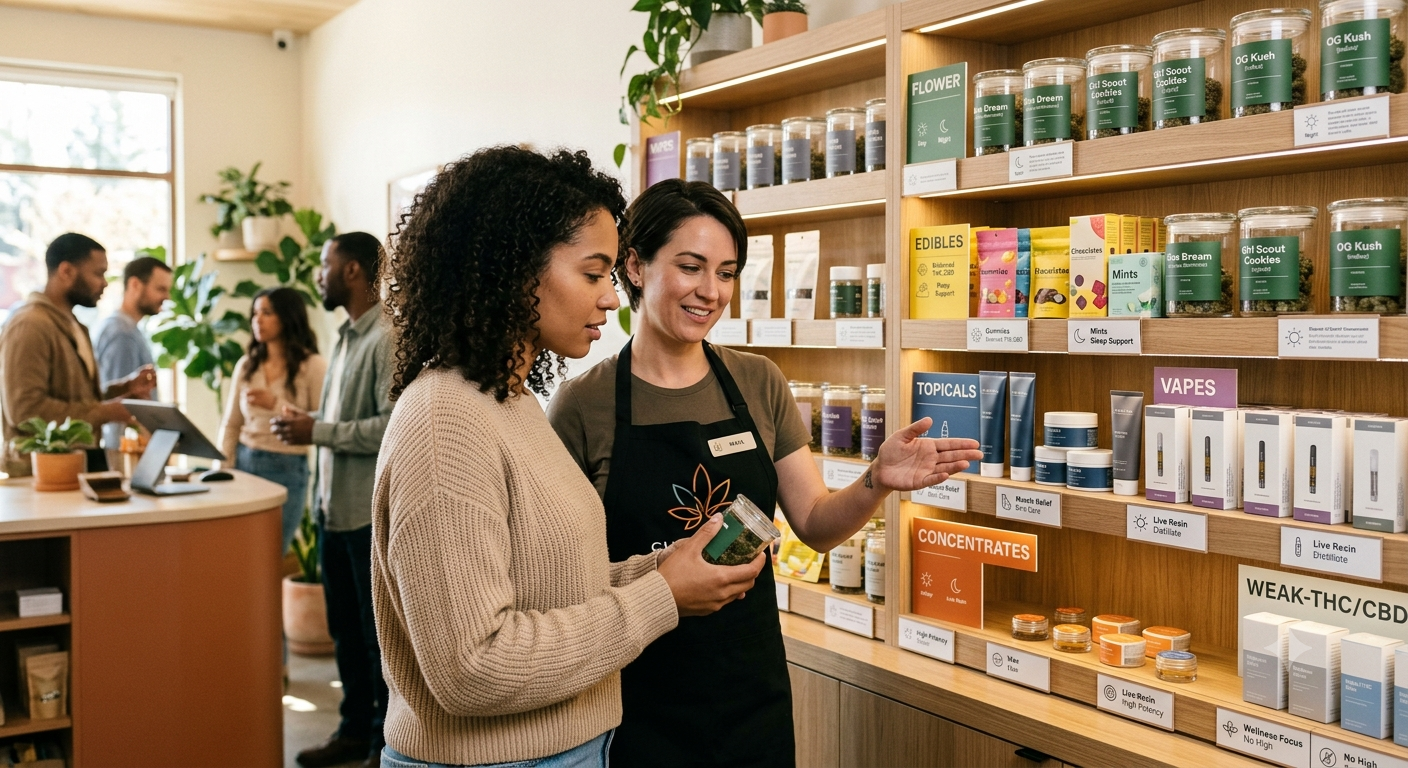
Walking into today’s cannabis market can feel overwhelming for curious buyers, especially those approaching cannabis from a wellness perspective rather than a recreational one.
The modern cannabis shelf looks very different from what many consumers expect. Instead of just a few flower strains or basic products, shoppers now encounter a wide range of categories including edibles, tinctures, concentrates, vape cartridges, capsules, beverages, topicals, CBD blends, and minor cannabinoid formulations. Packaging often includes terpene profiles, cannabinoid percentages, extraction methods, and strain descriptions that may feel confusing at first glance.
For wellness oriented consumers, this complexity can create hesitation. Many people are interested in exploring cannabis products for relaxation, balance, or lifestyle support but are unsure where to begin. Others worry about choosing products that feel too strong, inconsistent, or difficult to understand.
The good news is that modern cannabis shopping becomes much easier once buyers understand the purpose behind each category and how products are designed to fit different experiences.
Today’s cannabis industry is no longer centered only around potency. Instead, it has evolved into a far more sophisticated marketplace focused on personalization, convenience, and product diversity. Understanding the modern cannabis shelf allows consumers to make more informed decisions while avoiding the pressure to simply chase the strongest option available.
Cannabis Flower Still Remains the Foundation
Despite the rise of newer cannabis formats, flower remains one of the most widely used and recognizable product categories on dispensary shelves. Flower refers to the dried cannabis buds traditionally smoked or vaporized by consumers. For many wellness oriented users, flower appeals because it offers flexibility and relatively fast effects compared to some other formats.
Modern flower selections are often organized by strain types, terpene profiles, or intended effects rather than simply by THC percentage alone. Consumers may encounter labels describing products as calming, uplifting, balanced, or evening friendly. This reflects a growing understanding that cannabis experiences depend on more than potency numbers.
Experienced buyers frequently pay attention to freshness, aroma, terpene richness, and cultivation quality when evaluating flower products. A properly cured flower with moderate THC may provide a smoother and more enjoyable experience than a poorly handled product with extremely high potency.
Flower also allows consumers to control dosage more gradually, which is particularly valuable for newer or wellness focused users who prefer gentler experiences. Instead of committing to long lasting effects immediately, consumers can typically adjust intake more easily and better understand how different products affect them personally.
Edibles Appeal to Wellness Consumers Seeking Convenience
Edibles have become one of the fastest growing categories in modern cannabis. Gummies, chocolates, beverages, baked products, and mints now occupy significant shelf space because they offer a smoke free and highly approachable experience for many consumers.
Wellness oriented buyers often gravitate toward edibles because they feel discreet, convenient, and easy to integrate into evening routines or relaxation habits. Products with clearly labeled serving sizes also help consumers feel more comfortable controlling dosage.
However, edibles work differently from inhaled cannabis products. Effects usually take longer to appear because cannabinoids must pass through the digestive system first. For inexperienced consumers, this delayed onset can sometimes create confusion if additional servings are consumed too quickly.
Modern cannabis brands have responded by creating lower dose edible options that feel more manageable for casual or wellness focused consumers. Instead of only offering extremely potent products, many companies now emphasize balanced formulations designed for smoother and more predictable experiences.
CBD dominant edibles have also become increasingly popular among consumers who want relaxation support without strong psychoactive effects. This broader variety reflects the changing priorities of cannabis shoppers who often care more about functionality and comfort than extreme intensity.
Vape Products Focus on Speed and Simplicity
Vape cartridges and disposable vape devices have transformed cannabis convenience over the past several years. These products are popular among consumers looking for portability, discretion, and fast acting effects without the preparation associated with traditional flower.
For wellness oriented users, vape products can feel appealing because they are often easier to dose gradually. A small inhalation allows users to gauge effects relatively quickly before deciding whether more is needed. This level of control can reduce the uncertainty some newer buyers feel when trying cannabis products for the first time.
Modern vape shelves now include a wide variety of options, including full spectrum extracts, live resin cartridges, strain specific formulations, and balanced THC to CBD blends. Many experienced consumers prioritize products that preserve terpene profiles because they believe these compounds contribute heavily to overall experience quality.
At the same time, buyers are becoming more selective about transparency and ingredient quality within the vape category. Reputable brands increasingly provide lab testing and detailed product information because consumers now expect higher standards around safety and consistency.
Concentrates Are No Longer Just for Heavy Users
Concentrates are often misunderstood by newer cannabis buyers. While these products are typically more potent than traditional flower, the category itself has become much broader and more refined in recent years.
Modern concentrates include wax, shatter, rosin, resin, hash, and other extract based products designed to preserve cannabinoids and terpenes in concentrated forms. Historically, concentrates were associated mainly with highly experienced consumers seeking intense effects. Today, however, the category includes more nuanced products focused on flavor, terpene preservation, and specific experiences rather than raw strength alone.
Wellness oriented consumers may still approach concentrates cautiously, but some products are now marketed around craftsmanship and balanced experiences rather than simply maximizing THC levels. Solventless extracts, for example, have gained popularity among buyers interested in cleaner production methods and terpene rich profiles.
Understanding the concentrate category helps curious buyers recognize that modern cannabis products are increasingly diverse and specialized. Not every product is designed for maximum intensity, even within traditionally high potency categories.
CBD Products Have Expanded Beyond Basic Oils
CBD has become one of the most important drivers behind cannabis industry growth, especially among wellness consumers. While early CBD products mainly focused on tinctures and oils, today’s shelves include a much broader selection of formats designed for different lifestyles and preferences.
Consumers can now find CBD gummies, capsules, beverages, skincare products, vape formulations, and balanced cannabinoid blends alongside traditional tinctures. This expansion reflects the growing interest in flexible, approachable cannabis products that fit naturally into wellness routines.
Many consumers prefer CBD products because they are often associated with calmer and more manageable experiences compared to high THC products. Some users also combine CBD with THC to create a more balanced effect profile that feels smoother and easier to control.
As education improves, buyers are becoming more aware of distinctions between full spectrum, broad spectrum, and CBD isolate products. They are also paying closer attention to ingredient sourcing, third party testing, and brand transparency before making purchases.
The modern cannabis shelf now serves a much wider audience than in previous years. Products are increasingly designed not just for traditional cannabis users but also for wellness focused consumers exploring cannabinoids more intentionally.
Labels and Product Information Matter More Than Ever
One of the biggest changes in the cannabis industry is the amount of information now available directly on product packaging. Modern labels often include THC percentages, CBD content, terpene data, serving sizes, extraction methods, and recommended usage details.
For curious buyers, this information can initially feel intimidating, but it ultimately empowers better decision making. Instead of relying purely on guesswork or marketing language, consumers now have access to detailed product data that helps them compare options more thoughtfully.
Experienced shoppers often prioritize transparency over flashy branding. Clear labeling, consistent testing, and detailed cannabinoid information help build trust, particularly among wellness oriented consumers who value predictability and quality assurance.
The industry’s growing focus on education also reflects changing consumer behavior. Buyers today are more informed, more selective, and more interested in understanding how products fit into their routines rather than simply purchasing the strongest available option.
At Online Dispensary, this reflects the broader evolution of the cannabis market where consumers increasingly seek products that align with comfort, quality, and lifestyle compatibility rather than pure potency alone.
The Future of Cannabis Shopping Is Personalization
The modern cannabis shelf continues evolving rapidly because consumer expectations are changing. Buyers are no longer treated as one dimensional consumers seeking only stronger effects. Instead, the industry now recognizes that cannabis experiences are highly personal and influenced by individual goals, preferences, and comfort levels.
Some consumers want products for quiet evening relaxation. Others seek social experiences, balanced daytime use, or wellness focused routines. The growing variety of product categories allows buyers to personalize their cannabis experiences far more effectively than ever before.
This shift is helping cannabis become more approachable for curious consumers who may have previously felt intimidated by outdated stereotypes or potency driven marketing. Education, transparency, and product diversity are creating a more mature marketplace centered around informed decision making and overall experience quality.
FAQ
What is the easiest cannabis product type for beginners?
Many beginners start with low dose edibles, balanced CBD products, or moderate potency flower because these options often feel more approachable and manageable.
Why are terpenes important in cannabis products?
Terpenes contribute to aroma, flavor, and the overall experience. Many consumers believe they significantly influence how different products feel.
Are vape products stronger than flower?
Not always, but vape products can feel more concentrated because cannabis extracts are used. Effects also tend to appear quickly after inhalation.
What does full spectrum CBD mean?
Full spectrum CBD products contain multiple cannabinoids and plant compounds rather than isolated CBD alone, which some users prefer for a more balanced experience.
Why are consumers paying more attention to product labels?
Modern labels provide information about cannabinoids, terpene profiles, serving sizes, and testing results, helping buyers make more informed and personalized choices.