


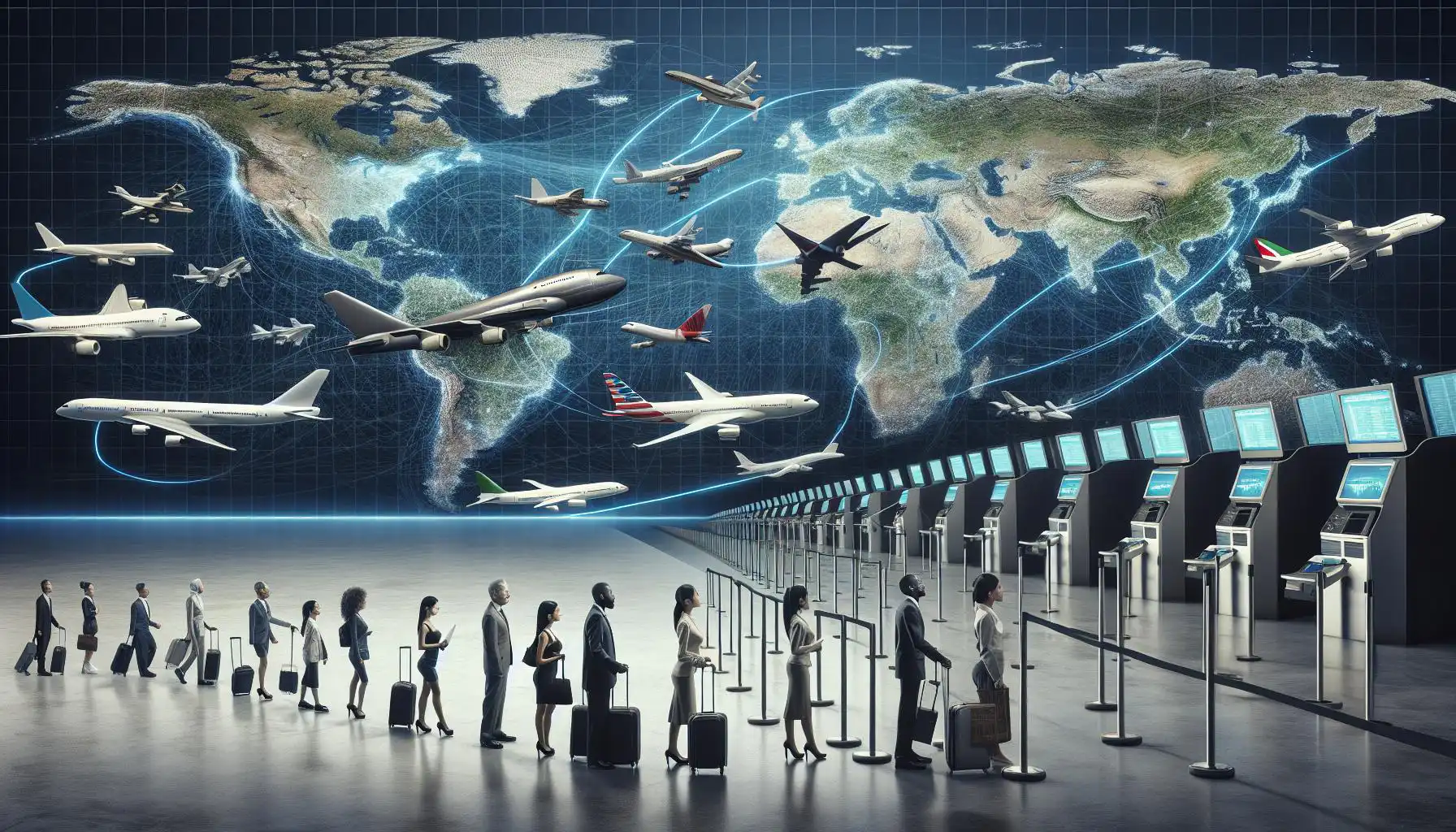
Ever wondered what it’s like to fly with the world’s largest airlines? I’ve got the inside scoop for you. These giants of the skies aren’t just big, they’re colossal, carrying millions of passengers across thousands of miles every year.
It’s not just about size, though. These airlines also lead the pack in terms of service, innovation, and sustainability. They’re setting the pace in an industry that’s always on the move. So buckle up, we’re about to take a journey through the world of aviation’s biggest players.
Largest Airlines in the World
As we delve further into the world of aviation’s behemoths, it’s time to take a closer look at the biggest industry players. Each one of these airlines not only dominates based on size but also shines in the fields of service, innovation, and sustainability.
American Airlines
With its major base in Fort Worth, Texas, American Airlines stands as one of the world’s largest airlines. Annually, it caters to millions of passengers and operates thousands of flights daily. The sheer size of this airline makes it a powerhouse in the US and beyond. Along with its size, American Airlines is also regarded for its top-notch service and innovative solutions in the aviation industry.
Delta Air Lines
Another massive player in the USA is Delta Air Lines. Headquartered in Atlanta, it holds a solid global presence and is renowned for its superior service and impressive flight routes. What really distinguishes Delta Air from its competitors is its commitment to sustainability. Cutting emissions and reducing waste have become pivotal aims for the airline.
United Airlines
United Airlines is another giant that claims its spot in the list of world’s top airlines. Based in Chicago, the airline has an extensive network, contributing to millions of satisfied customers worldwide. What sets United Airlines apart is not only its expansive reach but also its drive towards technological advancements in aviation.
Lufthansa
Moving our gaze across the Atlantic, the German airline Lufthansa takes its place amongst the world’s aviation leaders. Its striking fleet size and immense number of passengers stand testament to its vast operations. Known for its exceptional service, Lufthansa has also consistently prioritized investing in more eco-friendly options within the aviation industry.
Air France-KLM
Last but not least, the union of two national airlines — Air France and KLM, holds its own on this high-flying list. This pan-European powerhouse operates, impressively, on a global scale. Air France-KLM distinguishes itself with a strong focus on innovation and sustainability. Its efforts to ensure a more eco-friendly flying experience have been globally recognized.
With all this information about the largest airlines spread out before you, it’s evident that the sheer scale of these aviation giants is impressive. Yet it’s not just about size. Their pioneering approach in terms of service, sustainability, and innovation truly sets them apart. As we move forward, the next section of our journey through the world of aviation will explore in-depth, the intricate internal workings of these industry giants. Stay hooked as we continue our journey.
Factors Influencing Airline Size
As we delve deeper, there are several key elements that attribute to an airlines’ size. The primary among them are Fleet Size, Revenue, and Passenger Traffic. These are the definitive factors that come into play when ranking airlines for their overall size.
Fleet Size
The initial thing you notice when assessing an airline’s size is its Fleet Size. This factor refers to the number of aircraft operated by an airline. It’s experientially linked to the airline’s capacity to serve various routes. With a larger fleet, airlines like American Airlines and Delta Air Lines can operate more flights daily and cover a broader geographic range. Expansive networks like these not only allow the airlines to serve more passengers but also provide flexibility in adjusting schedules and planning new routes.
Revenue
Another determinant of an airline’s size is its Revenue. Airlines with higher revenues, such as United Airlines, are widely recognized as larger due to their financial command. Revenue is primarily generated through passenger fares but also comes from services like cargo transport and in-flight amenities. Noticeably, revenue ties directly into an airline’s ability to sustain operations, invest in further growth, make enhancements in quality of services, and innovate for customer satisfaction.
Passenger Traffic
Last, but by no means least, is Passenger Traffic, a measure of an airline’s vitality. It refers to the number of people who choose an airline for their travel needs. Airlines like Air France-KLM and Lufthansa are renowned for their vast passenger footfall. This metric is crucial as it reflects the public’s trust and preference, influencing the airline’s reputation and dominance in the market.
In respect to the world’s largest airlines, these metrics play an essential role. But their success is not only rooted in these numbers but also in their commitment to service excellence, innovation, and sustainability. These mentioned giants of the skies have managed to strike a balance between these numerical indicators and qualitative factors, thus earning their position atop the aviation industry. Let’s explore these determinants in a deeper light.
Strategies for Growth and Competition
On this flight, we’ll navigate through the key strategies leveraged by the world’s largest airlines to achieve growth and stay competitive. We’re buckled in and ready for take-off on a tour filled with insights on alliances, fleet expansion, and service innovation.
Alliances and Partnerships
In the aviation industry, it’s not just about going solo; it’s about the power of unity. Aligning with the right partners and entering alliances mean increased connectivity and boosted reach without drastically escalating cost. An alliance like Star Alliance, SkyTeam, or Oneworld can significantly influence an airline’s competitive prowess.
For instance, the Star Alliance – the largest aviation alliance – brings together 26 airlines, offering passengers more than 19,000 daily flights to over 1,300 airports in 195 countries. This unity enriches customer experience by providing efficient air travel and increased route options.
Fleet Expansion
“Fleet size” isn’t just a catchphrase in aviation circles. It’s a strategic lever that airlines pull to gain an upper hand in the highly competitive skies. For airlines, a bigger fleet means more flights, wider coverage, and increased capacity.
Take Delta Air Lines as an example. Their fleet, one of the largest globally, allows Delta to serve more than 300 destinations in over 50 countries. Their fleet variety ranging from the efficient Airbus A220 to the large, long-haul Boeing 777-200LR gives them flexibility and operational efficiency.
Innovation in Services
Last, but certainly not least, an airline’s commitment to innovation in services is a clear advantage in the race to dominance. Embracing new technologies improves customer interactions, operational proficiency, and affects an airline’s bottom line.
Imagine being able to check into your flight via a mobile app, order your meal beforehand, and customize your in-flight entertainment. That’s the digital transformation airlines like United are leveraging to push the boundaries of passenger experience.
One thing is clear: These strategies – alliances and partnerships, fleet expansion, and service innovation – are critical assets in an airline’s toolkit for navigating the crowded and competitive skies. They steer airlines towards sustainable growth and ensure a comfortable journey for passengers every day.
1. What are the main strategies used by airlines for growth and competitiveness?
Major airlines employ three key strategies for growth and competitiveness: forming alliances like Star Alliance to enhance connectivity and route options, expanding their fleet to increase capacity and coverage, and innovating in services to improve customer experience and operational efficiency.
2. How do alliances like the Star Alliance benefit airlines?
Alliances like the Star Alliance benefit airlines by enhancing connectivity and route options. They allow customers to enjoy seamless global travel with member airlines, sharing benefits like frequent flyer programs, airport lounge access, and more.
3. Why is fleet expansion essential for airlines?
Fleet expansion is crucial for airlines as it allows for increased capacity and coverage. A larger fleet means airlines can service more routes and transport more passengers, boosting their reach and revenue.
4. What role does service innovation play in airlines’ growth?
Service innovation, such as digital transformations, plays a significant role in airlines’ growth. It helps to improve customer experience by offering convenience and personalized services. It also enhances operational efficiency, leading to cost savings.
5. Are these strategies only relevant to major airlines?
While the article focuses on major airlines, these strategies – alliances, fleet expansion, and service innovation – are applicable and beneficial to all airlines. They help navigate the competitive aviation industry and ensure sustainable growth while enhancing passenger comfort.