
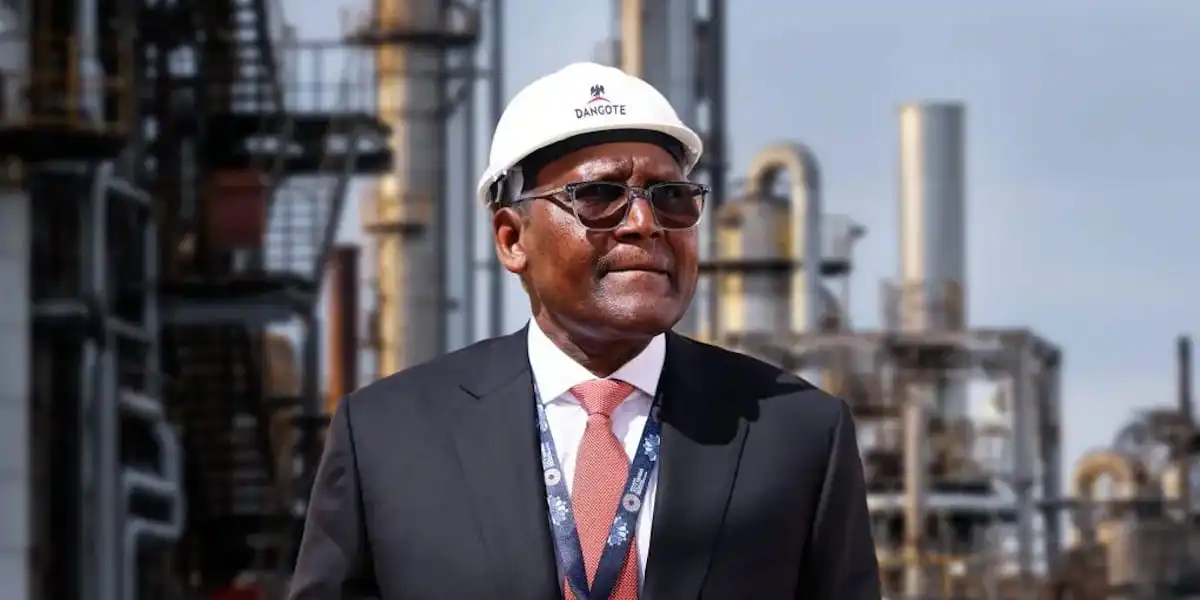
During the 79th United Nations General Assembly (UNGA 79) in the US, Africa’s wealthiest individual, Aliko Dangote, disclosed that his companies have poured over $25 billion into Nigeria’s oil and gas, cement, and sugar industries in the last seven years.
This substantial investment not only serves as a testament to Dangote’s confidence in Nigeria’s economic prospects but also sends a message to potential investors that Africa is a viable destination for investment.
“We need to show the world that there are many opportunities in Africa, and the sky’s the limit. Yes, there are challenges, but they are solvable,” Dangote remarked.
He expressed his long-term vision of making Africa self-sufficient, aiming to reduce the continent’s dependence on imported goods and services.
Rather than being solely remembered for his wealth, Dangote expressed a desire to be recognized for his contributions to Africa’s development and future prosperity.
Despite acknowledging the global trend towards renewable energy, Dangote emphasized the importance of addressing Africa’s immediate energy needs using existing resources like natural gas and coal.
He recognized that transitioning away from fossil fuels will require significant time and effort, particularly in meeting the energy needs of the 600 million Africans currently without electricity.
“Transitioning doesn’t happen overnight. It would be catastrophic if we were to move directly into renewable energy. We still need oil, natural gas, and coal to meet today’s needs,” Dangote said.
He added that oil remains crucial as it is used to produce over 6,800 different items, making it difficult to find a swift replacement.
Looking forward, Dangote reaffirmed his company’s commitment to investing in renewable energy.
He mentioned that after building a refinery, a fertilizer plant, and other industrial projects, his conglomerate should expand into renewable energy.
“We are already transitioning from fossil fuel to compressed natural gas (CNG), and we intend to lead in renewable energy opportunities in the future,” he concluded.