
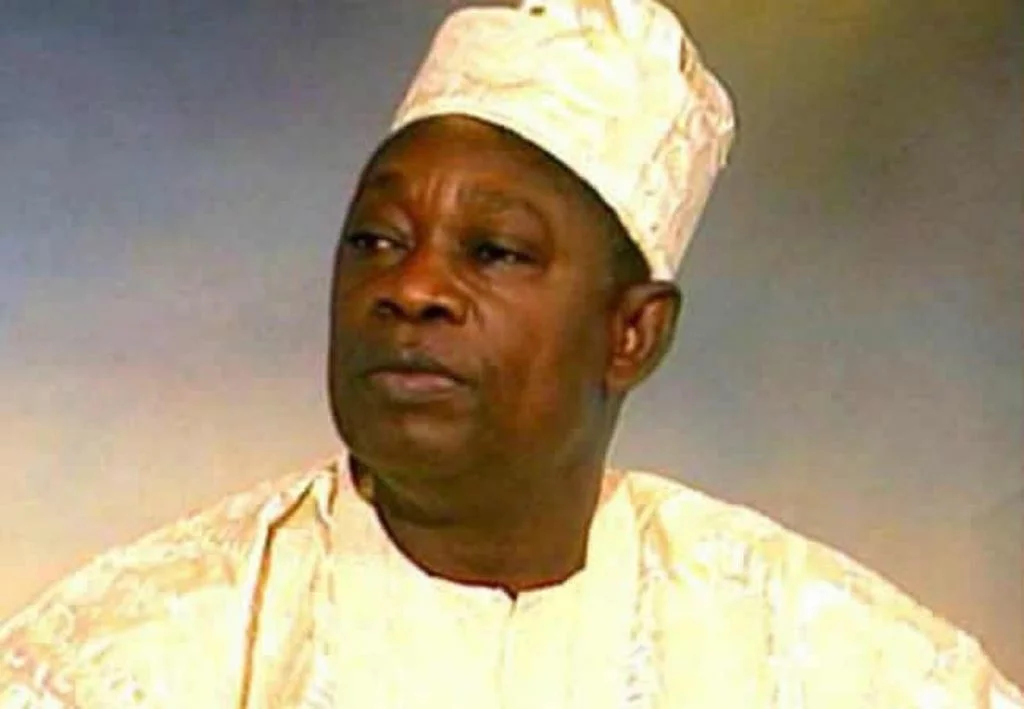
Jamiu Abiola, son of the late Chief MKO Abiola, has said that Nigeria would have made significant economic progress had his father been allowed to assume office as president following his victory in the 1993 election.
Speaking during a Channels Television June 12 Special Forum, held to mark Nigeria’s 26 years of uninterrupted democracy, Jamiu noted that the global economic climate in 1993 was favorable and could have worked to Nigeria’s advantage under his father’s leadership.
“Nigeria would have been better because, at that time, it was a very special time in global times; that 1993 period was a time when the world itself was having an international economic boom,” he said. “So, we could have tapped into that. But what did we get in return? We got a kleptomaniac as head of state.”
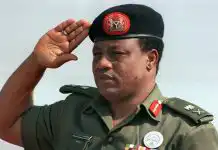
Though he didn’t dwell on the matter, Jamiu made a pointed reference to the late General Sani Abacha, saying, “I am not going to talk about Abacha because he has his problems wherever he has found himself.”
The event, themed Nigeria’s Democratic Journey: An Inter-Generational Conversation On Building A Better Nation, also provided Jamiu, currently the Senior Special Adviser to President Bola Tinubu on Linguistics and Foreign Affairs, a chance to reflect on how his father’s legacy has been treated in Nigerian history.
He lamented attempts to erase MKO Abiola’s role in Nigeria’s democratic evolution.
“I wrote a book in 2015 because I came to realise that my father’s name was becoming like a memory that was becoming distant and people were hellbent on rewriting the history of Nigeria without him,” he said.
Jamiu explained that foreign dignitaries often mention past Nigerian leaders such as Yar’Adua, but leave out MKO Abiola. “Some people wanted to bury his name. Like my father would say: they wanted to shave his head in his absence.”
To preserve his father’s memory, he authored the book The President Who Never Ruled in 2015.
In 2018, former President Muhammadu Buhari posthumously awarded MKO Abiola the Grand Commander of the Order of the Federal Republic (GCFR) and officially declared June 12 as Democracy Day—an act widely seen as a long-overdue recognition of Abiola’s role in Nigeria’s democratic struggle.