

Elon Musk has officially become the first person in history to reach a net worth of $500 billion, a milestone that cements his position as the richest individual ever recorded.
According to Bloomberg’s Billionaires Index, Musk’s wealth briefly peaked at $500 billion before settling at $499.1 billion, following a strong surge in Tesla’s stock, which has climbed by roughly 14% this year.
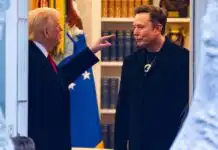
The rebound in Tesla’s market performance marks a major turnaround after a turbulent start to the year. The company’s share price, which opened 2025 at $427.90 before falling to $220.67 amid controversy surrounding Musk’s brief tenure in Donald Trump’s Department of Government Efficiency (DOGE), has since recovered sharply.
After stepping down from his government role in May and returning full-time to Tesla, Elon Musk helped restore investor confidence, propelling the company’s valuation upward and boosting his own fortune in the process.
Beyond Tesla, Musk’s immense wealth spans SpaceX, xAI, Neuralink, and X (formerly Twitter) — all multi-billion-dollar ventures. Analysts suggest that at his current pace, Musk could become the world’s first trillionaire within the next few years.
To illustrate the scale of his fortune:
-
Elon Musk’s $500 billion net worth would rank as the 31st largest economy in the world, just below Austria and ahead of Norway, Malaysia, and South Africa.
-
It is 125 times the value of the UK’s Crown Jewels, 20 times the cost of London’s Elizabeth Line, and 10 times the estimated worth of the Louvre Museum and its contents.
-
His wealth even surpasses the combined $14 billion market value of all English Premier League football clubs — by 35 times.
Financial analysts have humorously noted that Musk could buy the White House 1,250 times over, based on Zillow’s $398 million valuation of the U.S. presidential residence.
Meanwhile, the broader tech landscape around Musk continues to evolve rapidly. Rival neurotech company Science Corporation recently unveiled a breakthrough innovation — a brain-computer interface called PRIMA, which uses an eye chip to restore partial vision in patients. In clinical trials across 17 global sites, including London’s Moorfields Eye Hospital, 84% of participants experienced measurable improvements in visual function within a year.
As Musk’s empire continues to expand across electric vehicles, space exploration, artificial intelligence, and neurotechnology, he remains not just a dominant force in wealth rankings, but a defining figure in shaping the future of global innovation.