
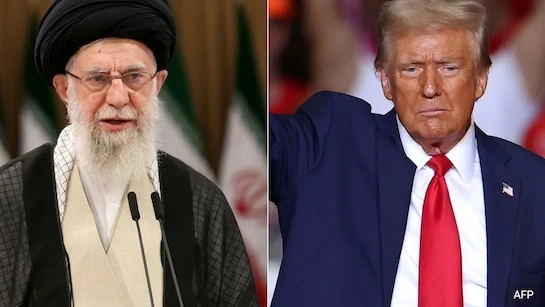
US President Donald Trump on Saturday, February 28, declared that American and Israeli forces had launched a “massive and ongoing operation” against Iran, warning Iranian troops to surrender or face severe consequences.
In an eight-minute video shared on Truth Social, Trump stated that the joint military campaign aims to prevent Iran’s leadership from threatening the United States and its allies.
“We are undertaking a massive and ongoing operation to prevent this very wicked, radical dictatorship from threatening America and our core national security interests,” he said.
The strikes follow weeks of escalating rhetoric from Washington, during which Trump repeatedly pressured Tehran to agree to a new nuclear deal and condemned the Iranian government over its crackdown on protesters earlier in the year.
Prior to the operation, the US repositioned over a dozen naval vessels and aircraft to the Middle East, signaling preparations for possible military action, even as American officials engaged in indirect talks with Iranian representatives over Tehran’s nuclear programme.
Trump outlined the operation’s objectives as comprehensive and uncompromising.
“We will destroy their missiles and raze their missile industry. We will annihilate their Navy and ensure that the region’s terrorist proxies can no longer destabilize the region,” he declared.
He emphasized that Washington had sought diplomatic agreements to curb Iran’s nuclear ambitions, but claimed Iranian leaders had rejected every opportunity.
“This regime will soon learn that no one should challenge the strength and might of the United States armed forces,” Trump said, while acknowledging the risks involved, including potential casualties among American service members.
“The Iranian regime seeks to kill. The lives of courageous American heroes may be lost and we may have casualties. That often happens in war,” he added, describing the mission as essential for long-term security.
The escalation represents one of the most significant direct confrontations between the US, Israel, and Iran in recent years, heightening concerns of a broader regional conflict.
Negotiators from both sides held indirect talks in Oman in early February, followed by two rounds in Switzerland later in the month. Iranian officials described the discussions positively, while Trump asserted that Iran seeks a deal.
Badr Albusaidi, who helped mediate the talks, told CBS News after the third round that an agreement is “within our reach” and that the parties “just need a little bit more time.”