

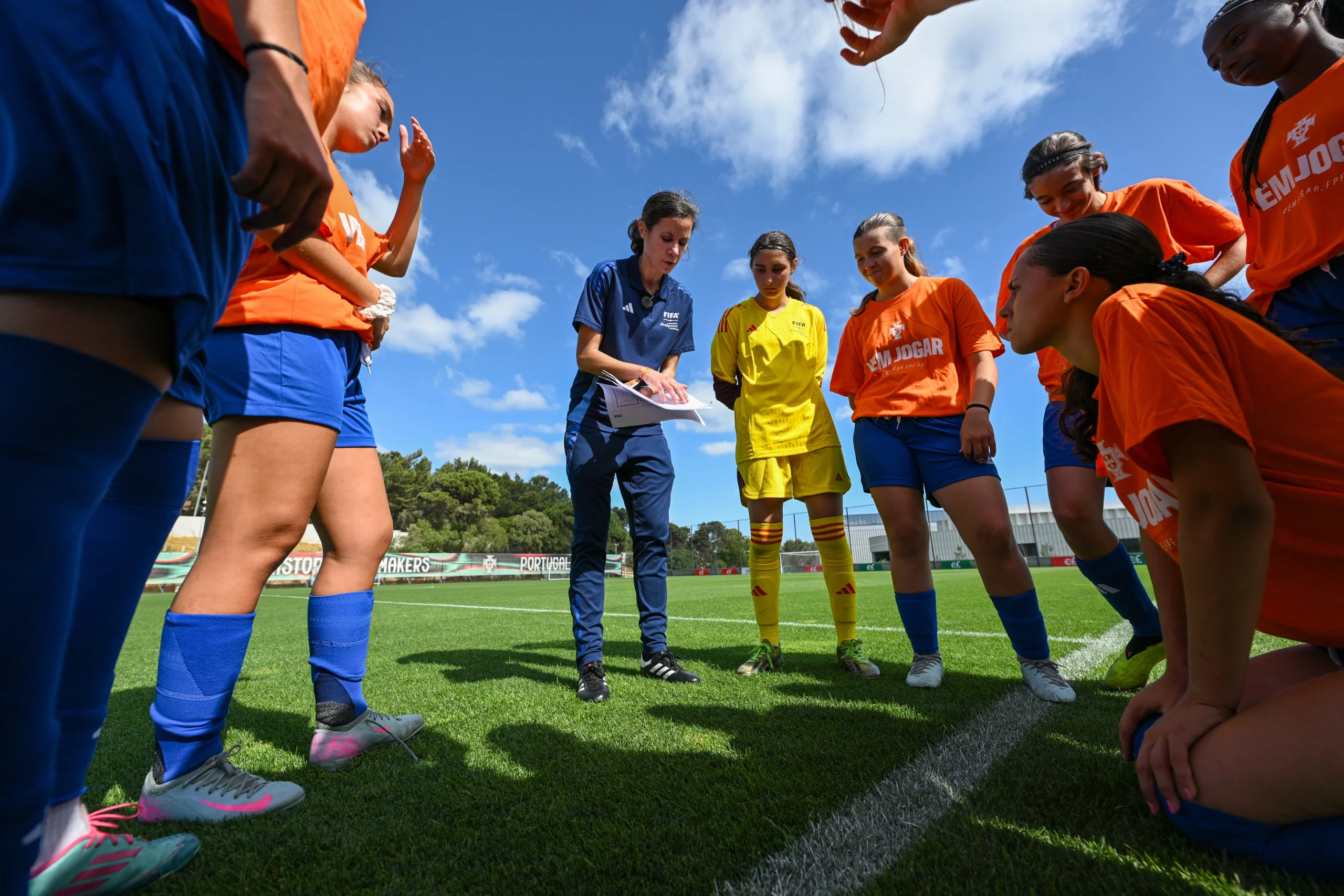
World football governing body, FIFA, has announced new regulations requiring every team in its women’s tournaments to include at least one female head coach or assistant coach, in a move aimed at improving representation in the sport.
The rule, approved by the FIFA Council, will take effect at this year’s FIFA U-17 Women’s World Cup and FIFA U-20 Women’s World Cup, as well as the Women’s Champions Cup. It will apply across both youth and senior competitions, including club and international teams.
Under the new policy, each team must have at least two female staff members on the bench during matches, with one serving as either head coach or assistant coach.
FIFA’s Chief Football Officer, Jill Ellis, said the initiative is designed to address the underrepresentation of women in coaching roles.
“There are simply not enough women in coaching today. We must do more to accelerate change by creating clearer pathways, expanding opportunities, and increasing the visibility for women on our sidelines,” she said.
“The new FIFA regulations, combined with targeted development programmes, mark an important investment in the current and future generation of female coaches.”
The move comes amid ongoing concerns about gender imbalance in football coaching. At the 2023 Women’s World Cup, only 12 of the 32 head coaches were women, including Sarina Wiegman.
FIFA hopes the new policy will boost female representation ahead of upcoming competitions, including the 2027 FIFA Women’s World Cup in Brazil.
Several prominent female coaches are already active at the top level, including Emma Hayes, who leads the United States women’s national soccer team alongside assistant Denise Reddy.
Other English coaches working internationally include Gemma Grainger with Norway, Casey Stoney with Canada, and Carla Ward with the Republic of Ireland.
Wiegman, who has led England to major successes and won multiple FIFA Best Women’s Coach awards, also emphasized the need for improved gender balance in coaching.
“Of course what we hope is to get more female coaches at the top level and that the balance gets better than it is right now. Males are welcome too but if the balance is better than hopefully that will inspire more women to get involved in coaching.”