
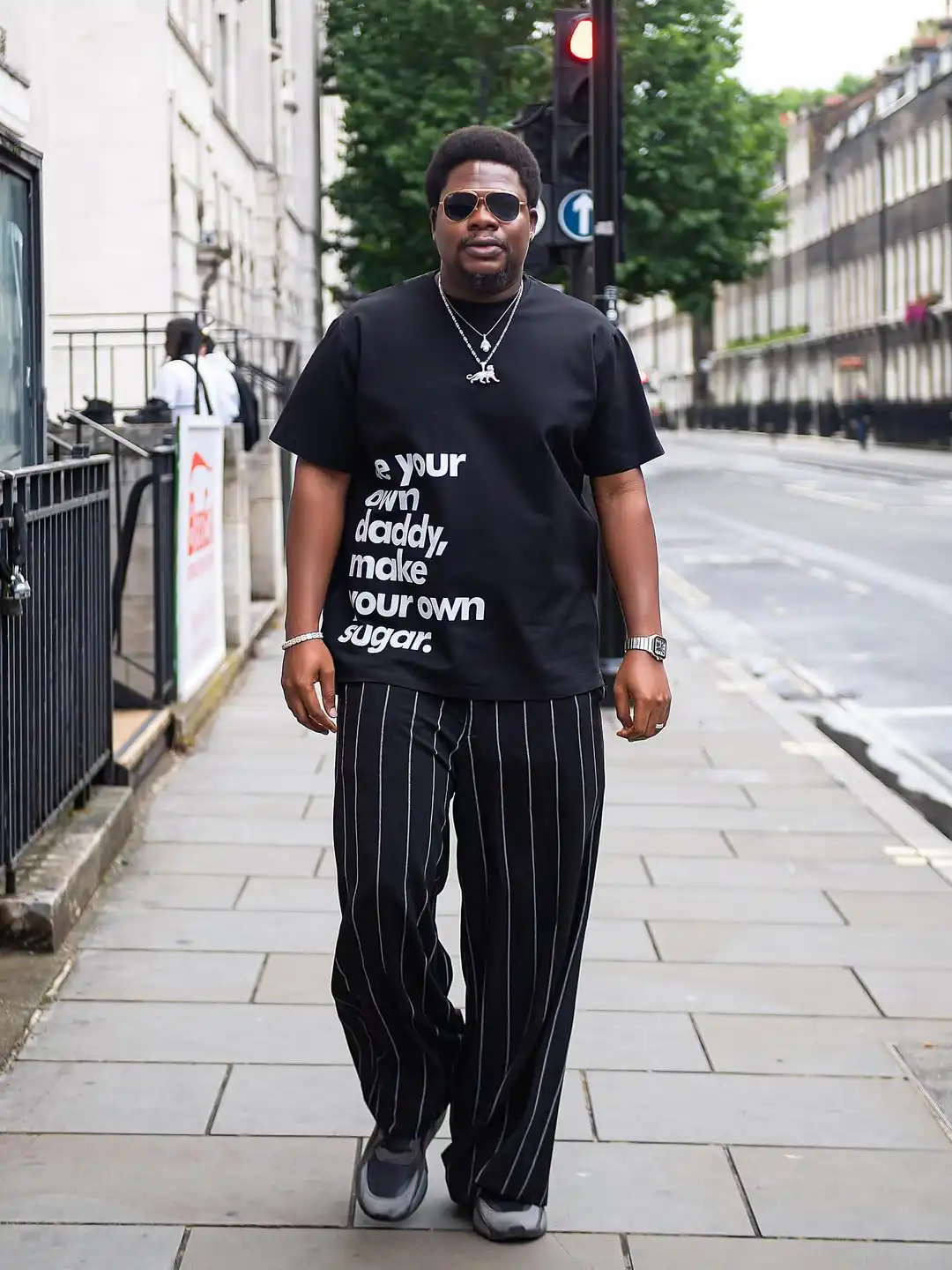
Nigerian activist and content creator Mr Macaroni has opened up about a moment that still defines his stance on accountability, revealing why he declined an invitation from Babajide Sanwo-Olu following the #EndSARS protests.
Speaking during a recent podcast appearance, the comedian revisited his experience during the protests in Lagos, where he was among those arrested while demanding an end to police brutality.
The incident, which drew widespread attention at the time, became a turning point in his public identity, solidifying his role not just as an entertainer but as a vocal advocate for civic rights.
According to him, the aftermath of that experience included an outreach from the Lagos State Governor, who invited him to his office in what appeared to be an attempt at reconciliation.
But Macaroni said he turned it down.
His reasoning, he explained, was rooted in principle rather than emotion. If the apology was sincere, he believed it should not come with the formality or optics of a government office setting. Instead, he insisted it should be more personal and direct, reflecting a genuine effort to connect beyond official protocols.
In a move that has since sparked conversation, he said he suggested the governor come to his home instead.
For him, the gesture carried symbolic weight. He emphasised that elected officials are ultimately public servants, accountable to the people they represent.
By asking the governor to meet him on his terms, he was making a broader point about power, responsibility, and respect in a democratic system.
The exchange, though private at the time, now adds another layer to ongoing conversations about leadership and accountability in Nigeria, especially in the context of the #EndSARS protests.
Macaroni’s position has drawn mixed reactions. Supporters view it as a bold assertion of citizen power and a refusal to conform to traditional hierarchies. Others argue that dialogue, regardless of location, could have been an opportunity for progress.
Still, the comedian’s stance aligns with the image he has consistently projected since the protests, one of independence, principle, and willingness to challenge authority when necessary.
As discussions around governance and civic engagement continue to evolve, moments like this serve as reminders that influence today is not limited to political offices. Voices from outside the system, especially those with strong public platforms, are increasingly shaping the narrative.
For Mr Macaroni, the message is clear. Accountability, in his view, is not just about words, it is about how and where those words are delivered.