

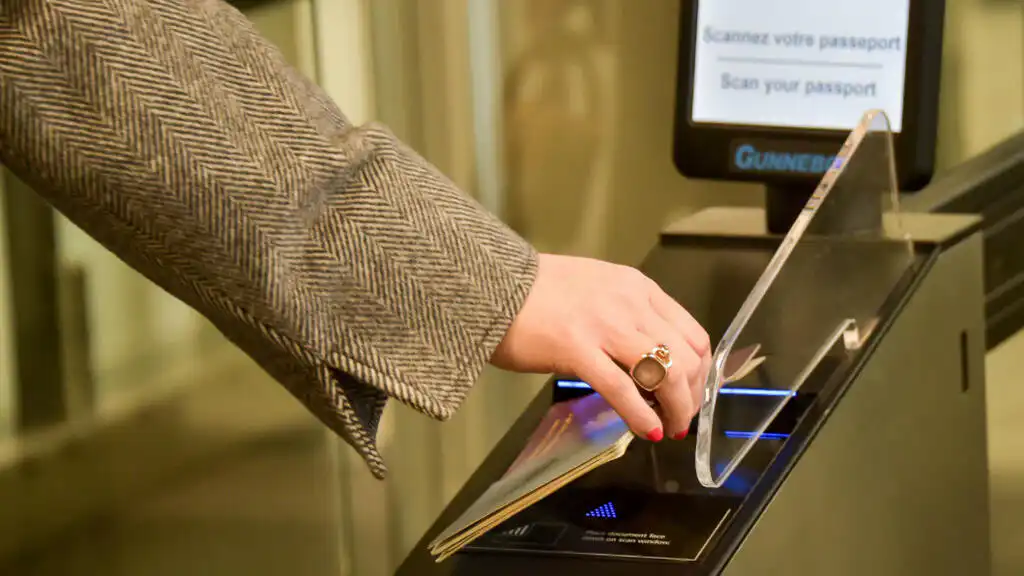
The European Union is set to fully deploy its Entry Exit System on April 10, 2026, introducing a major overhaul of how travelers are processed at borders across the Schengen Area.
The system replaces traditional passport stamping with a fully digital process that uses biometric identification, including fingerprints and facial recognition, to track the movement of non-EU visitors across 29 European countries.
How the System Works
Under the new framework, travelers will no longer receive physical stamps in their passports. Instead, border authorities will scan passports and collect biometric data, which is then stored electronically.
The system records key details, including facial images, fingerprints, travel documents, entry and exit dates, and any instances of refused entry. Each time a traveler crosses a border, the data is automatically checked and updated.
For visa-exempt travelers, the system will work alongside the upcoming ETIAS travel authorization, creating an additional layer of monitoring and security.
What Travelers Should Expect
Upon arrival, visitors will go through automated digital checks, during which their biometric data is captured and verified. When leaving, the system automatically logs their exit.
While first-time users may experience slightly longer processing due to initial data capture, the EU expects the system to reduce queues and speed up border crossings over time.
Early Results From Rollout
Since its phased introduction in October 2025, the system has already processed more than 45 million crossings. Authorities have refused entry to about 24,000 travelers and identified around 600 individuals flagged as potential security risks.
Officials say the technology has already helped detect identity fraud and repeated attempts to enter under different identities. In one case, Romanian border authorities identified a traveler who had been denied entry multiple times under different names.
Broader Impact
The Entry-Exit System is part of a broader EU effort to modernize border management through technology, focusing on improving security while maintaining efficiency for legitimate travelers.
By replacing manual processes with digital records, the EU aims to improve the accuracy of tracking short-term stays, reduce fraud, and create a smoother travel experience across the region.