


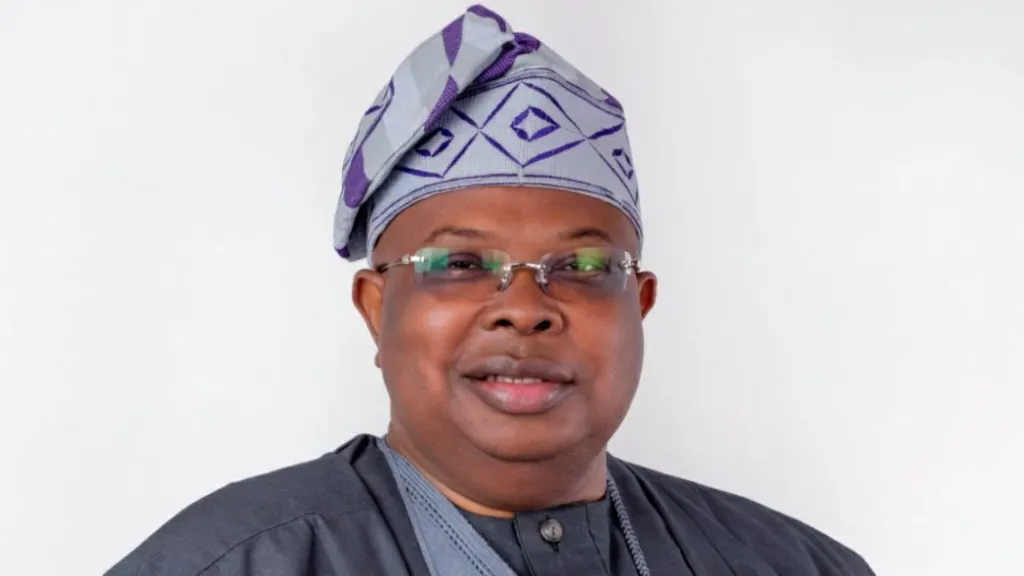
Nigeria’s Minister of Power, Joseph Olasunkanmi Tegbe, has pushed back against widespread reports claiming he promised to solve the country’s electricity crisis within three months, insisting his comments during his Senate screening were taken out of context.
In a statement released through his spokesperson, Adeola Adelabu, the minister said media reports suggesting he guaranteed a complete fix for the national grid within 100 days were inaccurate and misleading.
“Our attention has been drawn to inaccurate media reports alleging that the Honourable Minister-designate promised to fix Nigeria’s power grid within three months. This claim is a clear misrepresentation of his remarks,” the statement read.
The clarification comes after earlier reports sparked widespread public debate, with many Nigerians questioning whether such an ambitious timeline was realistic given the long-standing structural problems in the country’s electricity sector.
According to the statement, Tegbe never set a fixed three-month deadline for resolving the power crisis. Instead, he explained during his Senate screening that reform timelines were still being developed and would depend on technical reviews, stakeholder consultations, and broader sector realities.
The minister reportedly told lawmakers that while visible stabilization efforts would begin within his first 100 days, comprehensive reforms across the electricity value chain, including gas supply, metering, infrastructure, and sector coordination, could take up to a year.
“My promise to this chamber and to Nigeria is that Nigerians will see visible improvement in the sector,” Tegbe was quoted as saying.
That distinction is important.
Rather than promising an immediate end to grid collapses and nationwide electricity instability, the minister appears to be positioning his early months in office as the foundation stage for wider reforms aimed at long-term stability.
The statement also outlined some of the priorities expected to shape his tenure.
These include stabilizing the national grid, modernizing electricity infrastructure, improving accountability across the sector, and strengthening commercial frameworks that support power generation and distribution.
On electricity tariffs, Tegbe reportedly assured senators that reforms under his leadership would aim to balance affordability with sustainability while protecting vulnerable households from excessive pressure.
The clarification highlights the sensitivity surrounding Nigeria’s power sector, where public frustration remains high after years of unreliable electricity supply, repeated grid collapses, and rising energy costs.
Because of that history, even optimistic remarks from public officials are often scrutinized intensely and quickly amplified online.
The ministry’s response also reflects an effort to manage expectations early in Tegbe’s tenure.
Rather than presenting the crisis as something that can be solved overnight, the statement frames the challenge as a phased reform process requiring technical, financial, and operational restructuring.
Bola Tinubu recently nominated Tegbe following the exit of former minister Adebayo Adelabu.
As he officially settles into the role, attention will now shift from public statements to implementation, with Nigerians watching closely to see whether the promised “visible improvements” begin to materialize in the months ahead.