


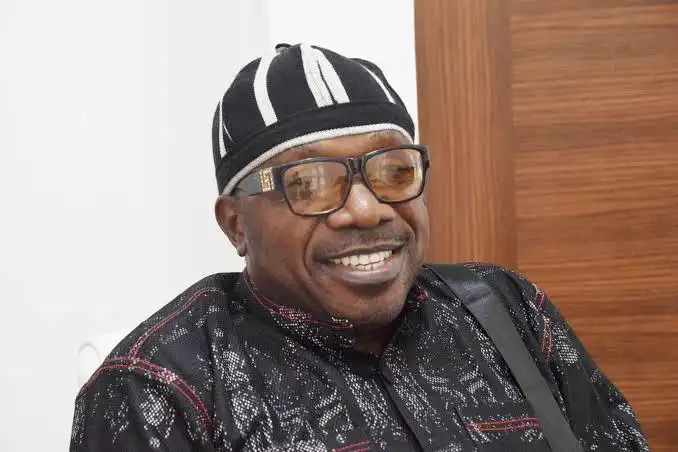
Veteran Nigerian musician Zaaki Azzay has weighed in on Nigeria’s political climate, saying he currently sees no opposition figure convincing enough to replace President Bola Tinubu ahead of the next election cycle.
Speaking during an interview amid growing political conversations across the country, the singer said many Nigerians are repeatedly presented with the same class of politicians without seeing genuine change in leadership style or national vision.
“There is a lot going on politically right now. I have not really seen anyone who genuinely seems interested in moving Nigeria forward,” he said.
Zaaki Azzay added that, in his view, Tinubu should be allowed to complete two terms in office because the alternatives currently emerging do not appear fundamentally different.
“To be honest, I believe the devil you know is better than the one you don’t know. If you ask me, I think Tinubu should be allowed to complete his eight years,” he stated.
The singer explained that his position is not necessarily an endorsement of the current state of the country, but rather a reflection of disappointment in the wider political class.
“Looking at the people coming up, I’m honestly not seeing anybody different. It feels like recycling the same set of people,” he said.
Still, Azzay made it clear that the kind of leader he hopes to see in the future would need to embody sacrifice, patriotism, and a genuine commitment to national progress.
“It has to be someone who is ready to die for Nigeria,” he said, stressing that the country needs leaders willing to prioritize service above personal gain.
He also argued that Nigeria needs a fresh political cycle driven by younger, youth-inclined leadership, rather than repeated returns to familiar political structures.
Beyond politics, the musician reflected on the emotional disconnect many Nigerians, especially young people, now feel toward the country.
According to him, years of broken promises and failed leadership have weakened public trust to the point where even sincere messages from government are often met with doubt.
“The government has disappointed Nigerians for too long, to the point where even when a good government comes and speaks honestly, people no longer believe,” he said.
The conversation also turned toward music and the fading presence of socially conscious songs within mainstream Nigerian entertainment.
Zaaki Azzay, known for songs centered on peace and national unity, lamented that patriotic music no longer receives the same institutional support it once did.
He argued that both the entertainment industry and political establishments now prioritize commercially successful party songs over music carrying messages of social responsibility.
“When the government and political leaders continue to patronise only entertainment songs while ignoring musicians promoting peace, unity and patriotism, it discourages others from creating meaningful music,” he explained.
The singer noted that artists creating conscious music still exist, but many have become discouraged by the lack of visibility and support.
He also revisited one of his own songs, Change Is Possible, saying it was widely misunderstood after listeners linked it to political campaign slogans associated with the APC.
According to him, the song was never political propaganda but rather a message promoting peace and national healing amid insecurity and violence.
“The song talks about peace and why we must stop the killings, banditry and kidnappings happening in the country,” he clarified.
Zaaki Azzay’s remarks reflect a broader frustration shared by many Nigerians caught between political uncertainty, economic hardship, and growing disillusionment with leadership.
At the same time, his comments revive an older conversation about the role music once played in shaping national consciousness and whether today’s entertainment culture still leaves room for artists focused on unity, activism, and social change.