

Eye health is not usually the first thing people associate with cannabis, but it has been part of medical discussion for decades, especially in relation to glaucoma and intraocular pressure. As interest in wellness-focused cannabis use grows, many users are asking whether cannabinoids like THC or CBD can influence vision, eye pressure, or overall ocular health. This is where the conversation around cannabis products for eye pressure and vision wellness support becomes both interesting and misunderstood.
While cannabis does interact with biological systems involved in pressure regulation and circulation, the effects on the eyes are complex, time-dependent, and not as straightforward as many online claims suggest.
How Eye Pressure Works and Why It Matters
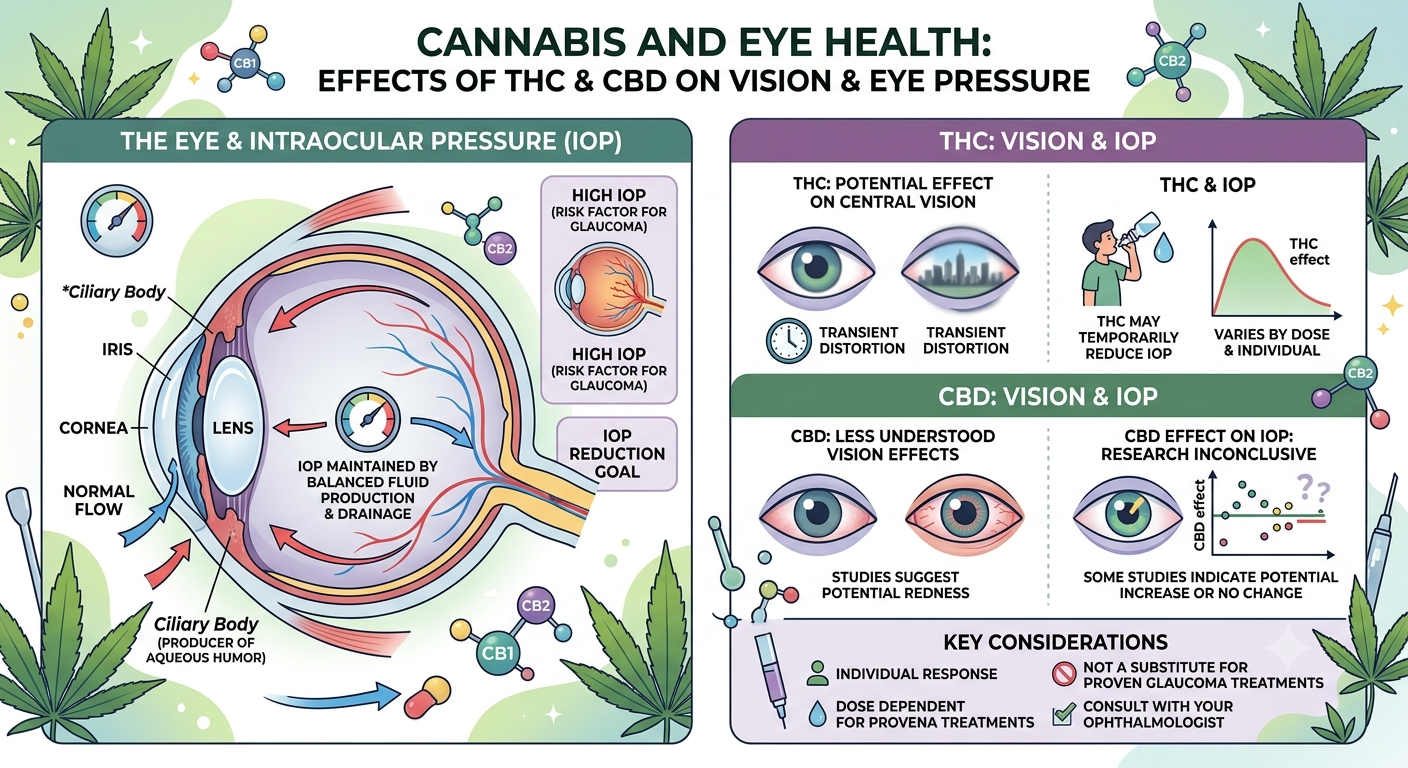
Inside the eye, there is a fluid called aqueous humor that maintains pressure and supports normal shape and function. When this pressure, known as intraocular pressure (IOP), becomes too high, it can damage the optic nerve over time, which is a key factor in glaucoma.
Managing eye pressure is important because prolonged elevation can lead to vision loss. This is why researchers have long studied whether cannabinoids could play a role in lowering IOP or supporting eye health.
However, the effects of cannabis on eye pressure are temporary and do not work in the same way as conventional glaucoma treatments.
THC and Its Effect on Eye Pressure
THC is the most studied cannabinoid in relation to eye pressure. Research has shown that THC can temporarily reduce intraocular pressure in some individuals. This effect is believed to occur through interactions with cannabinoid receptors in the nervous system and vascular system, which may influence fluid dynamics within the eye.
However, this reduction is short-lived, typically lasting only a few hours. This makes THC impractical as a standalone treatment for conditions like glaucoma, which require consistent, long-term pressure control.
THC also causes well-known side effects such as red eyes, which are due to blood vessel dilation in the conjunctiva. While this is often seen as a cosmetic effect, it reflects THC’s influence on ocular blood flow.
CBD and Eye Health: A More Complicated Picture
CBD interacts with the body differently from THC and does not produce the same psychoactive effects. When it comes to eye pressure, research on CBD is less clear.
Some studies suggest that CBD may not significantly reduce intraocular pressure and, in some cases, may even counteract the pressure-lowering effects of THC when used in higher doses. This has led researchers to question whether CBD is beneficial, neutral, or potentially counterproductive for eye pressure management in certain contexts.
However, CBD may still play an indirect role in eye health through its potential anti-inflammatory and neuroprotective properties. Inflammation and oxidative stress are factors that can contribute to long-term eye conditions, and CBD’s interaction with these pathways is still being studied.
Vision Changes and Perception Effects
Beyond eye pressure, cannabis can also affect visual perception. THC in particular can alter how the brain processes visual information, especially at higher doses. Users may experience changes in depth perception, contrast sensitivity, or light sensitivity while under the influence.
These effects are not caused by structural changes in the eyes themselves, but rather how the brain interprets visual signals. Once THC wears off, vision typically returns to normal.
CBD does not typically produce these perceptual changes, making it more stable in terms of visual experience.
Why Red Eyes Happen After Cannabis Use
One of the most recognizable effects of THC is red eyes. This occurs because THC causes blood vessels in the eyes to dilate, increasing blood flow and making the eyes appear red or bloodshot.
This effect is temporary and not harmful in most cases, but it is one of the most visible signs of cannabis use. It is often mistakenly associated with eye strain or damage, when in reality it is a vascular response.
CBD does not usually cause this effect on its own.
Medical Interest vs Wellness Reality
Cannabis has historically been studied in glaucoma research due to its ability to lower eye pressure temporarily. However, modern ophthalmology does not consider it a first-line treatment because of its short duration of action and systemic side effects.
Traditional medications are more effective because they provide consistent pressure control throughout the day without the psychoactive effects associated with THC.
From a wellness perspective, cannabis may still be of interest for users exploring broader relaxation, stress reduction, or inflammation support, which can indirectly influence overall well-being, but it is not a direct substitute for eye care treatment.
Common Misconceptions About Cannabis and Vision
One of the most common misconceptions is that cannabis can permanently improve or cure eye conditions. While THC may temporarily reduce pressure, there is no evidence that it provides long-term structural improvement for glaucoma or other chronic eye diseases.
Another misconception is that CBD can significantly lower eye pressure. Current research does not strongly support this, and in some cases suggests limited or inconsistent effects.
There is also confusion between short-term visual changes and actual eye health. Feeling visual distortion while high does not mean the eyes themselves are being damaged.
Practical Considerations for Users
For wellness users, the main consideration is understanding that cannabis effects on the eyes are temporary and dose-dependent.
THC may briefly reduce eye pressure but is not practical for ongoing management. CBD is generally neutral in terms of pressure effects but may contribute to overall relaxation and stress reduction.
Users with existing eye conditions should be especially cautious and consult healthcare professionals before using cannabis regularly, particularly if they are already on prescribed eye medications.
Product consistency also matters when using cannabis for wellness purposes. Reliable sourcing from platforms like Packsdash helps ensure predictable cannabinoid levels, which is important when monitoring subtle physiological responses.
The Bigger Picture
Cannabis does interact with systems involved in eye pressure and visual perception, but its role is limited and not fully understood. THC has demonstrated temporary pressure-lowering effects, while CBD’s impact remains less clear and potentially indirect.
For most users, cannabis should not be viewed as an eye health treatment but rather as a compound with broader neurological and physiological effects that may indirectly influence comfort or perception.
Ongoing research may further clarify its role, but current evidence supports cautious, informed use rather than therapeutic reliance for eye conditions.
FAQ
- Can cannabis reduce eye pressure?
THC may temporarily reduce intraocular pressure, but the effect is short-lived and not suitable as a long-term treatment. - Does CBD help with glaucoma or eye health?
CBD has not been shown to significantly reduce eye pressure and its role in glaucoma treatment remains unclear. - Why do eyes get red after using THC?
THC causes blood vessels in the eyes to dilate, increasing blood flow and leading to temporary redness. - Can cannabis improve vision?
Cannabis does not improve vision. It may temporarily alter visual perception, but these effects are reversible. - Is cannabis safe for people with eye conditions?
It depends on the condition and individual health. People with eye diseases should consult a medical professional before use.