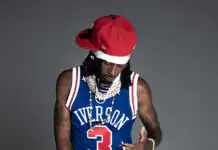

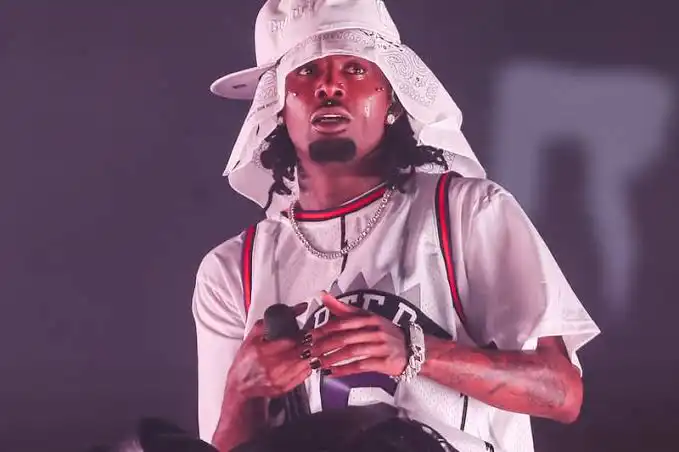
Playboi Carti finds himself in a perplexing situation, with a fanbase that is divided between admiration and criticism of his work. Some view him as a musical prodigy, while others see him as a victim of his own hype.
Regardless, Playboi Carti continues to attract attention with his music. However, on January 24th, he faced legal trouble when singer Blakk Soul filed a lawsuit against him over their collaboration on the 2017 song “Kelly K.”
Blakk Soul alleges that despite appearing on the song, he was not properly compensated by Playboi Carti.
The singer is now seeking payment for his contribution to a track that has garnered millions of views and streams. “Kelly K” was a standout moment in Carti’s career, with the mixtape it appeared on seen as a turning point for the artist both commercially and artistically.
According to Blakk Soul, he had an agreement with Playboi Carti and Cash Carti Music LLC for a 5% ownership stake in the song, but has yet to receive any payment after eight years. The legal battle has put a spotlight on the importance of fair compensation in the music industry, especially as streaming numbers continue to grow.
Blakk Soul, real name John Mercer, Jr., issued a statement through his legal team. The team argued that the singer should be compensated for the streams the song has racked up, given its success.
“Despite the commercial success of the song and the album,” the statement asserted. “Mr. Mercer had yet to be compensated for his contributions to the song. And has yet to receive a single dollar.”
Soul’s legal team also claimed the singer has yet to be given an accounting of what he’s owed. Soul not only named Carti in his lawsuit, but Interscope and Universal Music Group.
Playboi Carti has had to contend with legal issues as recently as August. The rapper and UMG won a lawsuit after they flagged a lesser-known artist for using a Carti instrumental.
G-Baby claimed that the song “Oi,” should was wrongfully taken down. Judge Analisa Torres ultimately ruled that UMG and Carti didn’t violate the Digital Millennium Copyright Act protections, however.
“A copyright holder is not liable for misrepresentation under the DMCA,” the judge explained. “If they subjectively believe the identified material infringes their copyright.”