


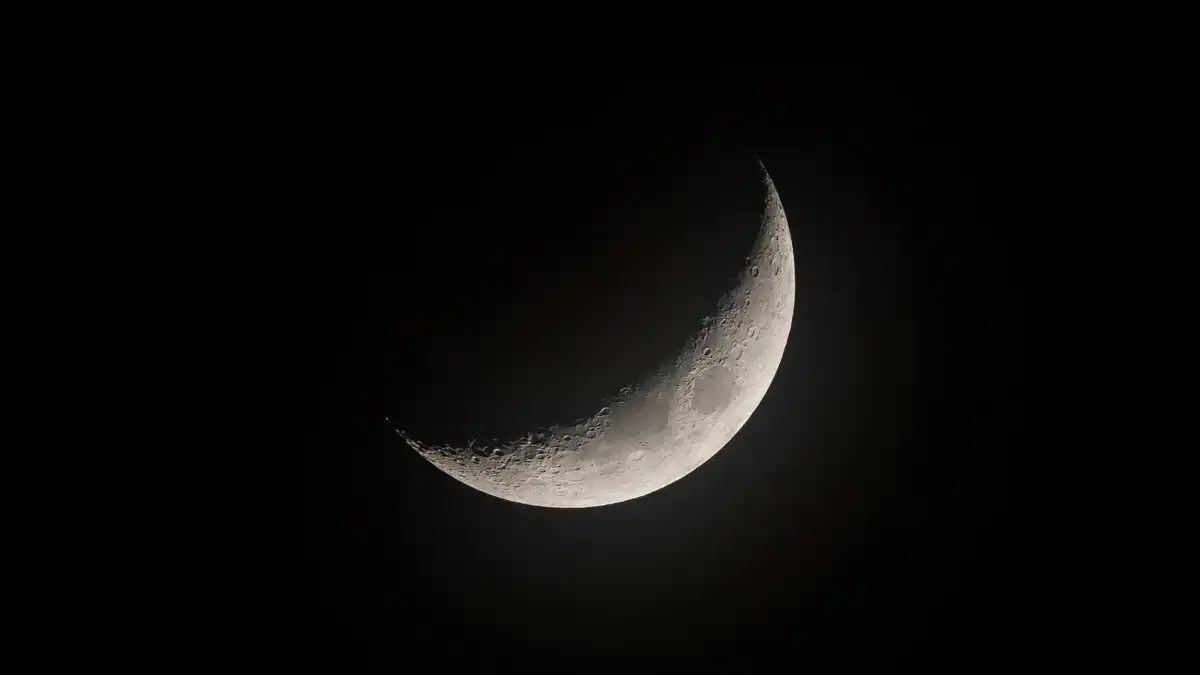
Nigeria is set to experience its first astronomical lunar crescent of the year on February 28, as reported by the National Space Research and Development Agency (NASRDA).
The agency’s Director of Media and Corporate Communications, Dr. Felix Ale, proclaimed on Saturday that the lunar crescent is anticipated to manifest at 1:45 a.m. West African Time, a moment designated as the “Crescent Zero Hour.”
During this preliminary phase, the crescent will only be discernible under optimal atmospheric conditions utilizing optical instruments such as binoculars or telescopes. Nevertheless, Ale emphasized that the lunar crescent would become observable to the unaided eye later in the evening, specifically between 6:17 p.m. and 7:35 p.m., across various locales in Nigeria.
He delineated additional timings, indicating that Damaturu in Yobe would witness the crescent from 6:22 p.m. to 6:53 p.m., whereas Kano, Katsina, Jos, and Kaduna would experience visibility between 6:38 p.m. and 7:12 p.m.
In southern Nigeria, Enugu is projected to observe the crescent between 6:42 p.m. and 7:32 p.m., with sunset and moonset occurring approximately at 6:42 p.m. and 7:18 p.m. The Federal Capital Territory (FCT) in Abuja will experience the phenomenon from 6:44 p.m. to 7:15 p.m.
Lagos and Abeokuta are anticipated to be the final cities to view the lunar crescent, from 6:59 p.m. to 7:30 p.m. Other cities throughout the nation will encounter the sighting at diverse times within the anticipated visibility timeframe.
For optimal observation, NASRDA recommended that spectators employ optical aids if necessary and select sites with clear atmospheric conditions and unobstructed vistas of the western horizon following sunset.
The agency underscored the significance of this scientific forecast for individuals who depend on lunar observations for religious, cultural, and scientific endeavors. Researchers, academics, and religious organizations were urged to leverage the findings, with additional data accessible on NASRDA’s official website.