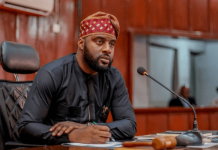


Speaker of the Oyo State House of Assembly, Rt. Hon. Adebo Ogundoyin, has added his voice to the growing call for the creation of state police, citing Nigeria’s worsening security crisis as a major threat to national development.
Speaking to journalists in Ibadan on Tuesday, Ogundoyin expressed deep concern over the staggering loss of lives due to insurgency, farmer-herder clashes, and other violent conflicts across the country.
“Over 700,000 Nigerians Have Died Needlessly” — Ogundoyin
“Losing 700,000 people is not only alarming but also a tragedy,” he stated.
“We have to identify that the primary role of government is the protection of lives and property. In a situation where the government cannot secure lives and properties, that means it has failed in its primary role.”
The Speaker described the current policing structure as inadequate and overstretched, suggesting that devolving security responsibilities to subnational levels would strengthen Nigeria’s fight against insecurity.
“Giving more responsibility to the subnational, which is the states, in terms of security, will address some of the security issues in Nigeria,” he added.
“Nigeria Police Force Is Overwhelmed” — Speaker Laments
Ogundoyin, who also serves as Chairman of the Conference of Speakers in Nigeria, stressed that the Nigeria Police Force (NPF) is currently overwhelmed, making it imperative for state governments to have constitutional authority over internal security.
He joins a growing list of political leaders, civil society groups, and security experts who have recently advocated for constitutional reform to allow the establishment of state-controlled policing units.
A National Debate Rekindled
Calls for state policing have intensified in the wake of persistent banditry, kidnapping, and terrorism in several parts of the country. Supporters argue that state police would enable faster, localized, and more accountable security responses.
Opponents, however, have raised concerns about potential abuse by state governors, especially during elections.
Nonetheless, with national security now a top priority, legislative and executive arms of government are expected to revisit the conversation in the coming months.