
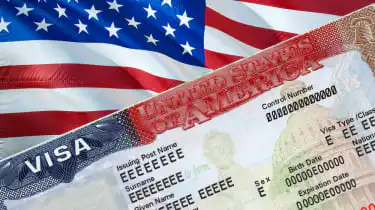
The United States government has announced plans to shorten the validity period of visas issued to international students and foreign journalists.
According to the U.S. Department of Homeland Security (DHS), the proposed rule would cap F visas—granted to foreign students studying in the U.S.—at a maximum of four years. Currently, student visas typically cover the full length of an academic program, which may extend beyond five years for doctoral candidates.
For international media professionals, visa validity would be restricted to 240 days, with the option of a single extension for another 240 days.
Journalists’ visas would also be tied strictly to the duration of their assignments. Any extension requests would have to be processed through U.S. Citizenship and Immigration Services (USCIS) and undergo additional security checks.
In the past, journalists from countries like Germany have received visas lasting up to five years.
“For too long, past administrations have allowed foreign students and other visa holders to remain in the U.S. virtually indefinitely,” DHS stated. “This practice poses security risks and financial burdens, and may disadvantage U.S. citizens.”
The department stated that the policy is designed to curb visa abuse and enhance oversight.
However, the proposal has already triggered backlash within the U.S. higher education sector.
Miriam Feldblum, president and CEO of the Presidents’ Alliance on Higher Education and Immigration, warned that the plan could create serious challenges for both students and institutions.
“The rule would force international students and scholars to regularly submit additional applications, disrupting their studies and straining university operations,” she said. Feldblum further cautioned that the uncertainty could discourage international talent from pursuing education and research opportunities in the U.S.