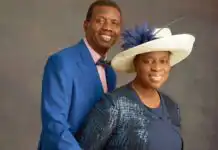


A firm position has been taken within the Redeemed Christian Church of God, as its General Overseer, Enoch Adeboye, publicly addressed calls to remove Nigeria’s First Lady from her pastoral role.
His response makes it clear that the church sees no grounds to reverse a decision made long before current political realities.
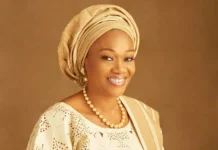
Speaking during a monthly Holy Ghost Service, Adeboye explained that Oluremi Tinubu was ordained as an Assistant Pastor over a decade ago after fulfilling all the necessary requirements within the church.
He emphasized that her ordination predates her husband, Bola Tinubu’s, presidential journey and therefore cannot be tied to present-day political developments.
The clarification comes amid growing public conversations questioning whether her position within the church should be reconsidered due to her role as First Lady.
Adeboye rejected that argument outright, stating that she has not violated any church doctrine or expectation that would justify such a move.
His stance also reinforced a broader principle about the church’s independence. According to him, the RCCG operates outside partisan alignment, welcoming members from across Nigeria’s political spectrum.
He specifically referenced attendance from parties such as the All Progressives Congress, the People’s Democratic Party, the African Democratic Congress, the All Progressives Grand Alliance, and the Labour Party of Nigeria.
However, he drew a clear boundary between inclusivity and political activity, stressing that while politicians are free to worship, the church altar is not a platform for campaign messaging or political promotion.
Beyond the issue of ordination, Adeboye also touched on national concerns, offering a spiritual perspective on Nigeria’s future leadership.
He stated that the individual who will emerge as the country’s next president has already been determined by God, a remark that is likely to resonate strongly within faith-based communities.
He further addressed concerns surrounding insecurity, particularly affecting Christian communities in parts of northern Nigeria.
In response to claims that the church has remained silent, Adeboye pushed back, outlining ongoing support efforts, including the establishment of camps for displaced persons and other welfare initiatives to assist affected members.
The statements come at a time when the intersection of religion and politics continues to generate debate in Nigeria. With influential religious leaders often shaping public discourse, remarks such as these carry weight beyond the church itself.
Adeboye’s message ultimately centers on consistency and principle. By affirming Oluremi Tinubu’s position, he has drawn a line between institutional decisions and external pressure, while also reiterating the church’s stance on neutrality in political matters.
As discussions continue, the development highlights a familiar reality in Nigeria’s public space, where faith, governance, and public expectation frequently overlap, often prompting conversations that extend well beyond the pulpit.