
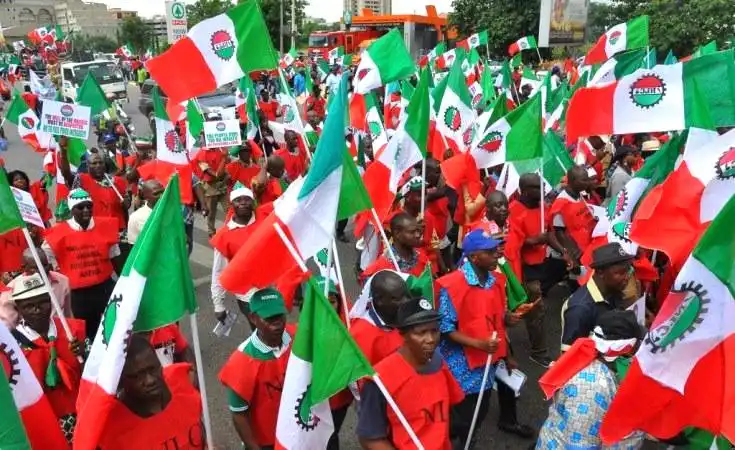
Fresh tensions may be brewing between organised labour and state governments after the Nigeria Labour Congress (NLC) rejected a proposal to increase the national minimum wage to ₦100,000, arguing that the figure falls far short of what Nigerian workers need to survive in the current economic climate.
The labour union insists that the realities facing workers today demand a far more substantial wage review, with officials suggesting that a living wage closer to ₦1 million would better reflect the country’s soaring cost of living.
The debate emerged following comments by AbdulRahman AbdulRazaq, who serves as chairman of the Nigeria Governors’ Forum.
According to the governors’ forum chairman, state governments are considering reviewing the national minimum wage in response to rising inflation, rising living costs, and the need to strike a balance between workers’ welfare and government finances.
While the proposal has been presented as an effort to improve workers’ earnings, labour leaders argue that the suggested figure does little to address the economic hardship many Nigerians currently face.
The NLC welcomed discussions on wage adjustments but maintained that ₦100,000 would be quickly eroded by inflation and would not significantly improve workers’ purchasing power.
Labour leaders pointed to a combination of economic pressures that have intensified over the past two years, including the depreciation of the naira, rising fuel prices, increased electricity tariffs, higher transportation costs, and growing food inflation.
According to the union, many workers now spend a substantial portion of their income on basic necessities, leaving little room for savings or improved living standards.
The labour body also questioned arguments that governments lack the resources to implement more meaningful wage increases.
Officials cited improvements in public revenue, including allocations from the Federation Account Allocation Committee (FAAC), as evidence that governments are generating more income than in previous years.
The union further noted that certain global economic developments have boosted government earnings in recent periods, arguing that workers should benefit from those gains rather than bear the burden of economic reforms alone.
At the heart of the dispute is a growing debate over what constitutes a realistic living wage in modern Nigeria.
For labour leaders, the issue extends beyond salaries and touches on broader questions of economic justice, productivity, and social stability.
They argue that adequately compensated workers are essential to national development and that stronger wages can stimulate economic activity by increasing consumer spending and improving living standards.
The disagreement comes against the backdrop of sweeping economic reforms introduced by President Bola Ahmed Tinubu since taking office.
The removal of fuel subsidies and the liberalisation of the foreign exchange market have been credited by government officials with improving public finances, but the policies have also contributed to higher living costs for many households.
As inflation continues to squeeze family budgets, calls for wage adjustments have grown louder across both the public and private sectors.
The current national minimum wage stands at ₦70,000 following negotiations concluded in 2024 between labour unions and the Federal Government. That agreement replaced the previous ₦30,000 minimum wage introduced in 2019 after lengthy discussions between labour and government representatives.
Less than two years later, however, rising prices have reignited demands for another review.
With both governors and labour unions acknowledging the need for higher wages but disagreeing sharply on the appropriate figure, the stage appears set for another round of intense negotiations.
For millions of Nigerian workers struggling to keep pace with rising costs, the outcome of those discussions could significantly affect household finances and living standards in the years ahead.