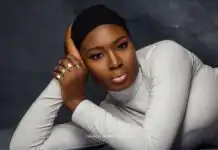


Nollywood actress Juliana Olayode has weighed in on the growing debate surrounding the role of religious leaders in Nigeria’s worsening security crisis, defending pastors who have come under fire for allegedly remaining silent while insecurity continues to affect communities across the country.
The actress shared her thoughts in a series of Instagram posts, addressing calls from some Nigerians who believe influential clerics should be more vocal about kidnappings, violent attacks, and other security challenges.
Her comments come at a time when public frustration is mounting, with citizens increasingly demanding that celebrities, religious leaders, and other prominent figures use their platforms to pressure authorities into taking stronger action.
While acknowledging those concerns, Olayode argued that many people misunderstand the role of pastors and the nature of their responsibilities.
“I know I might get dragged for saying this and not to deviate from the issue at hand, but I don’t know if it’s just my TikTok and Instagram algorithm, I’ve been seeing a lot of videos of people calling out pastors,” she wrote.
The actress agreed that religious leaders should not be completely detached from national issues. However, she stressed that the expectation that every pastor must publicly comment on political or social matters may be misplaced.
“Yes, I believe pastors should speak up more. So should Imams, Sheikhs, and everyone with a voice and influence,” she said.
Rather than focusing solely on public statements, Olayode argued that people should recognise that some forms of leadership and intervention happen behind the scenes.
According to her, a lack of social media commentary does not necessarily mean a person is unconcerned or inactive.
“But we should not automatically assume that those who are not speaking publicly on social media are doing nothing or are unconcerned about what is happening in the country. Not all meaningful action is visible online,” she stated.
The actress drew a distinction between activism and pastoral ministry, insisting that the primary calling of many clergy members differs from that of social commentators and political advocates.
“Pastors are not activists, though they certainly can speak on political and societal issues when they feel led to do so,” she wrote.
Olayode also acknowledged the scepticism many Nigerians have toward religious leaders, particularly in light of controversies involving some clerics over the years.
She noted, however, that negative experiences with certain individuals should not be used to judge all pastors.
“I understand that some people have no regard for pastors. We have seen and heard painful stories of what some have done in the name of God,” she said.
“But, while false pastors exist, so do genuine ones, men and women who serve faithfully, walk in integrity and carry their spiritual responsibility with sincerity.”
The actress further argued that pastors operate under what she described as divine authority and often approach national crises differently from activists or politicians.
Drawing from biblical examples, she suggested that public statements are not the only way spiritual leaders can respond to difficult situations.
“Yes, pastors are human beings like the rest of us, but they are under divine authority and also carry a spiritual responsibility before God,” she wrote.
“Throughout the scriptures, God’s servants didn’t always respond to national crises with public statements. Sometimes their assignment was to pray, intercede, offer counsel, and personally engage those in authority as God directed.”
Her comments have added a new perspective to an ongoing national conversation about accountability, influence, and leadership during times of crisis.
In recent weeks, calls for public figures to speak out about insecurity have intensified, with entertainers, influencers, and religious leaders increasingly facing pressure from Nigerians who want more visible advocacy.
For Olayode, however, the conversation should leave room for different forms of service and leadership.
While she supports speaking out when necessary, she believes genuine concern for a nation can take many forms, including prayer, private intervention, and spiritual guidance.
Her message ultimately challenges the idea that every impactful response must be seen online, arguing that some of the most significant actions may happen away from public view.