

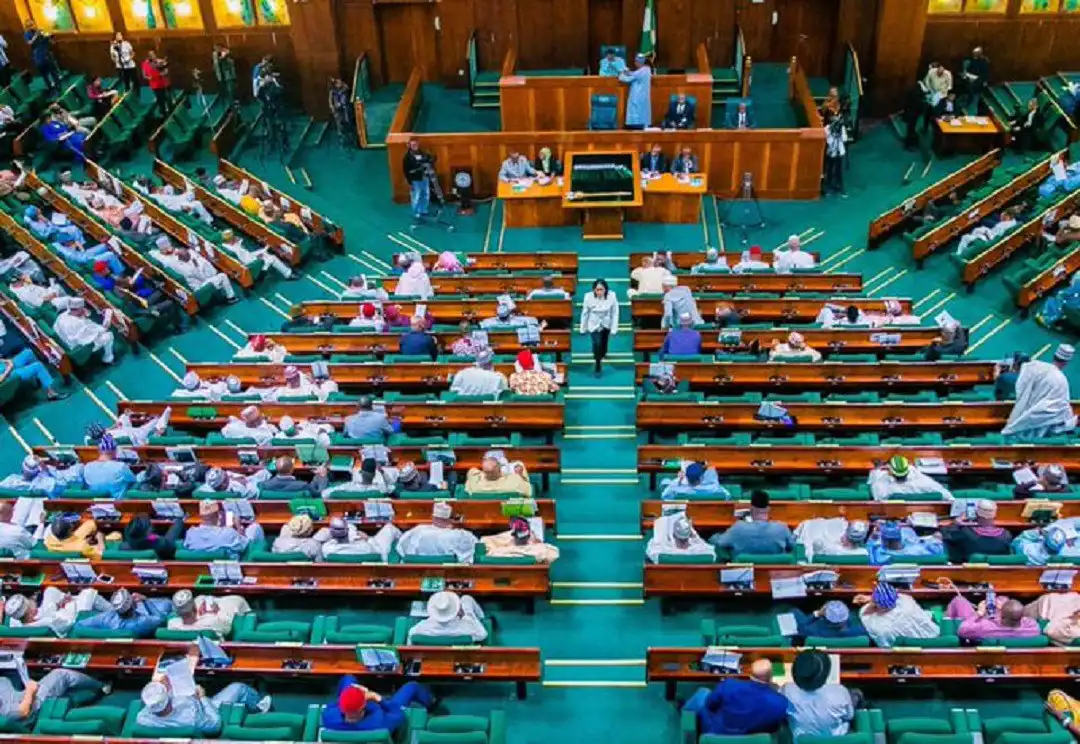
The House of Representatives has passed the State Police Bill, marking a significant milestone in efforts to reform Nigeria’s security architecture and decentralize policing nationwide.
The bill was approved during Thursday’s plenary session after an overwhelming majority of lawmakers voted in support of the proposal amid growing concerns over insecurity, including killings, kidnappings, banditry, and other violent crimes.
According to the voting results announced during the session, 289 lawmakers voted in favour of the bill, while only one member voted against it. Speaker of the House, Tajudeen Abbas, abstained from voting.
The plenary was convened specifically to consider the proposed constitutional amendment, which seeks to allow states to establish and manage their own police services alongside the existing federal police structure.
Supporters of the bill have argued that state policing would improve security response times, strengthen grassroots intelligence gathering, and help address the unique security challenges facing different parts of the country.
However, the debate was not without controversy.
During deliberations, a member representing the African Democratic Congress from Kaduna State, Bashir Zubairu, raised a point of order regarding the procedure adopted for considering the bill.
According to him, lawmakers were only provided with the report of the House Committee on Constitution Review on the day of the sitting, leaving little time for members to study the document adequately.
“Mr Speaker, this document was only made available to lawmakers in the chambers, and we are yet to go through it. We cannot do justice to it because we have not gone through it,” he said.
Despite the objection, Speaker Abbas ruled against the point of order and directed that proceedings continue.
The House subsequently moved into a clause-by-clause consideration of the bill, with lawmakers debating various provisions before the final vote.
The session witnessed intermittent objections and discussions from members, but the House ultimately proceeded to a decision.
Before the voting process commenced, Speaker Abbas informed lawmakers that the chamber’s electronic voting system was not functioning, making it impossible to conduct the exercise electronically.
As a result, the House adopted a manual voting process based on the number of members present in the chamber.
Out of the 290 lawmakers in attendance, 289 voted in favour of the bill, demonstrating broad bipartisan support for the proposed reform.
The passage of the State Police Bill is being viewed as one of the most significant security-related legislative developments in recent years.
However, the proposal still faces additional constitutional processes before it can become law, including consideration by the Senate and approval by the required number of state Houses of Assembly.
The debate over state police has remained a contentious issue in Nigeria for decades, with supporters arguing that decentralized policing is necessary to tackle insecurity more effectively. At the same time, critics fear state governments could abuse it for political purposes.
With the House of Representatives now giving its approval, attention will shift to the next stages of the constitutional amendment process as lawmakers continue discussions on one of the country’s most far-reaching security reforms.