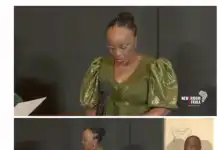


Cyril Ramaphosa, the President of South Africa, secured a second term through a coalition involving the African National Congress and other political entities, marking a significant departure from the past when the ANC solely dominated the political landscape following the end of apartheid in 1994.
Ramaphosa’s reelection for a second term took place late on Friday, following an agreement between his ANC party and the Democratic Alliance to establish a Unity Government, a novel development in South African politics that brought together typically opposing parties.
The vote results favored Ramaphosa over Julius Malema, the leader of the Economic Freedom Fighters, with 283 votes in his favor compared to Malema’s 44.
The process leading to Ramaphosa’s return involved unprecedented collaboration with opposition parties, culminating in the endorsement by the South African Parliament, a departure from the ANC’s historical ability to independently select the president post-election.
The ANC’s loss of its parliamentary majority in the 2024 elections prompted efforts to form a multiparty government, resulting in an agreement with the Democratic Alliance and other smaller parties like the Inkatha Freedom Party and the Patriotic Alliance.
During his address to parliament members, the 71-year-old Cyril Ramaphosa expressed gratitude for his reelection as president and acknowledged the collaborative efforts of the Democratic Alliance and other political parties in facilitating his return to office.