
The Federal Government has explained the rationale behind the augmentation of the fees levied upon Nigerians for the issuance of passports.
The government articulated that this escalation was incited by the fluctuations in the exchange rate between the United States dollar and the Nigerian naira.
The Honourable Minister of Interior, Olubunmi Tunji-Ojo, disclosed this information while addressing members of the press in Abuja on Friday.
He rationalized the increase in passport fees, asserting that the rise was merely approximately 45 percent.
In August, the Nigerian Immigration Service promulgated an upward revision of the fees associated with the Nigerian Standard Passport.
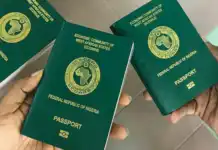
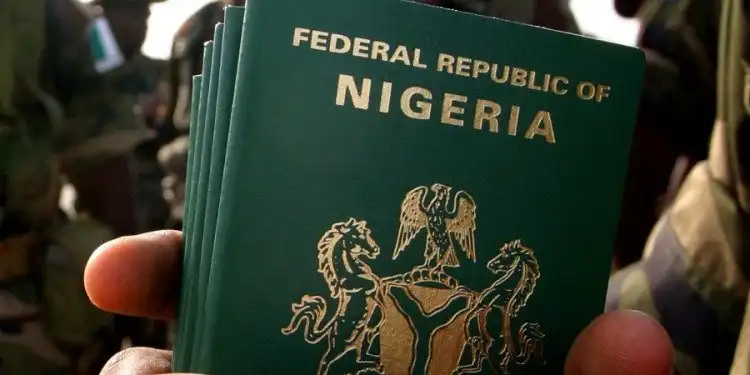
According to the recent revision, a 32-page passport booklet with a five-year validity, which was previously priced at N35,000, is now assessed at N50,000, while a 64-page passport booklet with a ten-year validity, formerly costing N70,000, is now charged at N100,000.
Numerous Nigerians have expressed dissatisfaction with the elevated fees, contending that this is part of the government’s initiative to render emigration more financially burdensome.
Nevertheless, during the media briefing in Abuja commemorating his inaugural year in office, the minister stated that the government cannot subsidize passport fees for its citizens.
He also clarified that the price increase does not pertain to passport fees for Nigerians residing abroad.
Tunji-Ojo said, “The increase in passport fees is a matter of cost-benefit analysis, especially when you consider the exchange rate between the dollar and the naira. If the government were to subsidise anything, I don’t think it should be passports. The increase is just from N35,000 to N50,000 — only about 45 per cent. There has been no increase for Nigerians abroad