
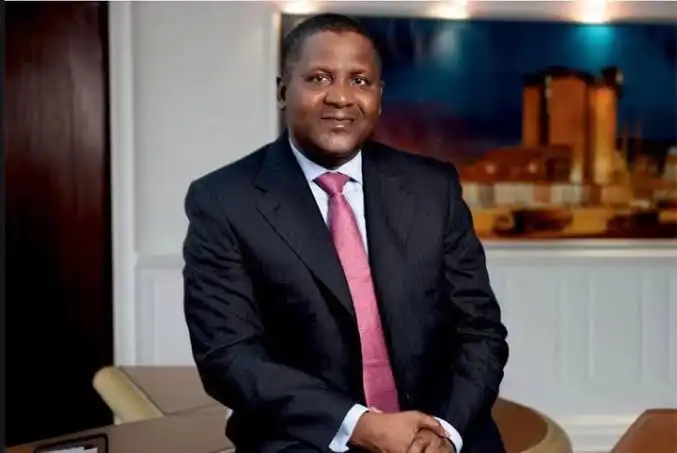
Africa’s richest man, Aliko Dangote, is charting new waters as he seeks regulatory approval to construct Nigeria’s largest and deepest seaport in Olokola, Ogun State — a landmark project aimed at expanding his industrial empire and revolutionizing Nigeria’s export and maritime logistics infrastructure.
According to Bloomberg, the proposed Atlantic seaport will be strategically located approximately 100 kilometres from Dangote’s massive fertilizer and petrochemical complex in Lagos. The seaport is designed to serve as a pivotal hub for Dangote’s fertilizer, petrochemical, and future liquefied natural gas (LNG) exports.
In an interview, Dangote confirmed that his group submitted paperwork to initiate the project in late June, describing the venture as “the biggest, deepest port in Nigeria.”
“It’s not that we want to do everything by ourselves, but I believe this kind of investment will inspire other entrepreneurs to get involved too,” Dangote said.
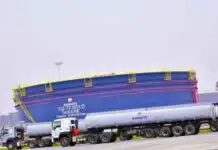
Currently, Dangote exports fertilizer and urea through a private jetty near his Lagos refinery. However, the new port would consolidate and significantly expand these operations — positioning itself to compete with major ports such as the Chinese-backed Lekki Deep Sea Port, which began operations in 2023.
The Olokola port will not only bolster Dangote Group’s fertilizer and petrochemical exports, but also support planned LNG exports, requiring new pipeline infrastructure from gas-rich areas in the Niger Delta to the southern coast.
“We want to do a major project to bring in more gas than what NLNG is doing today. We know where there is a lot of gas, so we’ll run a pipeline all the way and bring it to the shore,” Dangote explained, referencing Nigeria LNG Ltd, the country’s largest current LNG exporter.
His fertilizer plant already uses natural gas from the Niger Delta to produce hydrogen — a critical component in the manufacturing of ammonia and urea.
Dangote emphasized that projects of this magnitude, driven by long-term vision and strategic investments, are essential to reshaping Africa’s economic future and reducing dependence on foreign infrastructure.
Earlier this year, the billionaire industrialist projected that his conglomerate is on track to generate $30 billion in annual revenue by 2026, while also expressing confidence in surpassing Qatar to become the world’s top urea exporter within the next four years.