


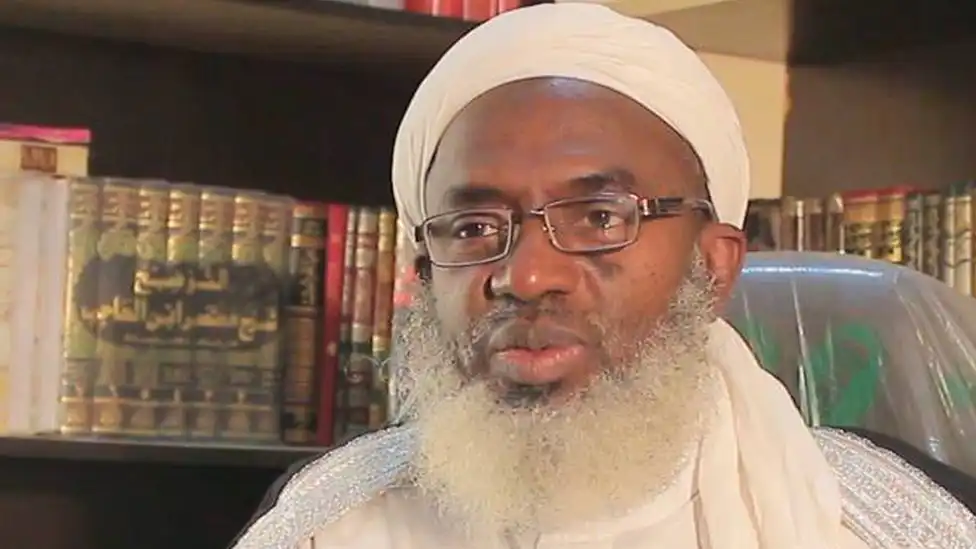
Popular Islamic scholar Sheikh Ahmad Gumi has refuted claims that he supports bandits, insisting that his involvement with armed groups is strictly for peacebuilding. His comments come as a surge in kidnappings across northern Nigeria sparks public outrage, school closures, and heightened Federal Government security operations. Gumi made the remarks during an interview on Frontline, a current affairs programme on Eagle 102.5 FM, Ilese-Ijebu.
Gumi dismissed growing calls for his arrest in the wake of the government’s actions against IPOB leader Nnamdi Kanu, who was recently sentenced to life imprisonment, and Yoruba Nation agitator Sunday Igboho. He argued that his engagements do not translate to endorsement, but rather represent humanitarian efforts aimed at conflict resolution.
“I am absolutely a peacemaker. I don’t want bloodshed. Nigerians forget that our military men are dying too. We recently lost a Brigadier General because of a stalemate with Boko Haram,” he said. He added that “These terrorists are supported by international interest groups who supply them logistics, weapons and intelligence. So, we are not fighting a ragtag group, we are fighting an international network.”
The cleric noted that some armed herders turned to violence because they lacked platforms to express their grievances. He explained, “It is like a doctor explaining an illness. People accuse the doctor of supporting the sickness. Understanding their side is the only way to propose a cure.”
Gumi emphasized that dialogue remains the most sustainable solution, arguing that military force alone cannot end the crisis. “Peace is still sweeter than war. Many of these fighters believe they are ready to die. We must show them the value of peace, education, hospitals and a better life. Their brutality is a sign of weakness, not strength,” he said.
Addressing reports that foreign influences fuel Nigeria’s insecurity, he stated, “Boko Haram, yes. There are professional, international interests involved, foreign bodies that supply them weapons and intelligence. The bandits, on the other hand, have more rudimentary weapons.”
He also dismissed former U.S. President Donald Trump’s claim that Nigeria is experiencing genocide, calling it misleading. “There is no Christian-Muslim war in Nigeria. Anyone pushing that narrative is not telling the truth,” he said. Describing Trump as uninformed, he added that the former president’s remarks should not be taken seriously and warned Nigerians against embracing foreign interference.
Responding to criticism about his visits to bandit camps, Gumi maintained that he acted with government awareness. “People do not know the full story. I was invited by the Zamfara State Government to help negotiate peace. We went with police, officials and the press. We sat with them only to hear their grievances. Many who shout online do not know the context,” he explained.
He defended reports of tactical military withdrawals during attacks, noting that “A platoon of nine soldiers cannot fight 300 bandits. The military sometimes must tactically withdraw to avoid unnecessary deaths. The bigger issue is lack of air support and drones.”
Gumi advocated for a structured amnesty programme similar to the Niger Delta model. “Amnesty helps you identify the fighters and give them reasons to drop arms. You cannot fight a ghost enemy forever. Many herders fear arrest if they surrender. We need real dialogue to address their grievances,” he said.
He proposed phased ranching supported by government infrastructure, stating, “We do not even have the resources to educate the young people already sitting peacefully with us. How then do we expect to ranch all the cattle in Nigeria? We must start with grazing routes and model ranches. If we create model ranches, herders will adopt them naturally.”
Gumi also cautioned against involving foreign military forces, asserting that internal solutions remain the best path to peace. “American military intervention will worsen things. Boko Haram is sponsored from outside, but herders are local and driven by survival. We should resolve the herder crisis internally,” he said.
Reiterating that he has no financial motive, he stated, “If I wanted money, I would join politics. I was a military captain. I am a medical doctor. I am not jobless and I do not need money from this.”
As insecurity worsens and pressure intensifies, Gumi maintained that his only mission is ending bloodshed and restoring peace across communities in northern Nigeria.