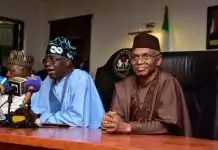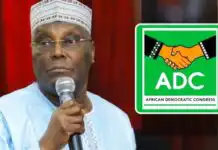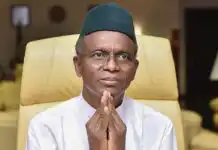


Former Vice President Atiku Abubakar and former Rivers State governor Rotimi Amaechi paid a late-night visit to former Kaduna State governor Nasir El-Rufai at his Abuja residence on Thursday, following an alleged attempt by security operatives to arrest him.
Amaechi was said to have visited in solidarity, condemning what he described as an improper move by operatives reportedly linked to the Department of State Services (DSS).
Airport Confrontation
The development followed a tense confrontation earlier in the day at the Nnamdi Azikiwe International Airport, where security agents allegedly attempted to take El-Rufai into custody shortly after he arrived from Cairo, Egypt.
According to El-Rufai’s media adviser, Muyiwa Adekeye, operatives approached the former governor upon disembarking and sought to detain him. El-Rufai reportedly declined, insisting he would not submit to arrest without a formal letter of invitation or warrant.
“Security agents today attempted to arrest Malam Nasir El-Rufai as he arrived on a flight from Cairo. Malam El-Rufai declined to follow them without a formal invitation.”
Videos circulating online showed a charged atmosphere at the airport, with supporters and bystanders demanding adherence to due process.
Adekeye further alleged that the operatives seized El-Rufai’s international passport during the encounter.
“They, however, snatched his passport from an aide.”
As of press time, it remained unclear whether the DSS or the Economic and Financial Crimes Commission initiated the move. Neither agency had issued an official statement.
Atiku’s Reaction
Reacting through his media office, Atiku condemned what he described as a “crude and unorthodox attempt” to arrest the former governor.
He warned against what he termed the politicisation of anti-corruption efforts, particularly actions perceived to target opposition figures, including members of the African Democratic Congress (ADC).
“While I support the anti-corruption effort in the country… I am worried about the politicisation of arrests that disproportionately target opposition leaders.”
Atiku also referenced the Uwais Panel on Electoral Reforms, noting its recommendation that the EFCC chairman be made accountable to the Chief Justice of Nigeria to preserve institutional independence.
He argued that failure to implement such safeguards risks undermining the credibility of anti-corruption agencies.
The situation adds another layer to Nigeria’s evolving political landscape ahead of 2027, as tensions between opposition figures and federal authorities continue to intensify.