


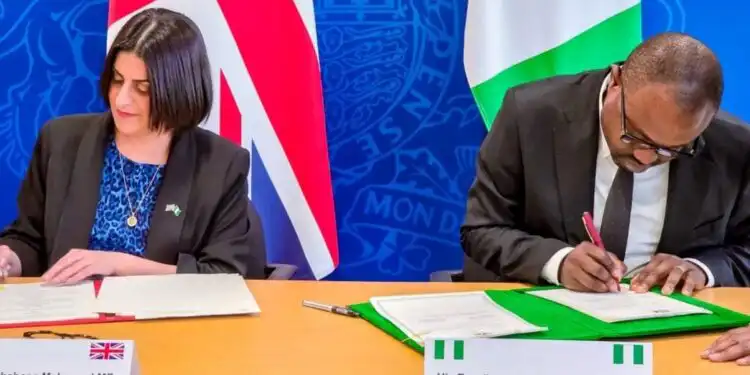
The United Kingdom has signed a new agreement with Nigeria to simplify and accelerate the deportation of failed asylum seekers, visa overstayers, and convicted offenders.
The deal, announced by the UK Home Office, forms part of broader immigration enforcement reforms and was concluded during President Bola Ahmed Tinubu’s state visit.
The agreement was signed by Home Secretary Shabana Mahmood and Nigeria’s Interior Minister Olubunmi Tunji-Ojo.
What changes under the agreement
A key feature of the deal is the acceptance of diplomatic documents known as “UK Letters” in place of traditional travel documents like passports—long considered a major bottleneck in deportation processes.
This means Nigerian nationals who have exhausted their legal right to remain in the UK can now be returned more quickly.
According to UK authorities:
-
961 Nigerians have exhausted asylum appeals
-
1,110 foreign national offenders are awaiting deportation
The agreement also extends to visa overstayers, widening the scope beyond asylum-related cases.
UK and Nigeria react
UK minister Alex Norris said the move is part of efforts to restore order to the immigration system.
“Today’s agreement is another step in our mission… ensuring those who have no right to be here are swiftly removed,” he said.
On Nigeria’s side, Tunji-Ojo described the deal as part of a broader push toward a rules-based and transparent migration system.
He added that the agreement would also support economic goals by reducing irregular migration barriers and improving mobility for legitimate travel and business.
Crackdown on fraud and cybercrime
Beyond deportations, both countries agreed to strengthen cooperation against:
-
Visa fraud
-
Cybercrime networks exploiting migration routes
A new document verification system will also be introduced to improve the integrity of visa applications, while Nigeria is expected to review its laws to impose stricter penalties for immigration-related offences.
Part of wider UK–Nigeria deals
The migration agreement is one of several deals signed during Tinubu’s visit—Nigeria’s first official state visit to the UK in 37 years.
Other key agreements include:
-
A £746 million deal to modernise Lagos ports, including Apapa and Tin Can Island
-
A $500 million dairy project between the Nigeria Sovereign Investment Authority and UK-based Asset Green Ltd
The visit also featured meetings with UK Prime Minister Keir Starmer and a state banquet hosted by King Charles III at Windsor Castle.
Bottom line
The agreement marks a significant tightening of immigration enforcement between both countries, while also reflecting deeper diplomatic and economic cooperation beyond migration policy.