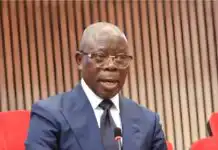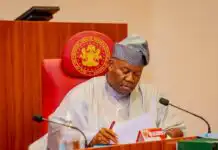

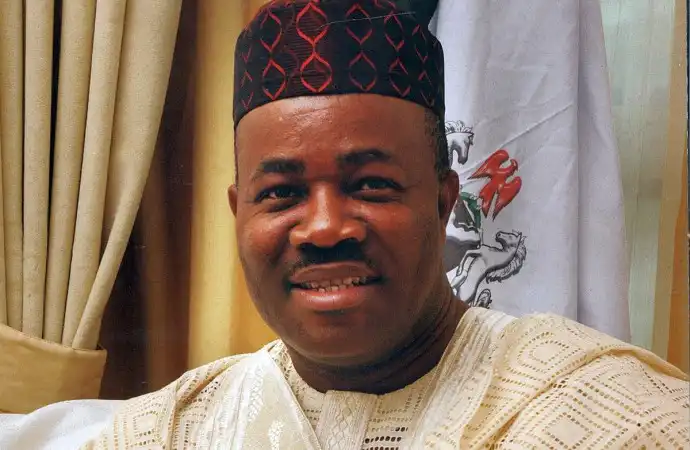
Tension flared on the floor of Nigeria’s Senate as Senate President Godswill Akpabio and Edo North lawmaker Adams Oshiomhole engaged in a sharp exchange during plenary, exposing growing friction over newly introduced legislative rules.
The confrontation unfolded during routine proceedings while Akpabio was reading the Votes and Proceedings from the previous sitting.
What began as a standard session quickly escalated when Oshiomhole attempted to raise a point of order, interrupting the process.
Akpabio immediately halted him, citing updated Senate rules that prohibit interruptions at that stage. The directive, however, did not settle the matter.
Oshiomhole pressed on.
His insistence prompted the Senate President to call on Orji Uzor Kalu, a former Chief Whip, to clarify the procedural rule before the chamber.
Kalu confirmed that senators are not permitted to raise points of order during the reading of Votes and Proceedings, reinforcing Akpabio’s position.
Even with that clarification, the disagreement continued.
At that point, Senate Whip Tahir Monguno stepped in, issuing a warning to Oshiomhole to desist from further disruption or risk disciplinary consequences.
The intervention underscored the seriousness of the situation, as procedural disagreements in the chamber rarely escalate to that level of caution.
Akpabio then moved to restore order, urging lawmakers to follow the session’s rules. But he also delivered a pointed warning that captured the mood in the chamber.
“Oshiomhole, if you become unruly, we will use the rules to take you out of the Senate,” he said.
The statement marked the peak of the exchange, drawing attention to the Senate leadership’s authority to enforce discipline when proceedings are disrupted.
Calm eventually returned as the chamber resumed its legislative business. A motion to adopt the Votes and Proceedings was moved by Adamu Aliero and seconded by Senate Minority Leader Abba Moro, allowing the session to proceed without further incident.
Beyond the immediate clash, the episode is widely seen as a reflection of deeper tensions stemming from recent changes to the Senate’s standing rules.
One of the key amendments introduces stricter eligibility criteria for leadership positions, requiring lawmakers to have completed at least two consecutive terms before they can contest for presiding roles.
That provision has significant implications.
It effectively disqualifies Oshiomhole from seeking certain leadership positions in the current Senate, a development that has fueled speculation about underlying political friction within the chamber.
The incident highlights how procedural rules, often viewed as routine, can become flashpoints when they intersect with political ambition and institutional power. In legislative environments, control of process is as important as control of numbers, and even minor breaches can trigger broader confrontations.
For now, the Senate has returned to order, but the exchange offers a glimpse into the tensions shaping Nigeria’s 11th National Assembly. As new rules continue to redefine internal dynamics, similar moments of friction may emerge, particularly when they affect access to influence and leadership within the chamber.