

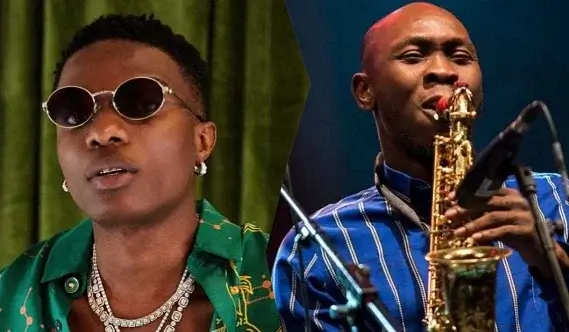
The tension between Seun Kuti and Wizkid is not cooling off anytime soon. In fact, Seun is making it clear that, from his perspective, there is no path to reconciliation.
Seun Kuti has described his disagreement with Wizkid as permanent, tying the conflict directly to what he considers disrespect toward his father, the late Fela Anikulapo-Kuti.
Speaking during an interview with Selah Meditate, Seun stated that his stance is not about personal rivalry or competition within the music industry. Instead, he framed it as a matter of principle and responsibility, particularly when it comes to protecting his father’s legacy.
According to him, any remarks he perceives as diminishing Fela’s influence cross a line that cannot be ignored or forgiven. For Seun, respect for his father is non-negotiable, and that position shapes how he engages with the situation moving forward.
The dispute first gained public attention earlier in 2026 when Seun criticized comparisons between Wizkid and Fela. He argued that such comparisons overlook the broader impact of Fela’s work, which extended far beyond music into activism, political resistance, and cultural identity.
Wizkid’s response on social media escalated the situation, with posts that included personal jabs and references that further deepened the divide. What might have remained a debate about legacy quickly turned into a full-blown public clash.
Since then, the conversation has continued to divide fans. Supporters of Wizkid point to his global achievements and influence in modern Afrobeats, while others align with Seun’s view that Fela’s contributions occupy a different historical and cultural space that should not be directly compared.
Seun’s latest comments now remove any ambiguity about his position. He is not seeking a resolution, and he does not view the situation as something that can be settled over time.
As the leader of Egypt 80, the band originally founded by his father, Seun has consistently positioned himself as a custodian of Fela’s legacy. His reaction to the controversy reflects that role, prioritizing preservation over compromise.
The broader implication of the clash goes beyond the two artists. It touches on a recurring conversation within Nigerian music about legacy, influence, and how different generations of artists are evaluated.
For now, however, the focus remains on the standoff. And if Seun Kuti’s words are anything to go by, this is one feud that is not heading toward a resolution anytime soon.