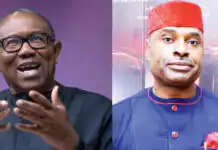

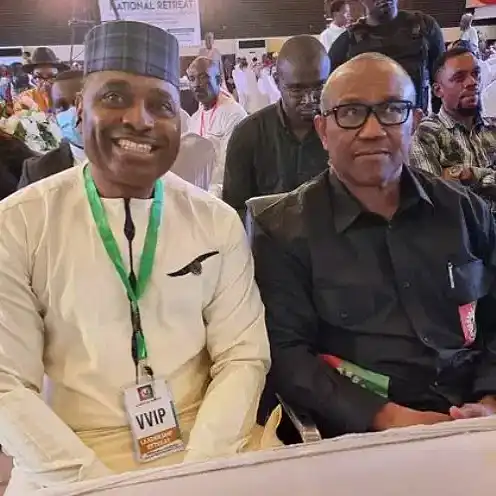
Nollywood actor and former Labour Party spokesperson Kenneth Okonkwo has delivered a sharp critique of Peter Obi, questioning his leadership capacity in comments that have reignited conversations within Nigeria’s opposition space.
In a strongly worded statement, Okonkwo argued that leadership in Nigeria requires resilience under pressure, suggesting that Obi’s political decisions reflect an unwillingness to confront difficult situations.
“I said I will not speak for a man who even if he wins and Nigerians give him the vote, does not have the capacity to even secure his own victory,” he said, framing his position around what he described as a gap between ambition and capability.
The remarks come against the backdrop of ongoing political realignments, in which party movements and coalition-building have become central to opposition strategy ahead of future elections.
Okonkwo referenced Obi’s history of switching political platforms, noting that while changing parties is not inherently a flaw, the reasoning behind such moves matters.
“Changing parties is not what questions your capacity, your competence or your character, it is the reason you adduced for changing party,” he said.
He went further to challenge Obi’s justification for past decisions, claiming it reflects a broader issue of temperament.
According to Okonkwo, a leader tasked with navigating Nigeria’s complex socio-economic and security challenges must demonstrate the ability to face adversity head-on rather than avoid it.
He questioned whether someone perceived as stepping away from difficult political environments could effectively manage the scale of issues confronting the country.
“How can a man who is running away from challenges be able to face the challenges we are facing in Nigeria today?” he asked.
The criticism culminated in a broader conclusion about leadership suitability, with Okonkwo asserting that Obi’s approach does not align with the demands of the current national climate.
“I am sorry Peter Obi’s temperament and capacity is incompatible with the requirement of Nigeria of today,” he stated, adding that Obi’s political movements would not impact the African Democratic Congress.
The comments have since triggered mixed reactions, reflecting the deeply divided opinions that continue to shape Nigeria’s political discourse. Supporters of Obi argue that his political decisions have been strategic rather than evasive, while critics see them as evidence of inconsistency.
Beyond the immediate exchange, the episode highlights a recurring theme in Nigerian politics: the tension between perception and performance.
Leadership debates are increasingly framed not just around policies but also around personal traits such as resilience, adaptability, and decision-making under pressure.
As political alignments continue to shift, statements like Okonkwo’s are likely to fuel further scrutiny of key figures in the opposition.
With future elections on the horizon, narratives around competence and character are expected to play a defining role in shaping public opinion.
For now, the clash of perspectives underscores one reality: Nigeria’s political conversation is intensifying, and voices from both within and outside formal party structures are actively shaping the narrative.