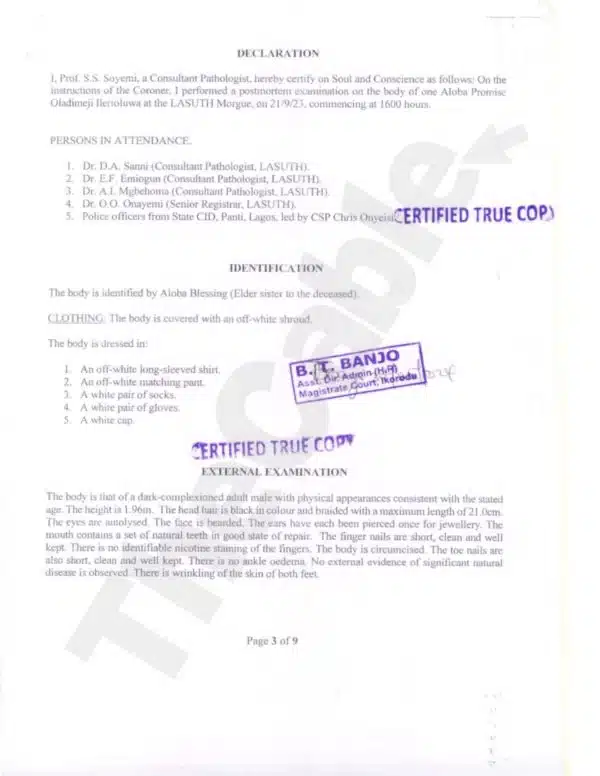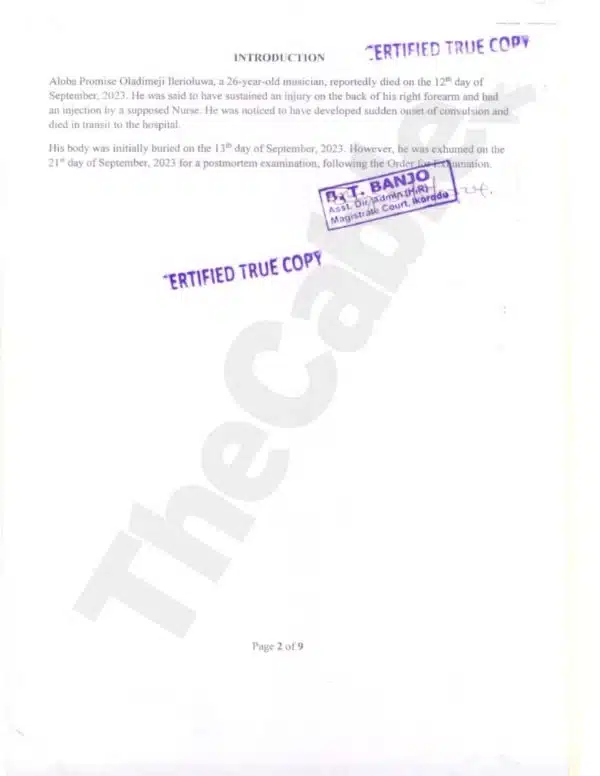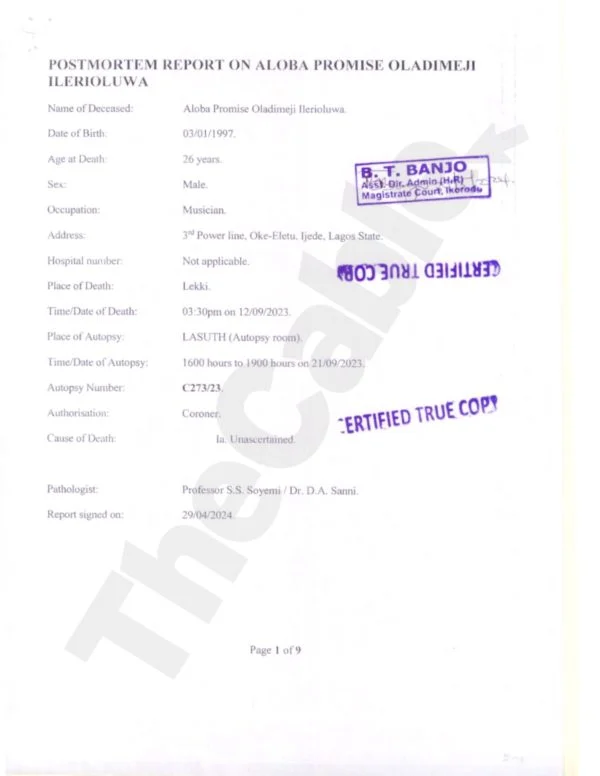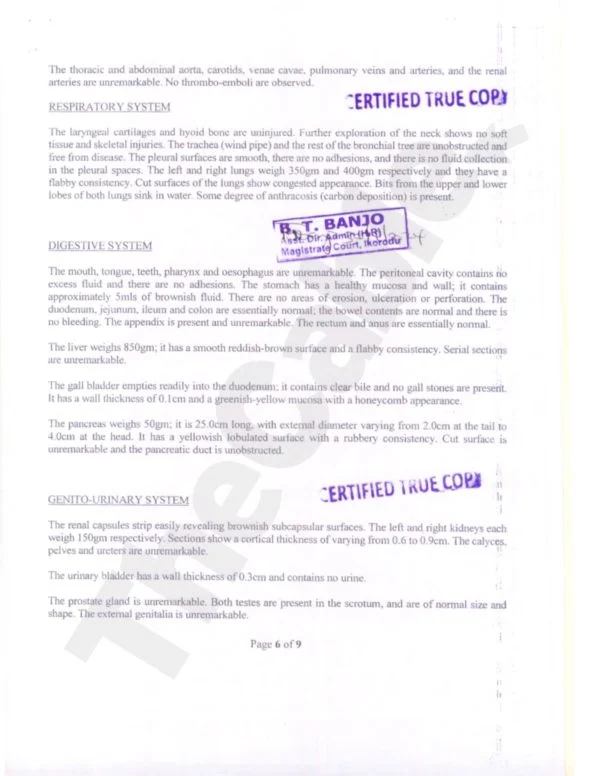


The post-mortem examination performed on the deceased Afrobeats artist Mohbad has disclosed the potential cause of his passing.
The findings from the autopsy carried out at the Lagos State University Teaching Hospital (LASUTH) were acquired by TheCable Lifestyle on Thursday.
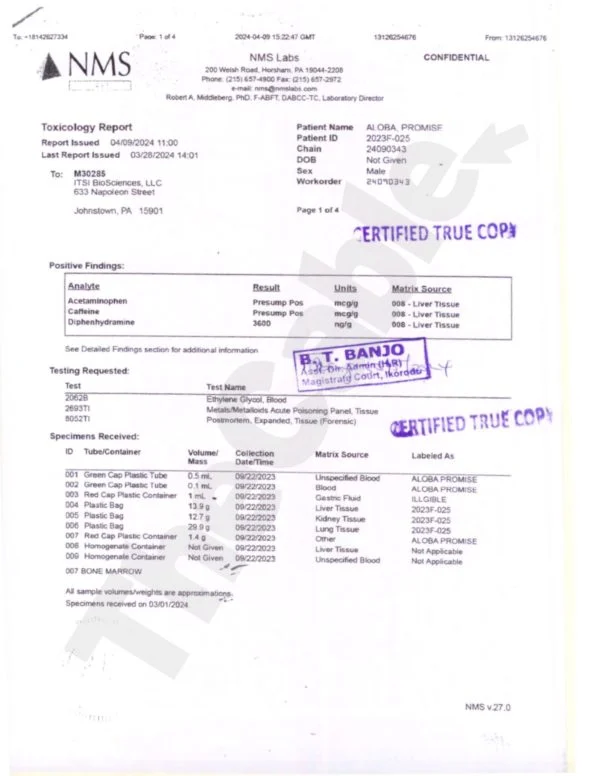
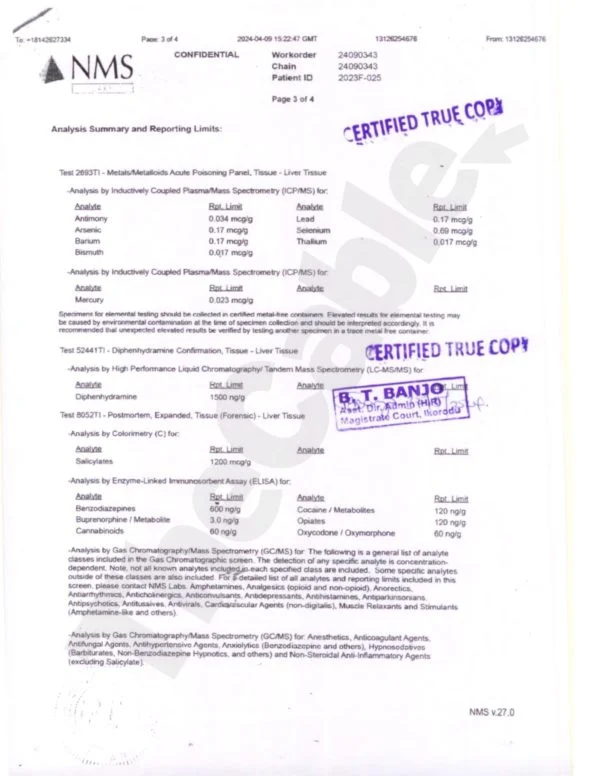
As outlined in the document, specimens of the late singer’s gastric contents, blood, bone marrow, liver, kidney, and lung were collected for toxicological analysis.
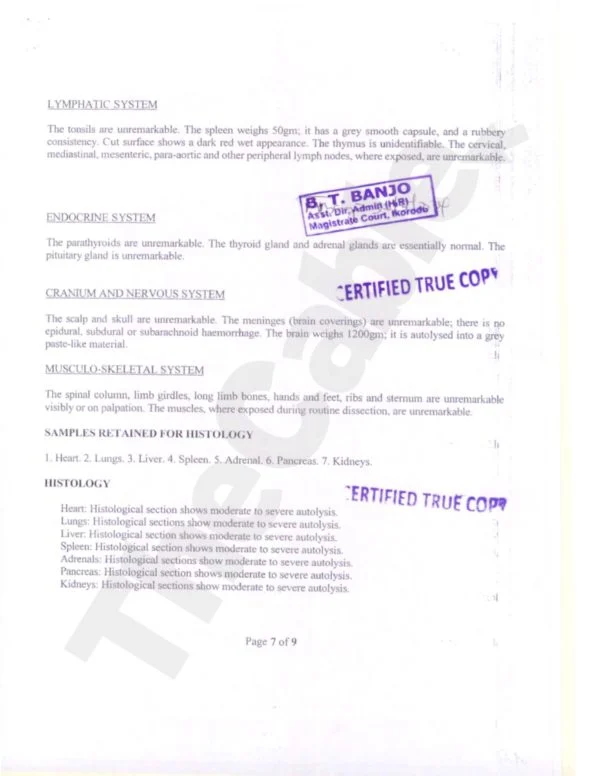
The anatomical and pathological discoveries indicated that Mohbad sustained an injury on his right forearm and his body exhibited moderate to severe decomposition.
The examination further revealed that there were no significant visible abnormalities that could be linked to the artist’s demise.
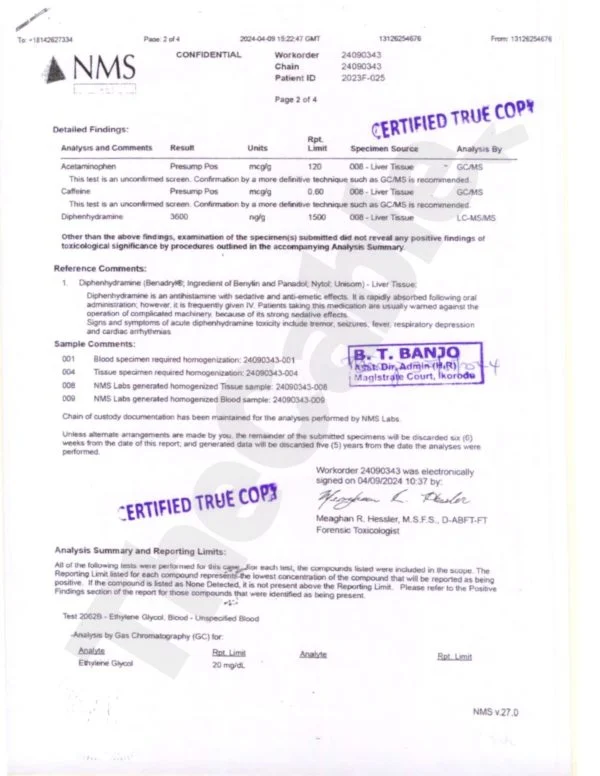
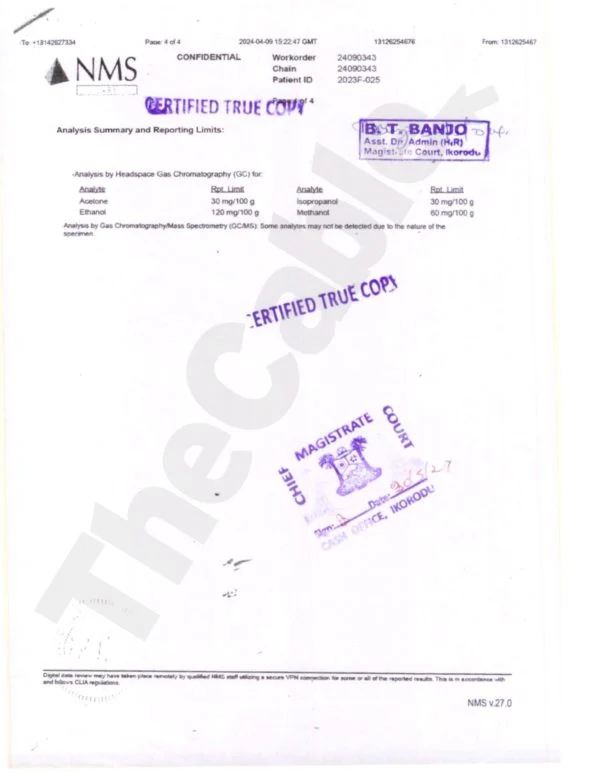
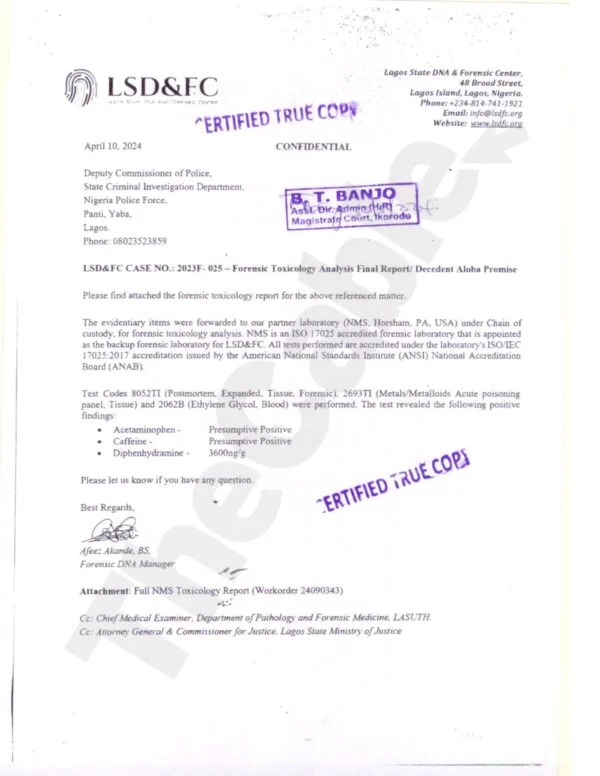
Subsequently, the toxicology assessment identified the presence of Diphenhydramine, an antihistamine; nevertheless, the concentration detected did not fall within a lethal range.
Antihistamines are pharmaceuticals utilized for alleviating allergy symptoms and various other conditions like gastrointestinal issues, colds, and anxiety.
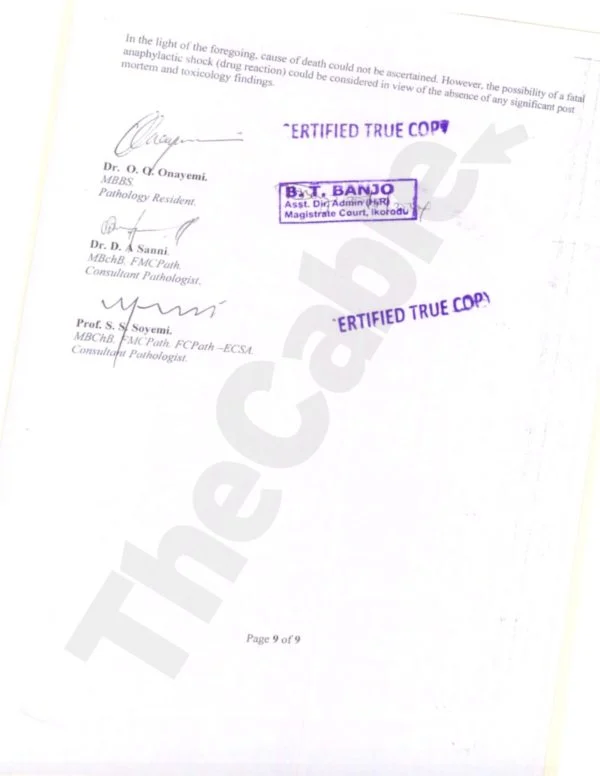
The documentation indicated that the exact cause of death remained undetermined. Nonetheless, it suggested the potential occurrence of a drug reaction based on any notable findings from the post-mortem and toxicology analyses.
“It is noteworthy that the body neither had an autopsy nor embalmed prior to interment on the second day
“Following the Order for Exhumation, the body was exhumed on 21/09/2023 (8 days after the burial).
“Autopsy revealed moderate to marked decomposition of organs. Apart from the superficial injury on the right forearm, no significant gross finding could be attributed to death.
“Against this background, samples were taken for toxicology. This is to determine if there was any anaphylactic reaction, substances of abuse, overdosage or common household poisoning.
“Toxicology revealed positive findings of Diphenhydramine, an anti-histamine; however, this concentration was not in a fatal or lethal range. The other analytics were unremarkable.
“In determining fatal anaphylactic shock, blood sample needs to be taken as quickly as possible.
“Unfortunately, this was prevented or made impossible by the burial of the deceased on the second day. In the light of the foregoing, cause of death could not be ascertained.
However, the possibility of a fatal anaphylactic shock (drug reaction) could be considered in view of the absence of any significant post mortem and toxicology findings,” the report read.
See photos below: