
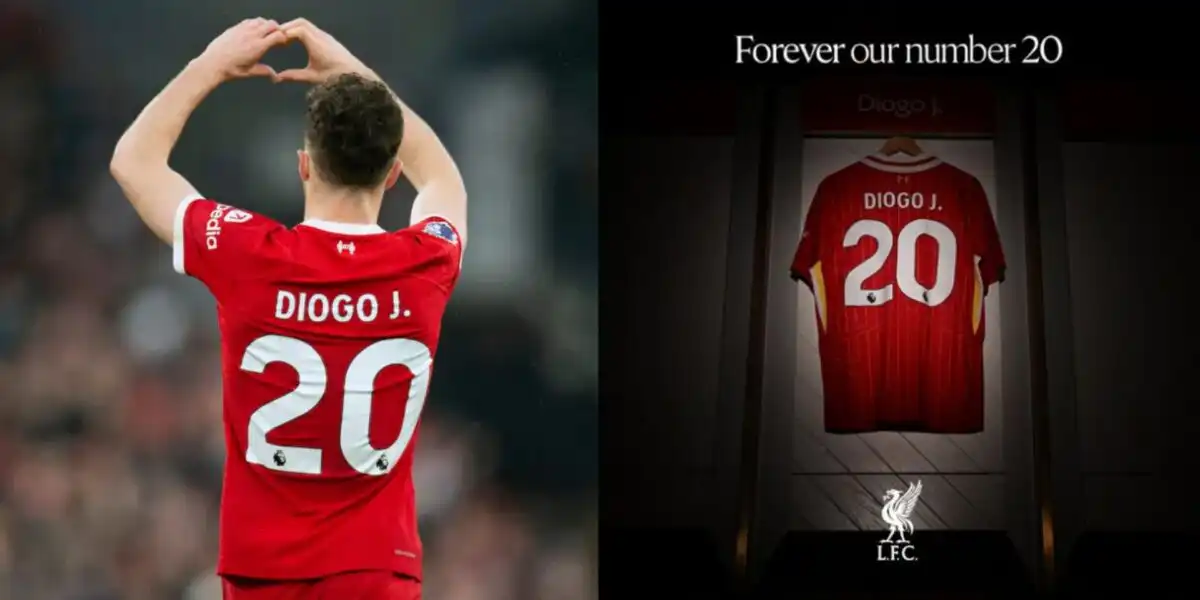
In a deeply emotional tribute, Liverpool Football Club has officially retired Diogo Jota’s iconic No. 20 jersey following the Portuguese forward’s tragic death in a car crash in Spain last week at the age of 28. His younger brother, Andre Silva, also died in the accident.
The club confirmed the decision in a statement on Saturday, revealing that no player across the men’s, women’s, or academy teams will ever wear the No. 20 shirt again. The move was made after consultations with Jota’s wife, Rute, and his family.
“After consultation with his wife, Rute, and family, the club can announce the squad number will be retired in honour and memory of Diogo across all levels,” the statement read.
“By retiring this squad number, we are making it eternal, and therefore never to be forgotten.
“Diogo joined us in 2020, he won us number 20, and he wore with honour, distinction and affection, the number 20. As far as Liverpool Football Club is concerned, he will be forever our number 20.”
Diogo Jota, who signed from Wolverhampton Wanderers in 2020, scored 49 goals in 131 appearances, playing a key role in Liverpool’s attacking lineup and contributing to the club’s domestic and international successes.
Beyond the pitch, Diogo Jota was described as having a “profound personal impact” on teammates, club staff, and fans, with his humility, dedication, and team spirit widely praised.
In a joint statement by key executives—Mike Gordon, Billy Hogan, John Henry, and Tom Werner—Liverpool FC acknowledged the unprecedented nature of the tribute:
“The fact that in the long and storied history of our club this honour has never previously been bestowed shows the significance of Diogo to Liverpool Football Club.
“His memory and contribution will be immortalised by his association with the number 20.”
The club also extended deep condolences to Rute, their three children, and the entire Jota family as they navigate the unimaginable grief from this loss.
As the football world continues to mourn, Diogo Jota’s legacy at Liverpool will live on—not just through his goals and accolades, but through the eternal retirement of his number, a symbol of the love and respect he earned from an entire footballing community.