
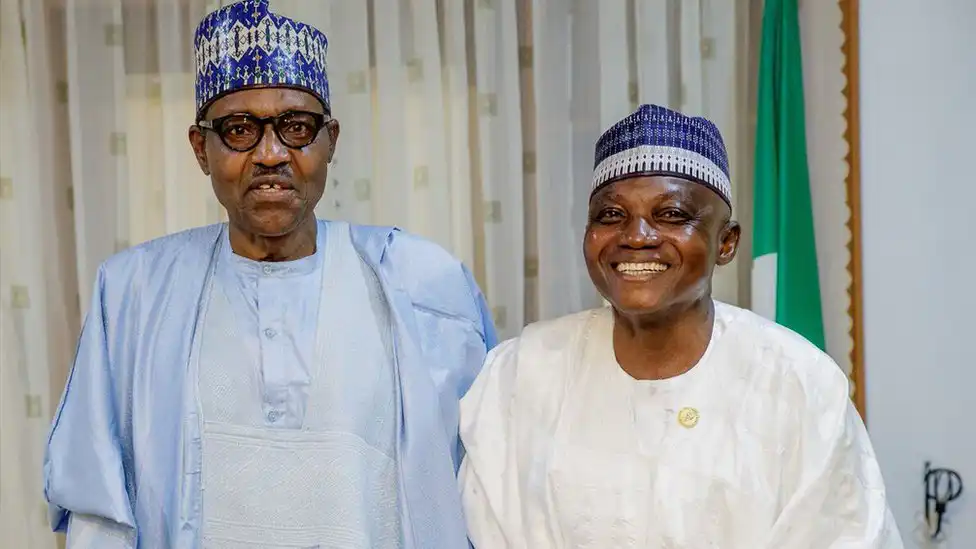
Garba Shehu, former Senior Special Assistant on Media and Publicity to ex-President Muhammadu Buhari, has admitted that his 2017 statement about rats invading the Presidential Villa was a calculated media distraction.
In his newly released memoir, ‘According to the President: Lessons from a Presidential Spokesperson’s Experience’, Shehu revealed the real reason behind the now-infamous claim, saying it was designed to divert public attention from Buhari’s health struggles at the time.
“It Was a Spin” — Shehu Confirms in Chapter 10
The revelation is detailed in Chapter 10, aptly titled “Rats, Spin and All That.” Shehu explained that after Buhari returned from a medical leave abroad in 2017, fellow aide Bashir Ahmad announced that the president would be working from home. The announcement sparked a media frenzy, with journalists questioning why the president couldn’t resume from his official office.
“With reporters wanting to know more, the number of calls increased, with some, including the BBC Hausa, interrogating me on the type of rats we had in the Villa that could eat wire cables,” Shehu recalled.
In an effort to shift the narrative, Shehu leaned on satirical deflection:
“To get them off my back, I referred them to the strange rats that invaded the country in the 1980s during the rice armada that came here aboard ships bringing the commodity from Southeast Asia.”
Ministers Disagreed With His Tactic
According to Shehu, his approach was later questioned by Minister of Information Lai Mohammed and Vice President Yemi Osinbajo, who felt the explanation was inappropriate.
“I said to them that the choice I made was deliberate: I wanted the discussion to shift, to move to any other issue besides the president’s health… In my view, that spin succeeded. Both of them disagreed, saying that this was well off the mark.”
The 2017 rat story became one of the most talked-about moments of Buhari’s presidency, sparking national and international headlines, public mockery, and memes across social media.
With this latest admission, Garba Shehu not only sheds light on how media narratives are crafted in high political offices but also reopens conversations about transparency and communication in leadership.