
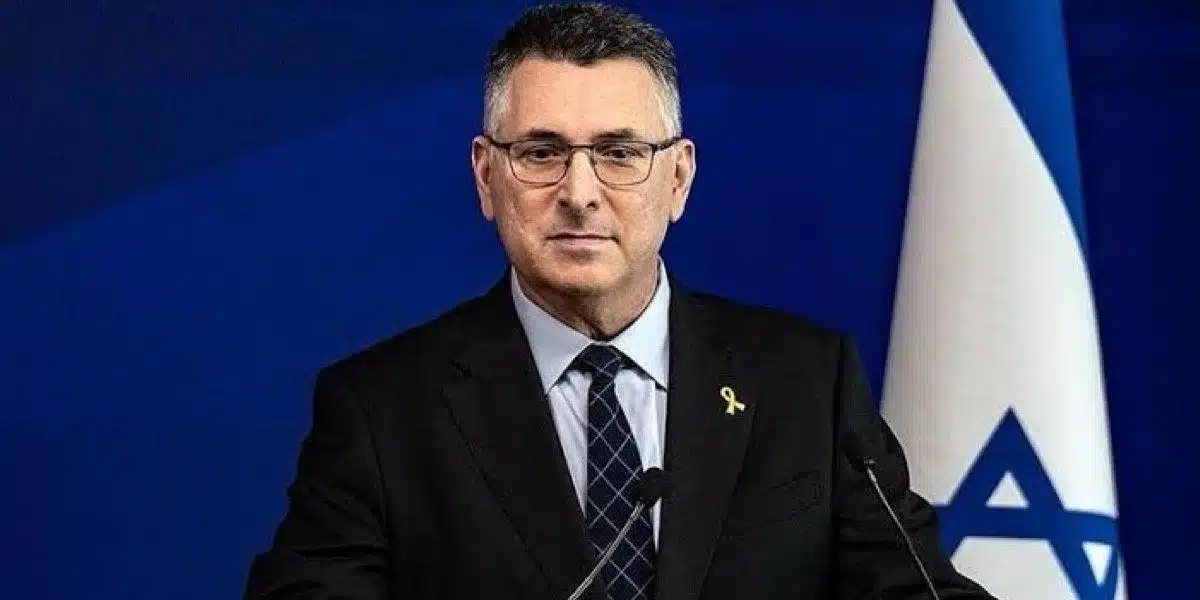
Ongoing Israeli airstrikes have set back Iran’s suspected nuclear weapons program by at least two to three years, according to Israeli Foreign Minister Gideon Saar.
Speaking to German news outlet Bild on Saturday, Saar said intelligence assessments suggest that the strikes have inflicted severe damage on Tehran’s nuclear ambitions.
“According to the assessment we hear, we already delayed for at least two or three years the possibility for them to have a nuclear bomb,” Saar said, adding that Israel remains committed to eliminating the perceived threat posed by Iran’s nuclear capabilities.
This statement follows more than a week of escalating conflict since Israel began targeting Iranian nuclear and military sites on June 13, prompting a barrage of missile and drone attacks from Iran’s Revolutionary Guards in retaliation.
So far, Israel claims Iran has launched over 450 missiles and 400 drones, primarily aimed at military installations. However, civilian casualties are rising on both sides. Iran reportedly suffered 657 fatalities, including 263 civilians, according to the U.S.-based Human Rights Activists News Agency. Israel says 25 people have died, with scores injured in cities such as Haifa.
U.S. President Donald Trump has maintained a hardline stance, warning Iran that it has “a maximum of two weeks” to de-escalate or risk American military involvement. Trump also dismissed European diplomatic efforts, insisting any meaningful talks must be held directly with Washington.
Efforts at reviving nuclear negotiations hit another roadblock in Geneva, where Iranian Deputy Foreign Minister Abbas Araghchi rejected calls from British, French, and German diplomats to return to the table.
Meanwhile, the International Atomic Energy Agency (IAEA) confirmed Iran’s uranium enrichment had reached 60% purity, though its chief, Rafael Grossi, cautioned that claims of Iran nearing bomb capability remain speculative.
As tensions simmer, foreign embassies, including Switzerland’s in Tehran, are scaling back operations, and the Organisation of Islamic Cooperation (OIC) is preparing an emergency session in Istanbul to address the worsening crisis.