


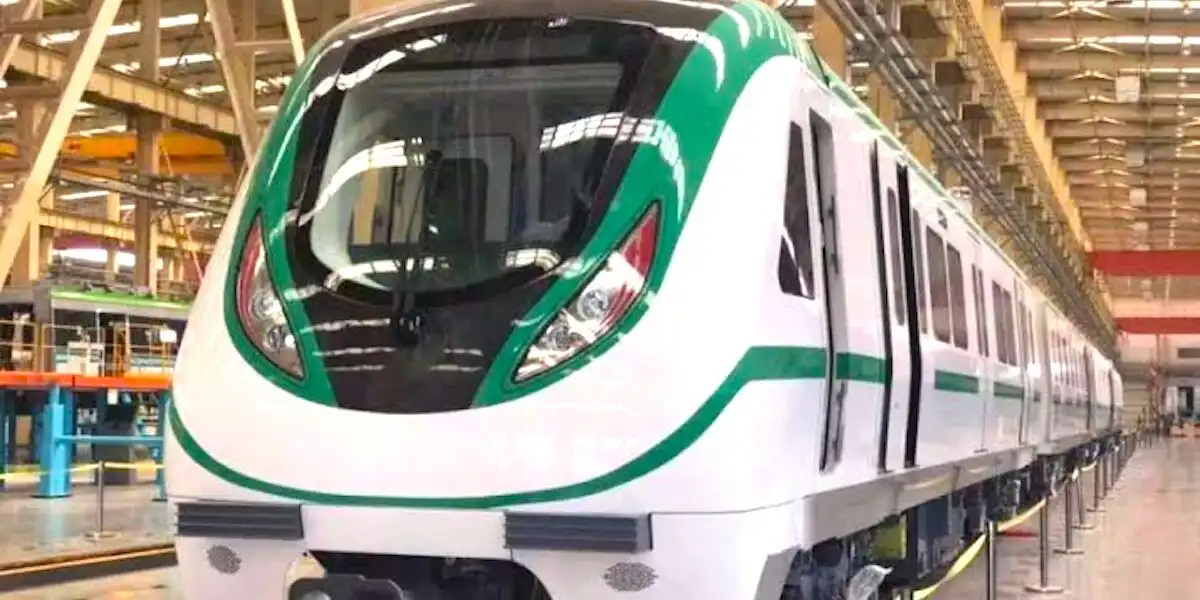
Nigeria is set to roll out one of Africa’s most ambitious infrastructure projects — a 4,000-kilometre high-speed rail line, popularly known as a bullet train, alongside major gas development initiatives.
The project will be spearheaded by De-Sadel Nigeria Limited in partnership with China Liancai Petroleum Investment Holdings Limited, and is projected to be completed within 36 months of commencement.
At a briefing in Abuja, Samuel Uko, CEO of De-Sadel Nigeria Limited, presented a $60 billion proof of funds to the Secretary to the Government of the Federation (SGF), Sen. George Akume. He explained that the first phase of the bullet train will connect Lagos, Abuja, Kano, and Port Harcourt, with phased construction allowing completed sections to begin operations before the final delivery.
“The 1,600 kilometres covering the four major cities will take us 36 months to build. But we won’t wait until the 36th month. As we progress through the states, completed portions will become operational,” Uko said.
According to Uko, funding will come from the Asian Development Investment Bank, with the first phase estimated at $55 billion. He also revealed that the project has secured almost 90% of necessary approvals under the current administration after nearly a decade of planning.
On the gas development aspect, Uko stressed the synergy between energy and transport:
“You cannot develop high-speed rail without developing the gas aspect of the economy. The raw material for high-speed rail is power, and the raw material for power is gas. We must expand our gas sector to power this transformative project.”
In response, SGF George Akume described the initiative as a welcome development, while assuring that the government will carefully scrutinise the proof of funds in line with global best practices.
“This administration is business-friendly, but we must ensure that partnerships are reliable, credible, and beneficial to all parties. The $60 billion proof of funds submitted will be critically reviewed to guarantee the viability and timelines of the bullet train project,” Akume said.
If approved, the bullet train network is expected to revolutionise transportation, boost industrialisation, and strengthen Nigeria’s gas economy, positioning the nation as a continental hub for modern rail transport.