
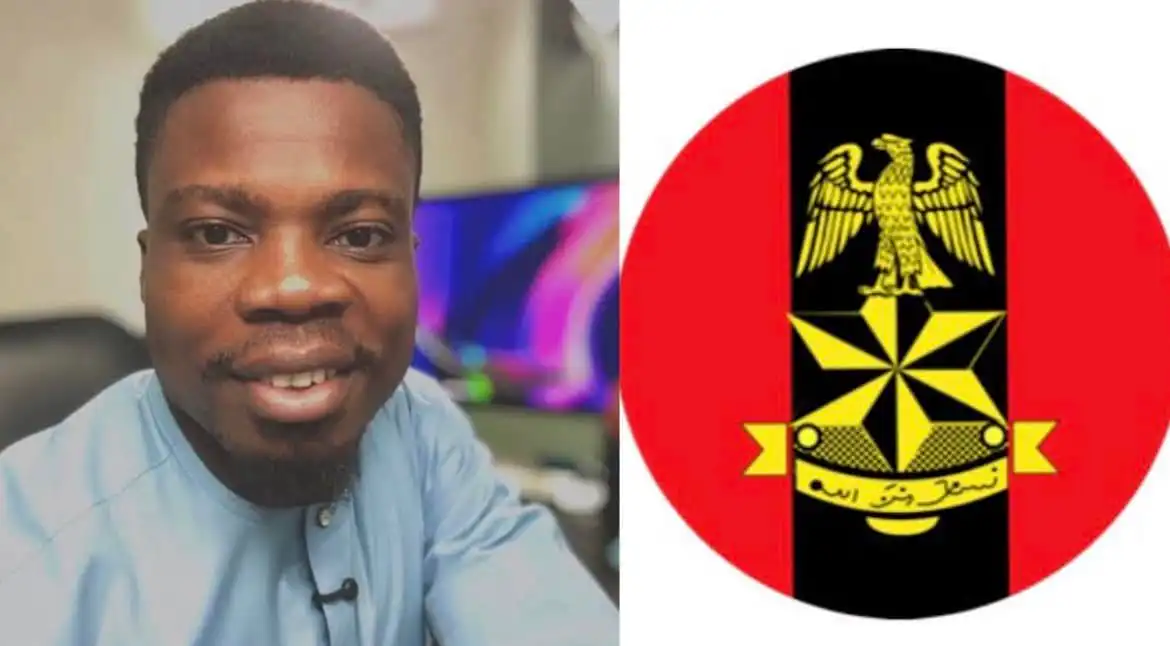
The Nigerian Army has broken its silence on the arrest of popular content creator Justice Mark Chidiebere, widely known as Justice Crack, following days of online concern over his whereabouts and growing calls from activists demanding accountability.
In a statement dated May 2, 2026, the Army said its actions were tied to an ongoing investigation into activities it believes may have crossed from advocacy into actions that could undermine military discipline.
Justice Mark Chidiebere had earlier gained attention after sharing videos highlighting alleged poor feeding conditions and welfare concerns among soldiers. The content quickly circulated online, sparking debate and drawing sympathy from sections of the public.
However, according to the Army, the situation extended beyond those initial claims. The statement, signed by Appolonia Anele, Acting Director of Army Public Relations, said preliminary findings suggest that Chidiebere engaged in conversations with soldiers that went beyond welfare discussions.
The Army alleges that these interactions included attempts to encourage dissatisfaction within the ranks, describing them as actions that could incite discontent.
It further claimed that at least one exchange raised concerns about discussions “bordering on subversion,” a term that signals potential threats to internal order and command structure.
The Nigerian Army also pointed to a possible violation of its Social Media Policy and to what it described as the spread of misleading information to the public.
As part of its response, the Army confirmed that Chidiebere was detained alongside some soldiers connected to the matter. It clarified that while the soldiers remain in military custody, the content creator has now been transferred to civil authorities for further investigation and possible legal action.
The development comes after days of public pressure, with activists raising concerns about his disappearance and questioning whether his fundamental rights had been violated. Those concerns were largely driven by the absence of official information in the immediate aftermath of his arrest.
The Army sought to address those concerns by reaffirming its commitment to the rule of law in its statement. It emphasized that all actions taken are within legal frameworks and that it is working with relevant agencies to ensure due process is followed.
Beyond the immediate case, the situation highlights a sensitive intersection between digital activism and national security. While social media has become a powerful tool for raising awareness of issues such as welfare and governance, the military operates under strict rules that limit engagement and communication, particularly with civilians on internal matters.
The case of Justice Crack now sits at the center of that tension. On one side is the argument for transparency and accountability. On the other hand, the military’s position is on discipline, information control, and national security.
As investigations continue, the outcome is likely to shape how similar cases are approached in the future, especially as more content creators engage with sensitive institutional topics.
For now, the focus remains on what the investigation will reveal and how both legal and public scrutiny will influence the next steps in a case that has already captured national attention.