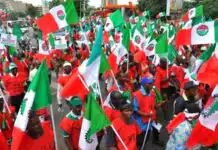

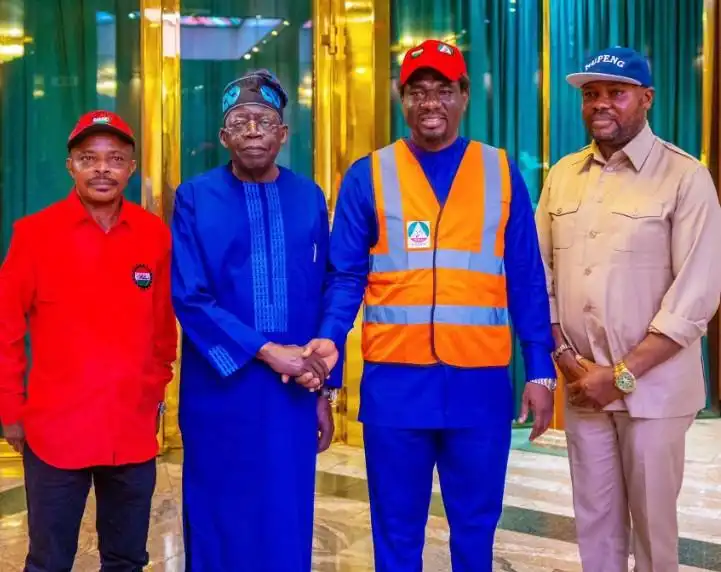
The Nigeria Labour Congress (NLC) has issued a stern warning to the National Assembly over a proposed constitutional amendment that would allow individual states to set their own minimum wage, vowing to resist any such move with full force.
Speaking on Friday at the National Administrative Council (NAC) meeting of the Central Working Committee in Abeokuta, Ogun State, NLC President Joe Ajaero described the proposal as “an exercise in futility.”
He argued that minimum wage is globally recognized as a national matter, governed by International Labour Organisation (ILO) conventions that treat member nations—not their sub-national units—as single entities in labor-related matters.
“This attempt to decentralize wage determination is a calculated effort to destroy the national minimum wage structure and create a system where workers in some states may be underpaid and further marginalized,” Ajaero stated.
The proposed amendment, if passed, would transfer labour issues from the exclusive legislative list—where they are solely under federal control—to the concurrent list, granting states the power to determine wages and establish their own industrial courts for labour disputes.
Ajaero contended that such a move would violate ILO conventions to which Nigeria is a signatory.
He also pointed out the irony that lawmakers pushing for decentralized wage control are not proposing that their own salaries be subject to state decisions.
“The National Assembly should not go into this exercise in futility unless members will also allow their respective states to determine their wages,” Ajaero declared, hinting at double standards.
The NLC president reaffirmed the union’s commitment to protecting workers’ rights nationwide, emphasizing that weakening the federal minimum wage framework would only exacerbate economic inequality and deepen poverty in states with weaker fiscal capacities.
As labour tensions mount over wage reform and economic challenges, this standoff between the NLC and the National Assembly could shape the future of workers’ rights and labour governance in Nigeria.