
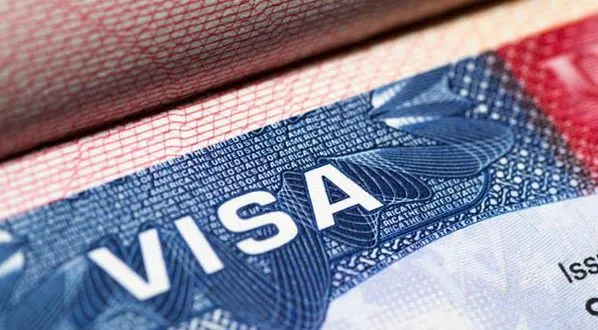
The United States has rolled out new travel measures that may significantly affect Nigerians seeking B1/B2 visitor visas, with applicants potentially required to post visa bonds of up to $15,000.
According to a notice issued by the US State Department, “any citizen or national traveling on a passport issued by one of these countries, who is found otherwise eligible for a B1 B2 visa, must post a bond for $5,000, $10,000, or $15,000”, noting that “the amount is determined at the time of the visa interview.”
The policy also introduces additional procedural requirements for applicants. The notice states that “The applicant must also submit a Department of Homeland Security Form I 352” and that “Applicants must agree to the terms of the bond through the Department of the Treasury’s online payment platform Pay gov.”
Applicants were cautioned against making payments without official instructions from consular officers. The notice emphasized that “a bond does not guarantee visa issuance” and warned that “if someone pays fees without a consular officer’s direction, the fees will not be returned.”
For Nigerian applicants, the policy is scheduled to take effect from January 21 and applies “regardless of place of application.”
In addition to the financial requirement, the policy places restrictions on points of entry into the United States. Nigerians who post visa bonds will be required to enter through designated airports, including Boston Logan International Airport, John F. Kennedy International Airport in New York, and Washington Dulles International Airport in Virginia.
The State Department further clarified that refunds of the bond will only be processed under specific conditions. These include confirmation by the Department of Homeland Security that the visa holder exited the US within the permitted time, situations where the individual did not travel before the visa expired, or cases where entry was attempted but refused at the border.
This development comes amid earlier partial travel restrictions imposed on Nigeria. The US government cited security and screening challenges, referencing the “free operation of radical Islamic terrorist groups such as Boko Haram and the Islamic State in certain parts of the country, creating substantial screening and vetting difficulties.”
Concerns over visa compliance were also highlighted, with the notice pointing to “an overstay rate of 5.56 percent on the B 1 B 2 visa” and “an overstay rate of 11.90 percent on the F, M, and J visas.”